
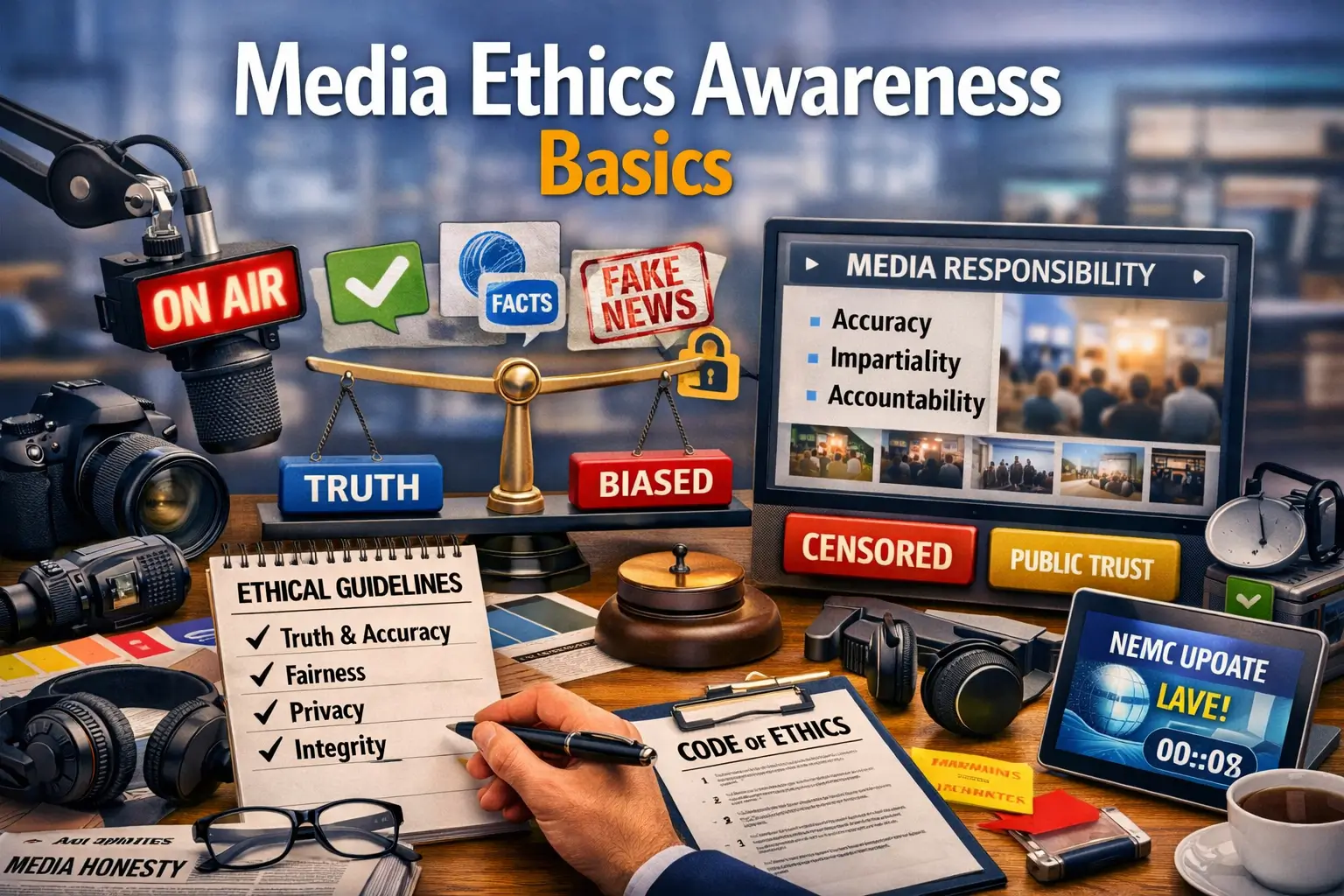
Media Ethics Awareness Course: Build Responsible Journalism and Communication Skills
The Media Ethics Awareness Course is a comprehensive, beginner-friendly, and career-oriented training program designed to help learners understand the ethical principles that guide media professionals. In today’s digital age, information spreads quickly, making ethical communication more important than ever.
First, this course introduces learners to the fundamentals of media ethics and explains why ethical practices are essential for maintaining public trust. Media professionals have a responsibility to deliver accurate, fair, and unbiased information.
Additionally, the course simplifies ethical concepts so beginners can easily understand and apply them. Whether you are a student, fresh graduate, aspiring journalist, content creator, marketing professional, or working professional, this course will help you build valuable ethical communication skills.
Why Learn Media Ethics?
Media ethics is important across all communication platforms. Moreover, organizations value professionals who can communicate responsibly and make ethical decisions.
Learning media ethics helps individuals:
- Improve critical thinking
- Develop responsible communication habits
- Strengthen fact-checking skills
- Build professional credibility
- Improve decision-making abilities
- Increase workplace confidence
As a result, learners become more prepared for modern communication careers.
What You Will Learn
Introduction to Media Ethics
First, learners will understand the importance of ethics in media and communication.
Principles of Ethical Journalism
Next, learners will discover the values that guide responsible journalism.
Topics include:
- Accuracy
- Fairness
- Transparency
- Accountability
Fact-Checking Techniques
Additionally, learners will understand how to verify information before publishing.
Digital Media Ethics
Moreover, learners will explore ethical responsibilities on digital platforms.
Media Accountability
Responsible communication builds trust. Therefore, learners will understand the importance of accountability.
Privacy and Confidentiality
Furthermore, learners will learn how to protect sensitive information.
Misinformation Awareness
Learners will understand how false information impacts society.
Ethical Decision-Making
Finally, learners will develop practical approaches to solving ethical challenges.
Skills You Will Gain
After completing this course, learners will develop:
- Ethical decision-making skills
- Fact-checking abilities
- Communication skills
- Critical thinking
- Media literacy
- Analytical thinking
- Responsible reporting skills
- Digital awareness
- Professional integrity
- Workplace confidence
Who Should Enroll?
This course is suitable for:
- Students
- Fresh graduates
- Aspiring journalists
- Content creators
- Bloggers
- Social media managers
- Marketing professionals
- Public relations professionals
- Working professionals
- Career changers
No prior experience is required.
Career Opportunities
Completing this course can support careers such as:
- Journalist
- Content Writer
- Media Executive
- Communications Executive
- Public Relations Executive
- Digital Content Creator
- Social Media Executive
- Corporate Communications Executive
- Media Research Assistant
- Editorial Assistant
Industries Hiring
Professionals with media ethics knowledge are valuable in:
- Media organizations
- News agencies
- Digital media companies
- Marketing agencies
- Public relations firms
- Educational institutions
- Corporate organizations
- Government departments
- Non-profit organizations
- Startups
Certification Benefits
Upon successful completion, learners receive a certificate validating their media ethics knowledge.
Benefits include:
- Improved employability
- Strong professional credibility
- Better communication skills
- Enhanced digital literacy
FAQ SECTION
1. What is a Media Ethics Awareness Course?
A Media Ethics Awareness Course teaches learners how to communicate responsibly and follow ethical principles in journalism and digital media.
2. Who should enroll in this course?
Students, journalists, content creators, marketing professionals, and working professionals can enroll.
3. Do I need prior experience?
No. This course is beginner-friendly and requires no prior experience.
4. What skills will I learn?
You will learn fact-checking, ethical decision-making, responsible reporting, and media accountability skills.
5. How long does the course take?
Most Media Ethics Awareness Courses can be completed within 4 to 8 weeks.
6. Will I receive a certificate?
Yes. A certificate is awarded after successful completion.
7. Is media ethics important in India?
Yes. Ethical communication is becoming increasingly important across media, marketing, and digital industries.
8. Is this course suitable for content creators?
Yes. Content creators can use media ethics principles to create trustworthy content.
9. What industries hire professionals with these skills?
Media organizations, PR agencies, digital companies, and corporate organizations hire such professionals.
10. Can this course improve career opportunities?
Yes. Ethical communication skills are valuable across many industries.



Reviews
There are no reviews yet.