
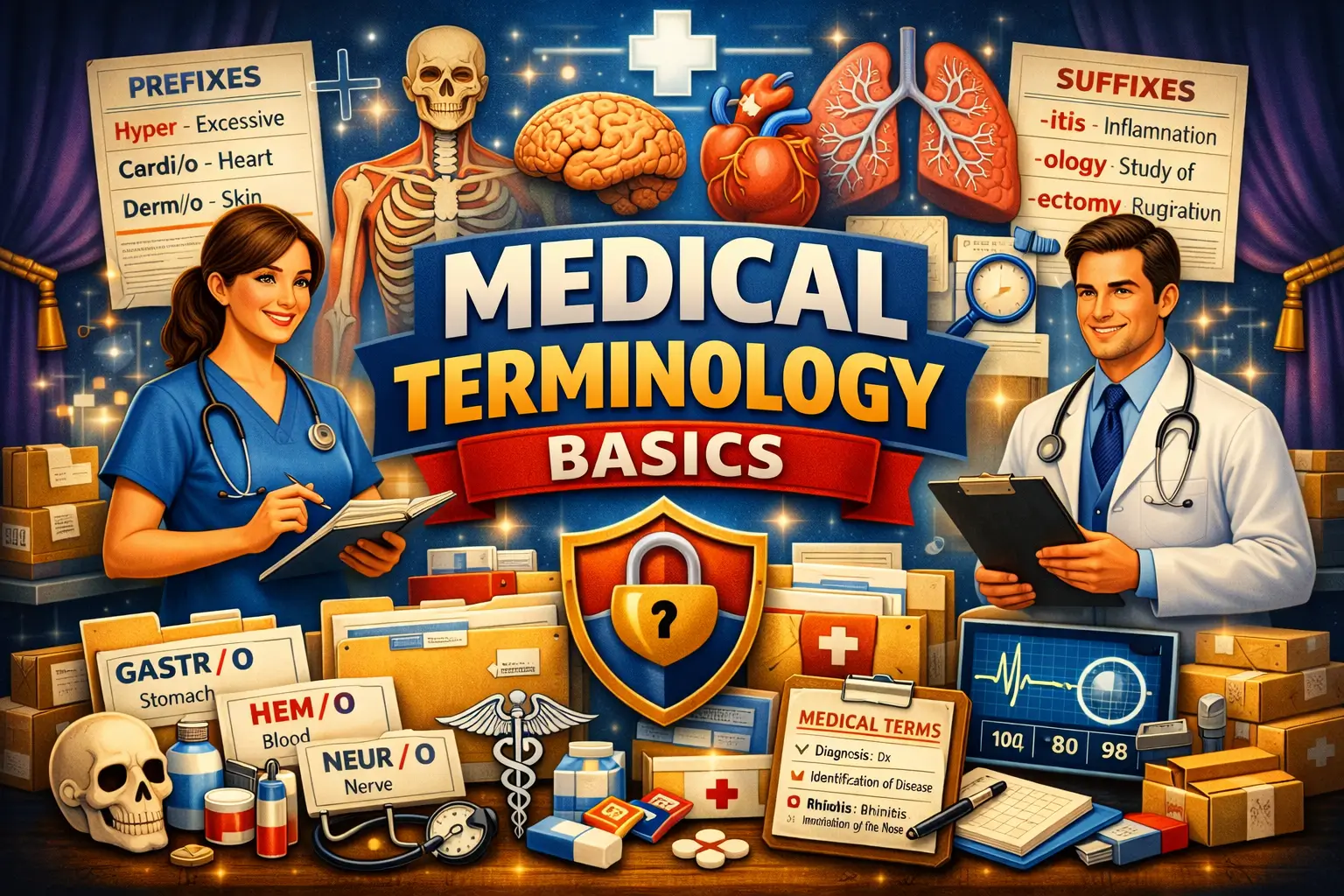
Medical Terminology Basics Course
The Medical Terminology Basics Course is designed to help learners understand the fundamental language used in healthcare and medical environments. Medical terminology is the standardized system of words used by healthcare professionals to describe the human body, medical conditions, procedures, and treatments.
This course introduces learners to essential medical vocabulary, including prefixes, suffixes, root words, anatomical terms, medical abbreviations, and clinical expressions. Whether you are a student, healthcare aspirant, nursing assistant, medical coder, or administrative staff member, this course provides a strong foundation for understanding medical language used in hospitals and clinics.
Why Learn Medical Terminology Basics?
Understanding medical terminology is essential for anyone working in healthcare or related fields. It ensures clear communication, reduces errors, and improves patient care. Without proper knowledge of medical language, healthcare documentation and communication can become confusing and inefficient.
Learning medical terminology basics helps individuals interpret medical reports, communicate effectively with healthcare professionals, and build a strong foundation for advanced healthcare studies such as nursing, pharmacy, or medical coding.
What You Will Learn
This course covers essential topics, including:
- Introduction to medical terminology
- Word roots, prefixes, and suffixes
- Common medical abbreviations
- Human anatomy terminology basics
- Clinical and diagnostic terms
- Medical language structure
- Healthcare communication basics
- Basic pathology terminology
- Medication-related terms overview
- Medical documentation language
Practical Learning Experience
Learners will practice breaking down complex medical terms into understandable parts. Through examples, exercises, and case-based learning, participants will gain confidence in interpreting medical reports and understanding healthcare communication.
The course also helps learners develop familiarity with real-world medical documents used in hospitals, clinics, and laboratories.
Benefits of the Course
Completing the Medical Terminology Basics Course offers several benefits:
- Understand medical language easily
- Improve healthcare communication
- Build foundation for medical careers
- Enhance medical reading and comprehension skills
- Support healthcare documentation understanding
- Prepare for advanced medical studies
- Increase employability in healthcare support roles
- Reduce errors in medical communication
Who Should Enroll?
This course is ideal for:
- Students entering healthcare fields
- Nursing and medical aspirants
- Medical coders and billing trainees
- Healthcare administrative staff
- Pharmacy students
- Lab technicians (beginners)
- Healthcare support workers
- Anyone interested in medical language
No prior medical experience is required. The course is designed for beginners.
Career Opportunities
After completing this course, learners can support or pursue roles such as:
- Medical Records Assistant
- Healthcare Data Entry Operator
- Medical Coding Trainee
- Hospital Administrative Assistant
- Clinical Support Staff
- Healthcare Documentation Assistant
This knowledge is valuable in hospitals, clinics, diagnostic centers, insurance companies, and healthcare IT organizations.
Certification
Upon successful completion of the Medical Terminology Basics Course, learners receive a certification demonstrating their understanding of essential medical vocabulary and healthcare communication terms.
Conclusion
Medical terminology is the foundation of all healthcare communication. The Medical Terminology Basics Course equips learners with essential language skills needed to understand medical reports, support healthcare professionals, and build a strong career in the healthcare industry. Enroll today to master the language of medicine and open doors to healthcare opportunities.
9. FAQ SECTION
Q1. What is medical terminology?
Medical terminology is the standardized language used in healthcare to describe body parts, diseases, procedures, and treatments.
Q2. Who should take this course?
Students, healthcare workers, medical coding trainees, and anyone interested in medical language.
Q3. Is this course difficult for beginners?
No. It is designed specifically for beginners with no prior medical knowledge.
Q4. What will I learn in this course?
You will learn medical terms, prefixes, suffixes, abbreviations, and basic anatomy terminology.
Q5. Why is medical terminology important?
It ensures accurate communication and understanding in healthcare environments.
Q6. Will this help in nursing or medical studies?
Yes. It provides a strong foundation for nursing, pharmacy, and medical studies.
Q7. Do I need science background?
No. A science background is helpful but not required.
Q8. Will I learn medical abbreviations?
Yes. Common medical abbreviations are included in the course.
Q9. Is this useful for hospital jobs?
Yes. It is valuable for administrative and support roles in hospitals.
Q10. Will I get a certificate?
Yes. A certification is provided after course completion




Reviews
There are no reviews yet.