
Introduction
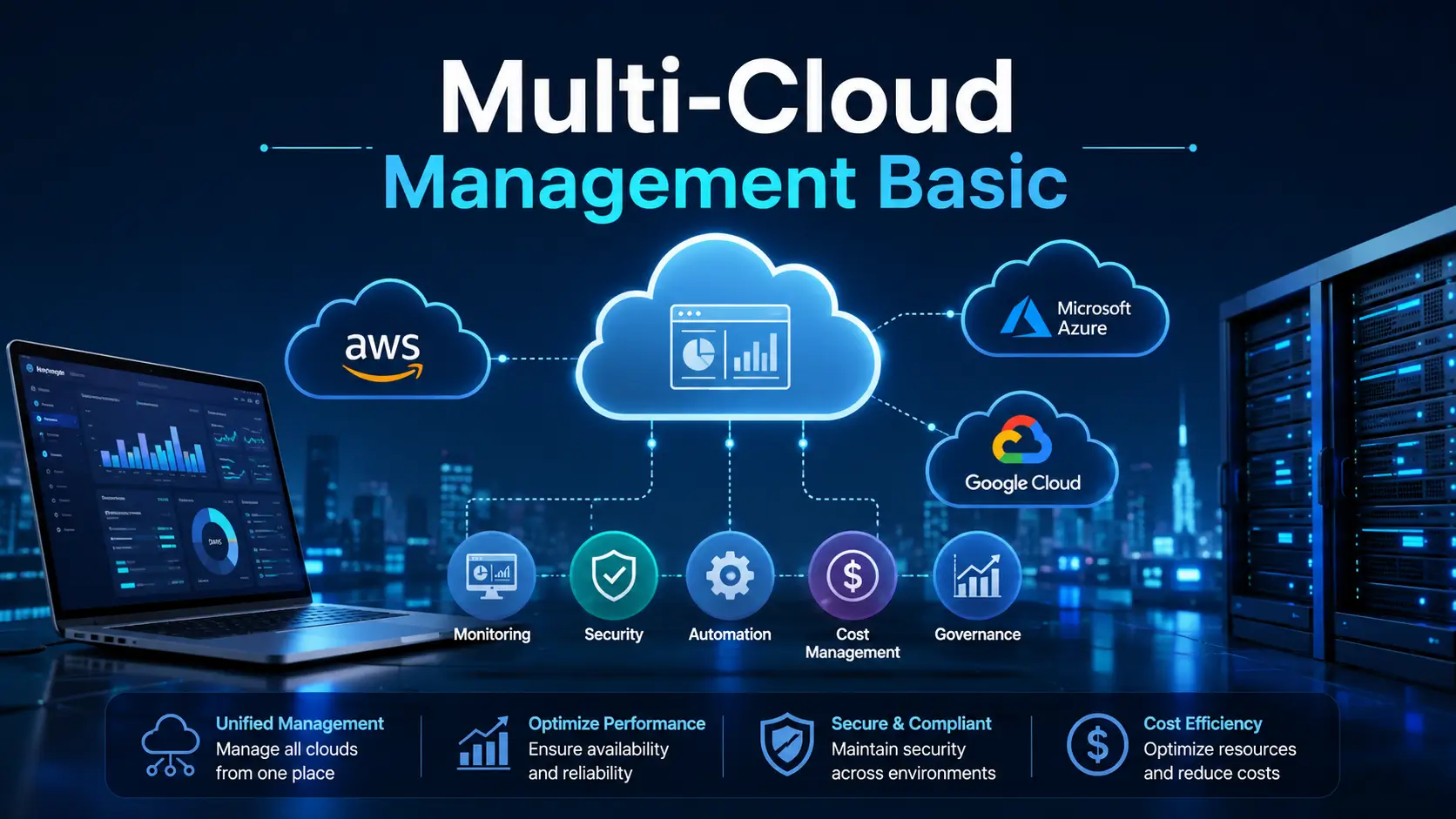
The Multi-Cloud Management Course is a comprehensive training program designed to help learners understand how modern organizations manage infrastructure and applications across multiple cloud platforms. As cloud computing continues to evolve, businesses are increasingly adopting multi-cloud strategies to improve flexibility, performance, and risk management. Therefore, understanding multi-cloud management has become an important skill in today’s IT and cloud industry.
Multi-cloud management refers to the practice of using multiple cloud service providers to distribute workloads and improve system reliability. As a result, organizations can avoid vendor lock-in, enhance resilience, and optimize operational efficiency.
Whether you are a student, IT professional, cloud engineer, DevOps learner, or technology enthusiast, this course provides valuable knowledge and practical understanding of multi-cloud environments.
Course Overview
Modern enterprises require flexibility and scalability across different cloud platforms. Therefore, multi-cloud strategies are widely adopted to support business continuity and performance optimization.
In this course, learners explore the fundamentals of multi-cloud architecture and cloud integration techniques. Additionally, participants gain knowledge of cloud orchestration, workload management, governance strategies, and cross-cloud communication.
The course combines theory with practical insights, helping learners understand how organizations manage multiple cloud providers effectively.
What You Will Learn
The Multi-Cloud Management Course covers a wide range of cloud computing topics. First, learners study the basics of cloud computing and multi-cloud concepts. Next, they explore cloud integration and workload distribution strategies.
Furthermore, the course explains cloud orchestration, governance policies, security considerations, and performance optimization across multiple platforms. Learners also gain knowledge of hybrid cloud environments, risk management, and cost optimization techniques.
In addition, participants examine real-world case studies and industry practices used in enterprise cloud environments.
Skills You Will Gain
- Multi-cloud fundamentals
- Cloud integration techniques
- Cloud orchestration concepts
- Workload distribution strategies
- Cloud governance understanding
- Hybrid cloud awareness
- Risk management skills
- Cloud security basics
- Problem-solving abilities
- Cross-platform cloud management
Moreover, these skills are highly valuable in cloud engineering, DevOps, IT operations, and enterprise architecture roles.
Benefits of the Course
The Multi-Cloud Management Course offers strong benefits for learners interested in advanced cloud strategies. First, it helps understand how multiple cloud platforms work together in real-world environments.
Additionally, learners gain knowledge of improving system reliability and reducing dependency on a single provider. Furthermore, participants understand how enterprises optimize performance, security, and cost using multi-cloud approaches.
Because organizations are rapidly adopting multi-cloud strategies, professionals with these skills are highly in demand. As a result, learners become better prepared for modern cloud computing careers.
Who Should Enroll?
This course is ideal for:
- Students and graduates
- Cloud engineers
- DevOps engineers
- IT professionals
- System administrators
- Technology consultants
- Business analysts
- Enterprise architects
- Cloud enthusiasts
- Anyone interested in cloud computing
No prior multi-cloud experience is required. Therefore, beginners can easily start learning from the basics.
Career Opportunities
After completing this course, learners may pursue roles such as:
- Multi-Cloud Engineer
- Cloud Solutions Architect (Associate)
- DevOps Engineer
- Cloud Operations Specialist
- Infrastructure Engineer
- Cloud Integration Analyst
- IT Systems Administrator
- Enterprise Cloud Associate
- Platform Engineer Assistant
- Technology Consultant
Additionally, these skills are applicable across SaaS companies, IT enterprises, fintech, consulting firms, and global cloud service providers.
Certification
Upon successful completion of the Multi-Cloud Management Course, learners receive a certification validating their understanding of multi-cloud architecture, cloud integration strategies, workload management, governance principles, and cross-platform cloud operations. This certification enhances career opportunities in cloud computing and enterprise IT roles.
Conclusion
The Multi-Cloud Management Course provides a strong foundation for understanding how modern organizations operate across multiple cloud platforms to achieve flexibility, reliability, and performance. As businesses continue to scale globally, multi-cloud strategies are becoming essential for maintaining competitive advantage. Therefore, professionals with multi-cloud expertise are highly valued in the IT industry.
Throughout this course, learners gain practical knowledge of cloud integration, workload distribution, governance, and orchestration across platforms like AWS, Azure, and Google Cloud. As a result, they become capable of managing complex cloud environments efficiently and effectively.
Overall, this course builds essential skills required for modern cloud architecture and enterprise IT operations. Whether your goal is to enter cloud engineering, DevOps, or system architecture roles, this course provides the knowledge and confidence needed to succeed.
In conclusion, mastering multi-cloud management empowers learners to design resilient, scalable, and future-ready cloud systems that support modern digital transformation.
FAQ Section
1. What is Multi-Cloud Management?
Multi-cloud management is the practice of using and managing multiple cloud service providers like AWS, Azure, and Google Cloud together.
2. Is this course suitable for beginners?
Yes, the course is designed for beginners with no prior multi-cloud experience required.
3. What topics are included?
The course includes cloud integration, orchestration, governance, workload management, and hybrid cloud concepts.
4. Will I receive a certificate?
Yes, learners receive a certificate after successful completion.
5. Do I need technical experience?
Basic cloud knowledge is helpful but not mandatory.
6. Who should take this course?
Cloud engineers, DevOps professionals, IT students, and technology enthusiasts can take this course.
7. Why do companies use multi-cloud?
Companies use multi-cloud to improve reliability, reduce risk, avoid vendor lock-in, and optimize performance.
8. What skills will I gain?
You will gain skills in cloud integration, workload management, orchestration, and multi-cloud governance.
9. What platforms are covered?
The course covers concepts applicable to AWS, Microsoft Azure, and Google Cloud.
10. What career options are available?
You can work as Multi-Cloud Engineer, DevOps Engineer, Cloud Architect Associate, or Cloud Operations Specialist.



Reviews
There are no reviews yet.