
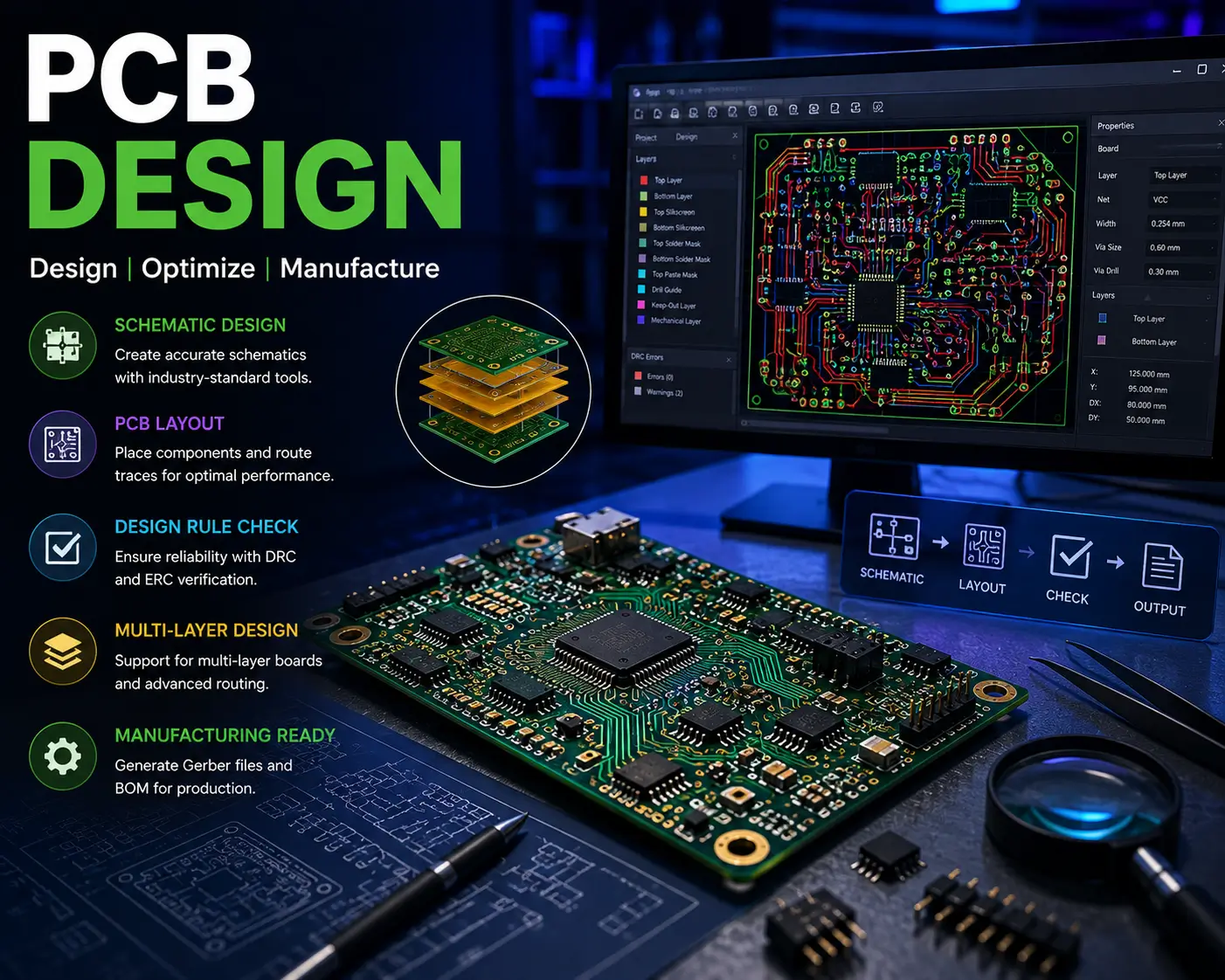
Build Electronics Engineering Skills with a PCB Design Course
The PCB Design Course is designed to provide learners with a comprehensive understanding of printed circuit board (PCB) design, electronic circuit development, hardware layout techniques, and modern electronics engineering practices. Printed circuit boards form the foundation of almost every electronic device, from smartphones and computers to industrial automation systems and medical equipment.
As the demand for electronic products continues to grow, PCB design skills have become highly valuable across industries such as consumer electronics, automotive engineering, telecommunications, robotics, aerospace, industrial automation, and embedded systems development.
This course introduces learners to PCB fundamentals, circuit schematics, layout design techniques, manufacturing processes, and industry best practices.
PCB Design Course Overview
PCB design involves creating the physical layout of electronic circuits on a printed circuit board. Engineers and designers use specialized software tools to convert circuit schematics into functional PCB layouts that support reliable electronic performance.
The PCB Design Course explores the complete PCB development lifecycle, from circuit planning and component placement to routing, manufacturing, testing, and optimization.
Why Learn PCB Design?
PCB design plays a critical role in modern electronics development.
Benefits of learning PCB Design include:
- Understanding electronic hardware design
- Learning PCB layout techniques
- Exploring circuit development processes
- Understanding manufacturing requirements
- Building practical engineering skills
- Improving technical problem-solving abilities
- Increasing career opportunities
- Supporting innovation in electronics development
What You Will Learn in This PCB Design Course
Throughout the course, learners will explore:
- PCB fundamentals
- Electronic components and circuits
- Schematic design principles
- PCB layout development
- Component placement strategies
- Routing techniques
- PCB manufacturing processes
- Testing and quality assurance
- Hardware design workflows
- Industry best practices
PCB Fundamentals
Learn the role of printed circuit boards in modern electronic devices and systems.
Electronic Circuit Design
Understand how circuits are designed and translated into PCB layouts.
PCB Layout Techniques
Explore component placement, routing, signal integrity, and board optimization methods.
PCB Design Software
Learn about industry-standard tools used for PCB development and hardware design.
Manufacturing and Testing
Understand how PCB designs are manufactured, assembled, and tested for quality and performance.
Skills You Will Gain from the PCB Design Course
After completing this course, learners will be able to:
- Understand PCB development workflows
- Interpret circuit schematics
- Analyze PCB layouts
- Understand component placement strategies
- Evaluate PCB manufacturing processes
- Apply PCB design best practices
- Support hardware development projects
- Improve electronics engineering knowledge
Career Benefits
PCB design skills are highly valued across electronics and engineering industries.
Potential career opportunities include:
- PCB Design Engineer
- Hardware Design Engineer
- Electronics Engineer
- Embedded Systems Engineer
- Product Development Engineer
- Circuit Design Engineer
- Electronics Technician
- Hardware Testing Engineer
- R&D Engineer
- Electronics Project Coordinator
Who Should Enroll?
This course is ideal for:
- Electronics engineering students
- Electrical engineering students
- Embedded systems learners
- Hardware developers
- Electronics technicians
- Product designers
- Engineering professionals
- Anyone interested in electronic product development
No prior PCB design experience is required.
Certification Benefits
Upon successful completion of the PCB Design Course, learners receive a certificate validating their understanding of printed circuit board design and electronics development.
Benefits include:
- Enhanced professional credibility
- Improved hardware design knowledge
- Increased employability
- Recognition of technical skills
- Preparation for advanced electronics training
Conclusion
The PCB Design Course provides a strong foundation in printed circuit board development, electronic circuit design, layout techniques, and hardware engineering. Learners gain practical knowledge that helps them understand how modern electronic products are designed and manufactured. Whether you are pursuing an electronics career or expanding your engineering expertise, this course offers valuable industry-relevant skills.
FAQ SECTION
1. What is PCB design?
PCB design is the process of creating the layout and structure of printed circuit boards used in electronic devices.
2. Is this PCB Design Course suitable for beginners?
Yes, the course is designed for beginners as well as engineering students and professionals.
3. What skills will I learn?
You will learn PCB layout design, circuit schematics, component placement, routing techniques, and manufacturing fundamentals.
4. Do I need electronics knowledge?
Basic electronics knowledge is helpful but not mandatory.
5. What industries use PCB design?
Consumer electronics, automotive, telecommunications, aerospace, healthcare, robotics, and industrial automation industries use PCB technology extensively.
6. Will I learn PCB design software?
Yes, the course introduces commonly used PCB design tools and software concepts.
7. Will I receive a certificate?
Yes, learners receive a course completion certificate.
8. Can PCB design improve career opportunities?
Yes, PCB design skills are highly valued in electronics and hardware engineering sectors.
9. Does the course cover PCB manufacturing?
Yes, manufacturing and testing fundamentals are included.
10. What should I learn after this course?
Advanced electronics design, embedded systems, IoT hardware development, and FPGA design courses are recommended.




Reviews
There are no reviews yet.