
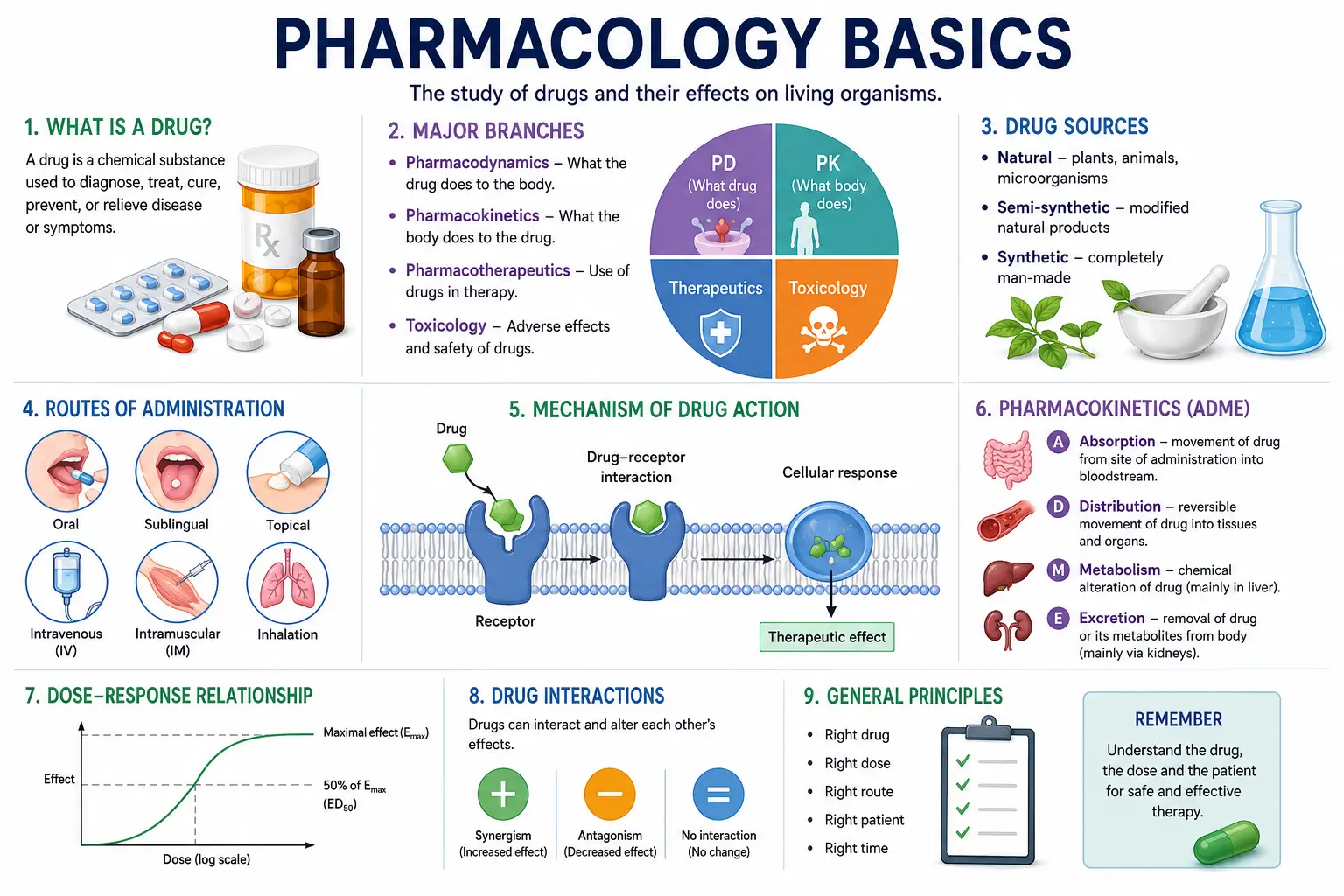
Pharmacology Basics Course
The Pharmacology Basics Course is designed to provide learners with a strong foundation in the science of drugs and medications. Moreover, the course introduces essential pharmacology concepts, including drug classifications, medication safety, drug actions, and healthcare applications. As a result, learners gain valuable knowledge about how medicines work and their role in patient care.
Pharmacology Basics Course Overview
Pharmacology is an important field within healthcare that focuses on the study of drugs and their effects on the human body. Therefore, understanding pharmacology is essential for healthcare professionals and anyone interested in medical sciences. This Pharmacology Basics Course provides a comprehensive introduction to pharmaceutical principles and medication management.
In addition, learners explore drug development, therapeutic uses, and medication safety practices. Furthermore, they gain practical insights into how medications are prescribed, administered, and monitored in healthcare settings.
Fundamentals of Pharmacology
The course begins with the fundamentals of pharmacology. Therefore, students learn key concepts, terminology, and principles related to drugs and medications. Moreover, they understand the importance of pharmacology in disease prevention, treatment, and patient care.
These foundations help learners build essential pharmaceutical knowledge.
Drug Classification Systems
Drugs are categorized based on their therapeutic uses and mechanisms of action. Consequently, learners study major drug classifications, pharmaceutical categories, and medication groups. In addition, they explore how classification systems help healthcare professionals select appropriate treatments.
As a result, students gain a clear understanding of drug categories and applications.
Drug Actions and Effects
Understanding how drugs work is a core aspect of pharmacology. Therefore, the course covers mechanisms of action, therapeutic effects, adverse reactions, and physiological responses. Furthermore, learners explore how medications interact with different body systems.
These concepts strengthen pharmacological understanding.
Medication Safety and Administration
Safe medication practices are essential in healthcare. Consequently, students learn medication administration principles, dosage calculations, patient safety guidelines, and error prevention techniques. In addition, they explore strategies for ensuring safe and effective medication use.
These skills support responsible healthcare practices.
Pharmacokinetics and Pharmacodynamics
Pharmacokinetics and pharmacodynamics explain how drugs move through and affect the body. Therefore, learners study drug absorption, distribution, metabolism, and excretion. Moreover, they understand how medications produce therapeutic effects and influence biological processes.
As a result, students develop a deeper understanding of drug behavior.
Drug Interactions and Side Effects
Medications can interact with other drugs, foods, or medical conditions. Consequently, the course introduces common drug interactions, side effects, contraindications, and risk factors. In addition, learners explore methods for identifying and minimizing medication-related risks.
These concepts improve medication awareness and safety.
Ethical and Legal Considerations
Ethics and regulations play a significant role in pharmacology. Therefore, students learn professional responsibilities, patient confidentiality, medication regulations, and ethical decision-making principles. Furthermore, they understand the importance of compliance and patient-centered care.
These skills support professional healthcare standards.
Practical Learning and Case Studies
The Pharmacology Basics Course includes practical exercises, medication analysis activities, and real-world healthcare case studies. Moreover, learners examine medication-related scenarios and apply pharmacological concepts in realistic settings.
As a result, students gain practical knowledge and industry-relevant experience.
Learning Outcomes
By the end of this course, learners will be able to:
- Understand fundamental pharmacology concepts and terminology.
- Identify major drug classifications and therapeutic uses.
- Explain how medications work in the body.
- Apply medication safety and administration principles.
- Recognize common drug interactions and side effects.
- Understand pharmacokinetic and pharmacodynamic processes.
- Support safe and effective medication practices.
Who Should Enroll?
This course is ideal for healthcare students, pharmacy assistants, nurses, caregivers, medical professionals, and individuals interested in pharmaceutical sciences. Moreover, it benefits anyone seeking foundational knowledge of pharmacology and medication management.
Conclusion
The Pharmacology Basics Course provides comprehensive training in drug science, medication safety, pharmacological principles, and healthcare applications. Furthermore, it combines theoretical concepts with practical learning. As a result, learners gain the knowledge and confidence needed to understand medications and support safe healthcare practices.
9. FAQ SECTION
What is a Pharmacology Basics Course?
A Pharmacology Basics Course teaches the fundamentals of drugs, medications, drug actions, and pharmaceutical principles.
Who can enroll in this course?
Students, healthcare professionals, caregivers, and beginners can enroll.
Do I need prior medical knowledge?
No, the course is designed for beginners and healthcare learners.
What skills will I learn?
You will learn drug classifications, medication safety, pharmacology principles, and drug interaction awareness.
Is practical training included?
Yes, the course includes case studies, practical exercises, and medication analysis activities.
Will I receive a certificate?
Yes, learners receive a course completion certificate.
Does the course cover medication safety?
Yes, medication safety is a key component of the curriculum.
What career opportunities are available?
The course supports careers in healthcare support, pharmacy assistance, medical administration, and healthcare education.
Are drug interactions discussed?
Yes, learners study common drug interactions and side effects.
Why should I study Pharmacology Basics?
The course helps develop essential knowledge about medications and their role in healthcare.




Reviews
There are no reviews yet.