
Introduction
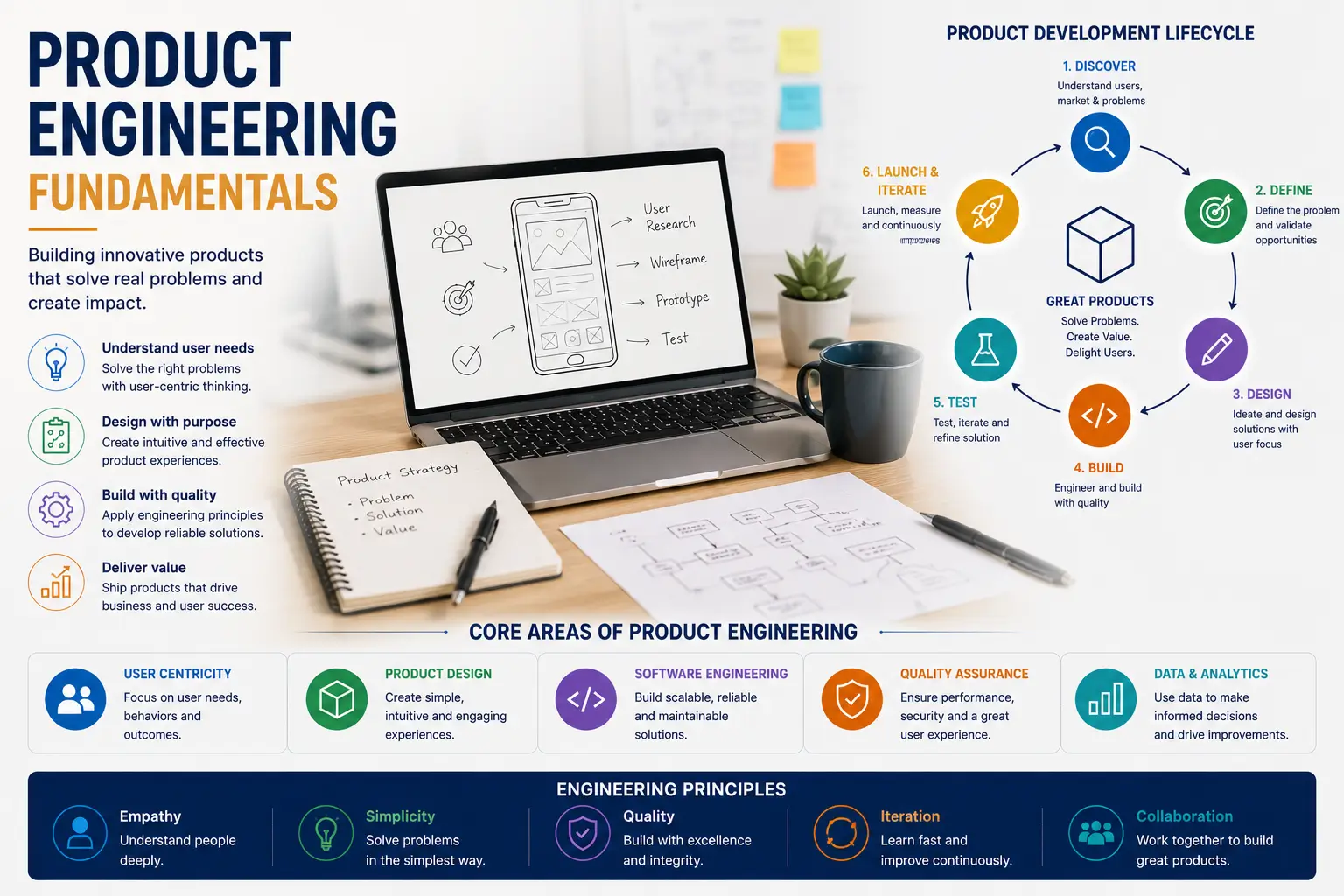
The Product Engineering Fundamentals Course is a comprehensive training program designed to help learners develop a strong understanding of how products are designed, developed, tested, and improved throughout their lifecycle. In today’s competitive global market, organizations must continuously innovate and deliver high-quality products that meet customer expectations, technical requirements, cost constraints, and sustainability goals. Therefore, product engineering has become a critical discipline across industries such as manufacturing, automotive, aerospace, electronics, software, consumer goods, and industrial systems.
Product engineering involves the integration of multiple disciplines, including mechanical design, materials engineering, manufacturing processes, quality assurance, user experience, and systems engineering. It focuses on transforming ideas into functional, reliable, and manufacturable products through structured engineering processes.
This course provides learners with practical knowledge of product engineering by combining product development principles, design thinking, prototyping, material selection, manufacturing considerations, testing techniques, quality management, and lifecycle optimization. Whether you are an engineer, designer, product developer, technician, student, or aspiring product manager, this course provides valuable knowledge that supports professional growth and innovation.
Course Overview
Product engineering focuses on transforming concepts into fully developed, functional, and market-ready products. It requires coordination between design teams, engineering teams, manufacturing teams, and quality assurance teams to ensure successful product outcomes.
First, learners explore the importance of product engineering in modern industries and understand how product development impacts innovation, competitiveness, customer satisfaction, and business success. Next, they examine how structured engineering processes improve product quality, reduce development time, and optimize costs.
Additionally, the course explains product lifecycle management, engineering design principles, requirement analysis, prototyping techniques, material selection, manufacturing processes, testing and validation, quality assurance, and product optimization. Learners also gain practical knowledge of Agile development approaches, cross-functional collaboration, documentation practices, and continuous improvement strategies.
Furthermore, the curriculum combines theoretical concepts with real-world engineering applications, helping learners understand how successful products are designed and developed in industrial environments.
What You Will Learn
The Product Engineering Fundamentals Course covers a wide range of topics related to product design, development, and manufacturing.
First, learners study the fundamentals of product engineering and understand how products are conceived, designed, developed, tested, and improved. They also explore the roles and responsibilities of product engineers in modern organizations.
Next, participants learn about requirements analysis. They understand how customer needs, technical specifications, functional requirements, and performance expectations are identified and documented before product development begins.
Additionally, the course introduces design thinking and engineering design principles. Learners discover how creativity, problem-solving, user-centered design, and technical constraints are combined to create effective product solutions.
Furthermore, participants study prototyping techniques. They learn how conceptual ideas are transformed into physical or digital prototypes for testing, validation, and improvement before mass production.
The course also explains material selection in product engineering. Learners explore how engineering materials are evaluated based on strength, durability, cost, manufacturability, and sustainability.
Moreover, learners gain knowledge of manufacturing processes such as casting, machining, molding, additive manufacturing, assembly techniques, and production planning that influence product design decisions.
In addition, the curriculum covers product testing and validation. Participants learn about functional testing, performance testing, reliability testing, quality assurance methods, and product verification techniques.
The course also introduces quality control and improvement practices, including defect prevention, process optimization, statistical process control, and continuous improvement methodologies.
Additionally, learners study product lifecycle management (PLM), including concept development, design, production, launch, maintenance, and product retirement strategies.
Furthermore, the curriculum explains cost optimization, value engineering, budgeting, and economic considerations in product development.
Participants also explore Agile product development, cross-functional teamwork, engineering documentation, communication strategies, and project coordination.
Finally, learners study sustainability in product engineering, including eco-friendly design, recyclability, energy efficiency, and environmental impact reduction.
Skills You Will Gain
Upon successful completion of the course, learners will develop valuable professional skills, including:
- Product engineering fundamentals
- Product lifecycle management
- Engineering design principles
- Requirements analysis
- Prototyping techniques
- Material selection
- Manufacturing process understanding
- Product testing and validation
- Quality assurance
- Cost optimization
- Agile product development
- Technical documentation
- Problem-solving skills
- Cross-functional collaboration
- Continuous improvement
These skills are highly valued across manufacturing companies, automotive industries, aerospace organizations, electronics manufacturers, consumer goods companies, engineering consultancies, and technology-driven product development teams.
Benefits of the Course
The Product Engineering Fundamentals Course provides learners with practical knowledge and engineering skills that support successful product development and innovation.
First, the course helps learners understand how structured product engineering processes improve product quality, reduce development time, and optimize costs.
Additionally, participants strengthen their ability to design, evaluate, test, and improve products based on user needs and engineering requirements.
Furthermore, learners develop practical skills in prototyping, material selection, manufacturing processes, quality assurance, testing, and lifecycle management.
The course also enhances creativity, analytical thinking, communication, teamwork, problem-solving, and decision-making skills that support engineering careers.
As industries continue to innovate and develop advanced products, professionals with product engineering expertise remain in high demand.
Finally, learners gain the confidence to contribute to product development teams and support successful product launches.
Who Should Enroll?
This course is ideal for:
- Product engineers
- Mechanical engineers
- Design engineers
- Manufacturing engineers
- Industrial engineers
- Quality engineers
- Product developers
- R&D professionals
- Engineering students
- Technicians
- Project engineers
- Product managers (technical background)
- Innovation specialists
- Technical consultants
- Anyone interested in product development
No prior product engineering experience is required. Therefore, beginners and experienced professionals can both benefit from this course.
Career Opportunities
After completing the course, learners may pursue opportunities such as:
- Product Engineer
- Design Engineer
- Manufacturing Engineer
- Product Development Engineer
- R&D Engineer
- Mechanical Engineer
- Industrial Engineer
- Quality Engineer
- Product Analyst
- Process Engineer
- Innovation Engineer
- Technical Project Engineer
- Product Specialist
- Engineering Consultant
- Product Lifecycle Coordinator
Additionally, learners can apply these skills across manufacturing, automotive, aerospace, electronics, consumer goods, healthcare devices, industrial systems, and technology companies.
Certification
Upon successful completion of the Product Engineering Fundamentals Course, participants receive a certification recognizing their understanding of product design, engineering principles, prototyping, material selection, manufacturing processes, testing, quality assurance, and product lifecycle management. This certification strengthens professional credibility and supports career advancement in engineering, product development, and manufacturing industries.
Why Choose This Course?
The Product Engineering Fundamentals Course combines engineering principles with practical product development processes to provide a comprehensive learning experience.
First, learners develop a strong understanding of product design, development, manufacturing, testing, and lifecycle management.
Additionally, the curriculum focuses on Agile development, material selection, prototyping, quality assurance, cost optimization, and continuous improvement.
Furthermore, participants gain industry-relevant knowledge that supports career development in manufacturing, automotive, aerospace, electronics, consumer products, and engineering design.
Whether your goal is to become a product engineer, design engineer, R&D specialist, manufacturing engineer, or innovation professional, this course provides the knowledge, practical skills, and confidence needed to succeed.
Enroll today and build a strong foundation in product engineering, product development, and engineering innovation.
FAQ Section
1. What is the Product Engineering Fundamentals Course?
The course teaches how products are designed, developed, tested, and improved from concept to production.
2. Is this course suitable for beginners?
Yes. The course is designed for beginners as well as professionals who want to learn product engineering fundamentals.
3. What topics are covered?
Topics include product lifecycle management, design thinking, prototyping, material selection, manufacturing processes, testing, quality assurance, and product optimization.
4. Will I receive a certificate?
Yes. Participants receive a certificate upon successful completion of the course.
5. Do I need prior engineering experience?
No. The course introduces product engineering concepts in a clear and beginner-friendly format.
6. Who should enroll in this course?
Engineers, designers, product developers, manufacturing professionals, R&D teams, students, and technical consultants can benefit from this course.
7. Is the course fully online?
Yes. The course offers flexible online learning at your own pace.
8. What skills will I gain?
You will gain skills in product design, prototyping, material selection, manufacturing processes, testing, quality assurance, and lifecycle management.
9. Can this course help my career?
Yes. Product engineering skills are highly valued across manufacturing, automotive, aerospace, electronics, and product development industries.
10. Why is product engineering important?
Product engineering ensures that ideas are transformed into functional, reliable, cost-effective, and high-quality products that meet user needs and market demands.



Reviews
There are no reviews yet.