
Introduction
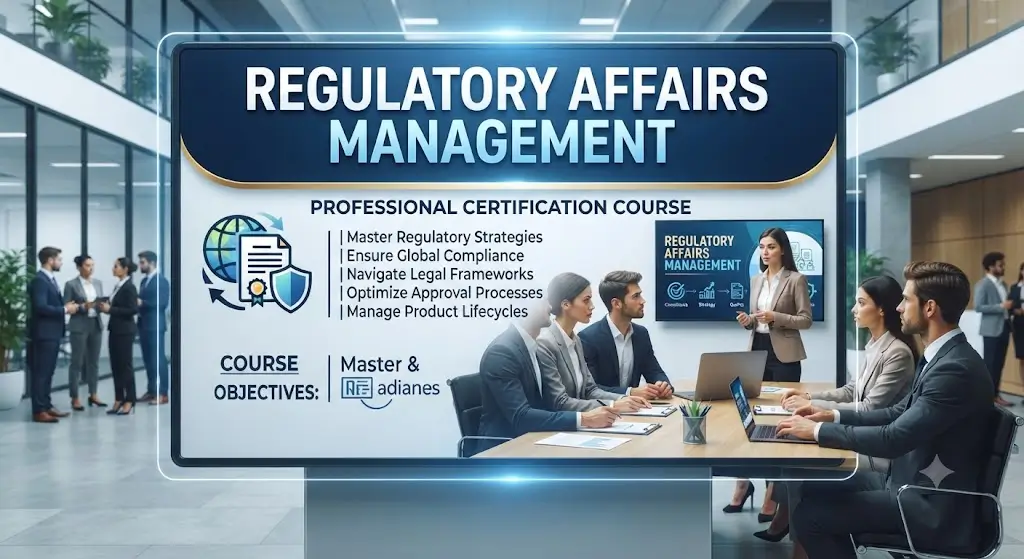
The Regulatory Affairs Management Course is a comprehensive training program designed to provide learners with a strong understanding of regulatory affairs, compliance management, and the operational processes required to meet regulatory obligations. Organizations operating in regulated industries must ensure that their products, services, documentation, and business processes comply with applicable laws, industry standards, and government regulations. Effective regulatory affairs management helps organizations reduce legal risks, maintain product quality, improve operational efficiency, and protect public trust.
Regulatory affairs professionals coordinate compliance activities, prepare regulatory documentation, manage submissions, monitor changing regulations, support audits, maintain quality systems, and work closely with cross-functional teams to ensure that business operations align with regulatory expectations.
Organizations across pharmaceuticals, medical devices, healthcare, biotechnology, food and beverage, cosmetics, manufacturing, chemicals, technology, environmental services, and government sectors rely on regulatory affairs management to support compliance and sustainable business growth.
This course combines regulatory principles with practical business applications to help learners understand how regulatory affairs contribute to organizational success and operational excellence.
Whether you are a student, regulatory professional, compliance officer, quality specialist, healthcare worker, manufacturing professional, entrepreneur, consultant, or working professional, this course provides practical knowledge applicable across multiple industries.
Why Regulatory Affairs Management is Important
Effective regulatory affairs management enables organizations to operate responsibly while maintaining compliance with legal and industry requirements.
Key benefits include:
- Supports regulatory compliance
- Improves product quality
- Reduces legal and operational risks
- Strengthens documentation practices
- Supports successful audits
- Enhances organizational governance
- Improves market readiness
- Encourages continuous improvement
- Protects organizational reputation
- Promotes sustainable business growth
For example, organizations use regulatory affairs management to manage product approvals, compliance documentation, quality systems, regulatory submissions, inspections, and policy implementation.
Course Overview
This course provides a structured understanding of regulatory affairs management and compliance practices.
Learners will explore:
- Introduction to regulatory affairs
- Regulatory frameworks
- Compliance management
- Regulatory documentation
- Quality management systems
- Product lifecycle compliance
- Regulatory submissions
- Risk management
- Audit preparedness
- Governance and policy implementation
- Change management
- Ethical practices
- Regulatory monitoring
- Continuous improvement
- Best practices in regulatory affairs
What You Will Learn
By the end of this course, learners will be able to:
- Understand regulatory affairs principles
- Support regulatory compliance
- Prepare regulatory documentation
- Improve quality management practices
- Identify compliance risks
- Support audit activities
- Monitor regulatory changes
- Strengthen governance awareness
- Improve documentation accuracy
- Contribute to organizational compliance
Key Components of Regulatory Affairs Management
1. Regulatory Compliance
Learn the principles of regulatory compliance, legal obligations, industry standards, policy implementation, and organizational responsibilities.
2. Regulatory Documentation and Quality Systems
Understand documentation practices, quality management systems, compliance records, regulatory submissions, document control, and audit support.
3. Risk Management and Audits
Explore methods for identifying compliance risks, preparing for inspections, supporting internal and external audits, and implementing corrective actions.
4. Product Lifecycle and Change Management
Learn how regulatory affairs support product development, manufacturing, product modifications, change management, approvals, and ongoing compliance.
5. Practical Business Applications
Understand how regulatory affairs management supports pharmaceuticals, healthcare, biotechnology, manufacturing, food production, cosmetics, environmental management, technology, chemicals, and government organizations.
Skills You Will Gain
After completing this course, learners will develop valuable professional skills, including:
- Regulatory affairs management
- Compliance management
- Regulatory documentation
- Quality systems awareness
- Audit preparation
- Risk assessment
- Governance awareness
- Policy implementation
- Documentation management
- Business communication
- Analytical thinking
- Problem-solving
- Continuous improvement
- Ethical decision-making
- Professional record management
Benefits of This Course
Completing this course offers several professional advantages, including:
- Strong understanding of regulatory affairs principles
- Better compliance and documentation skills
- Improved quality management awareness
- Practical understanding of regulatory processes
- Better audit preparedness capabilities
- Enhanced risk management skills
- Increased employability across pharmaceuticals, healthcare, biotechnology, manufacturing, food production, cosmetics, technology, consulting, government, and corporate sectors
- Competitive advantage in regulatory affairs and compliance roles
- Strong foundation for advanced studies in regulatory affairs, quality management, compliance, governance, and risk management
Who Should Enroll?
This course is suitable for:
- Students
- Regulatory Affairs Professionals
- Compliance Officers
- Quality Assurance Professionals
- Healthcare Professionals
- Pharmaceutical Professionals
- Manufacturing Professionals
- Business Managers
- Legal Support Staff
- Anyone interested in regulatory affairs
No previous regulatory affairs experience is required, making this course suitable for beginners as well as experienced professionals.
Career Opportunities
After completing this course, learners can strengthen their professional capabilities in roles such as:
- Regulatory Affairs Executive
- Regulatory Affairs Specialist
- Compliance Officer
- Quality Assurance Executive
- Regulatory Documentation Coordinator
- Quality Systems Coordinator
- Risk and Compliance Executive
- Regulatory Compliance Analyst
- Product Compliance Executive
- Audit Coordinator
- Regulatory Affairs Associate
Certification
Upon successful completion of the Regulatory Affairs Management Course, learners receive a professional certificate recognizing their knowledge of regulatory affairs, regulatory compliance, quality management systems, regulatory documentation, product lifecycle compliance, audit preparedness, governance, risk management, policy implementation, and continuous improvement practices. This certification enhances career opportunities across pharmaceutical companies, healthcare organizations, biotechnology firms, food manufacturers, cosmetics companies, technology organizations, consulting firms, government agencies, manufacturing enterprises, and multinational corporations.
Conclusion
The Regulatory Affairs Management Course provides learners with practical knowledge and professional skills to support regulatory compliance and quality management across regulated industries. By mastering regulatory frameworks, documentation practices, quality systems, compliance monitoring, audit preparation, governance, risk management, product lifecycle compliance, and continuous improvement, learners will be well prepared to contribute to organizational success and regulatory excellence.
Whether your goal is to build a career in regulatory affairs, compliance, quality assurance, healthcare, manufacturing, governance, or business administration, this course provides a strong foundation for long-term professional growth.
FAQ
1. What is the Regulatory Affairs Management Course?
It is a course that teaches the principles and practices of regulatory affairs, including compliance management, regulatory documentation, quality systems, audit preparedness, and governance.
2. Who should enroll in this course?
Students, regulatory affairs professionals, compliance officers, quality assurance professionals, healthcare and pharmaceutical professionals, manufacturing professionals, business managers, legal support staff, and anyone interested in regulatory affairs.
3. Do I need prior regulatory affairs experience?
No. The course is beginner-friendly and suitable for learners with no previous background in regulatory affairs or compliance.
4. What topics are covered in this course?
The course covers regulatory frameworks, compliance management, regulatory documentation, quality management systems, product lifecycle compliance, risk management, regulatory submissions, audit preparedness, governance, and continuous improvement.
5. Will I learn how organizations manage regulatory compliance?
Yes. The course explains how organizations prepare documentation, monitor regulations, support audits, implement compliance programs, and maintain quality systems across regulated industries.
6. Does this course include quality systems and audit preparation?
Yes. You will learn quality management systems, documentation practices, audit readiness, compliance monitoring, regulatory submissions, and risk management.
7. Will I receive a certificate after completing the course?
Yes. A professional course completion certificate is awarded upon successful completion.
8. Why is regulatory affairs management important?
Regulatory affairs management helps organizations comply with legal requirements, maintain product quality, reduce operational risks, support market approvals, and strengthen customer and stakeholder confidence.
9. How does regulatory affairs management benefit organizations?
It improves compliance, quality assurance, documentation accuracy, audit readiness, governance, risk management, operational efficiency, and long-term business sustainability.
10. What career opportunities are available after this course?
This course strengthens your professional skills for roles such as Regulatory Affairs Executive, Regulatory Affairs Specialist, Compliance Officer, Quality Assurance Executive, Regulatory Documentation Coordinator, Quality Systems Coordinator, Risk and Compliance Executive, Regulatory Compliance Analyst, Product Compliance Executive, Audit Coordinator, and Regulatory Affairs Associate.




Reviews
There are no reviews yet.