
Introduction
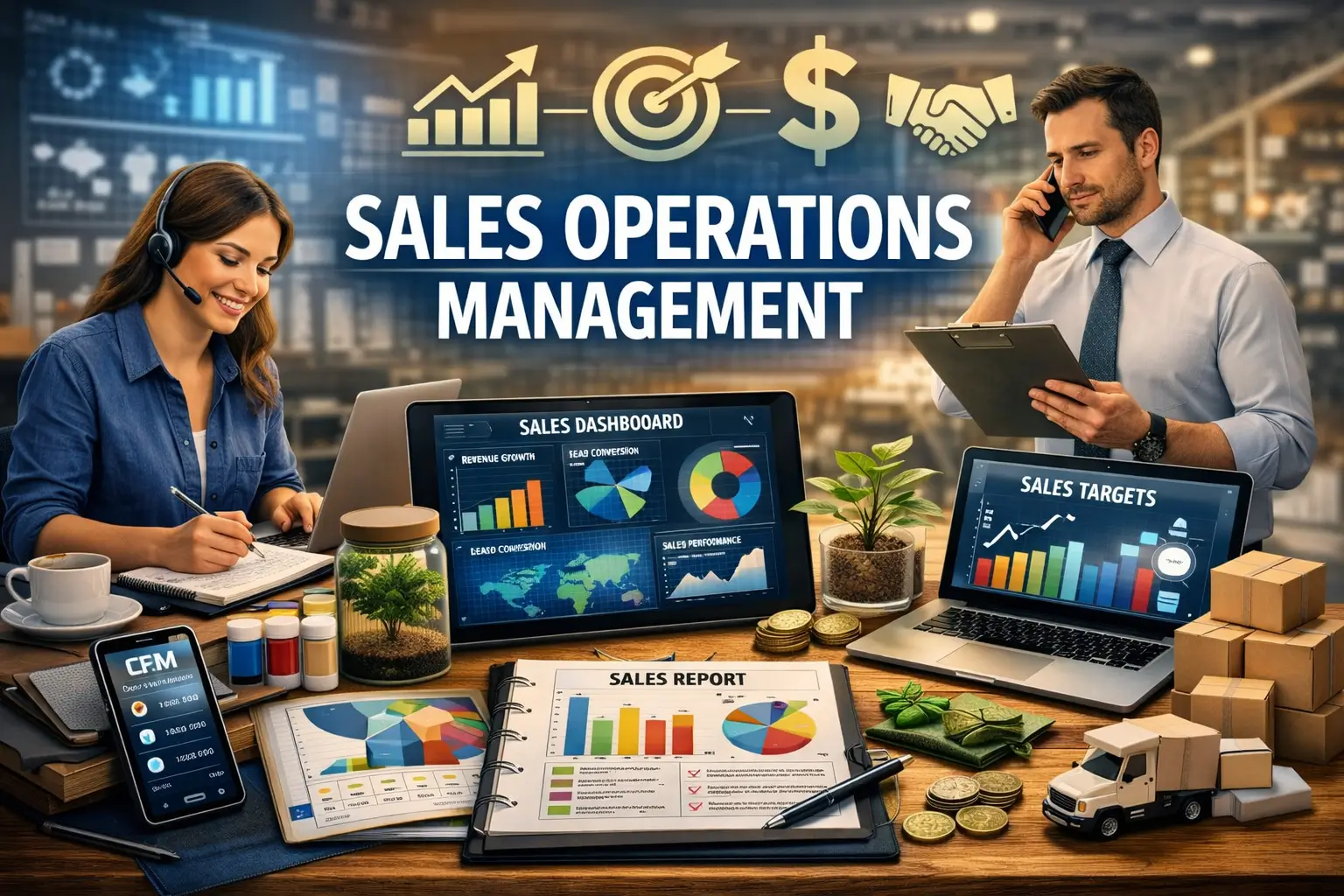
The Sales Operations Management Course is a comprehensive training program designed to equip learners with the knowledge and practical skills required to manage, support, and optimize sales operations within modern organizations. As businesses grow, sales teams need structured processes, accurate reporting, and efficient systems to achieve revenue targets. Therefore, sales operations management plays a critical role in improving productivity, supporting sales teams, and driving sustainable business growth.
Sales operations involve managing the systems, processes, technology, and data that enable sales teams to perform efficiently. Rather than focusing only on selling, sales operations ensure that the sales organization has the right tools, strategies, and insights to maximize results.
Whether you are a student, entrepreneur, business owner, sales executive, or aspiring manager, this course provides practical knowledge to build a successful career in sales operations.
Why Sales Operations Management is Important
Efficient sales operations help organizations improve productivity, make informed decisions, and achieve revenue goals.
Key benefits of sales operations management include:
- Improves sales productivity
- Streamlines sales processes and workflows
- Supports accurate sales forecasting
- Enhances customer relationship management (CRM)
- Increases revenue through better planning
- Improves collaboration between sales and marketing teams
- Enables data-driven decision-making
- Reduces operational inefficiencies
- Supports performance measurement and continuous improvement
- Strengthens overall business growth
For example, a company that uses CRM systems, standardized sales processes, and sales performance dashboards can identify opportunities faster and improve conversion rates while reducing administrative work.
Course Overview
This course provides a structured understanding of sales operations, sales strategy, and revenue management.
Learners will explore:
- Fundamentals of sales operations management
- Sales planning and execution
- Sales process optimization
- Customer Relationship Management (CRM) systems
- Sales pipeline management
- Lead management fundamentals
- Sales forecasting techniques
- Sales performance measurement
- Sales analytics and reporting
- Revenue operations concepts
- Territory and account management
- Sales technology and automation
- Collaboration between sales and marketing
- Sales budgeting and resource planning
- Continuous sales process improvement
What You Will Learn
By the end of this course, learners will be able to:
- Understand the role of sales operations in business success
- Develop structured sales plans and workflows
- Manage CRM systems effectively
- Monitor sales pipelines and opportunities
- Apply sales forecasting techniques
- Analyze sales data to improve performance
- Support sales teams with operational strategies
- Improve collaboration across business departments
- Optimize sales processes using technology and automation
- Contribute to organizational revenue growth
Key Components of Sales Operations Management
1. Sales Planning
Learn how businesses establish sales goals, allocate resources, and develop action plans that support organizational objectives.
2. CRM Management
Understand how Customer Relationship Management systems organize customer information, improve communication, and strengthen sales performance.
3. Sales Forecasting
Learn techniques used to estimate future sales, monitor trends, and support strategic business decisions.
4. Sales Performance Analytics
Explore key sales metrics, dashboards, reporting systems, and performance indicators that help evaluate sales effectiveness.
5. Process Optimization
Discover methods to improve sales workflows, reduce inefficiencies, automate repetitive tasks, and increase productivity.
Skills You Will Gain
After completing this course, learners will develop valuable professional skills, including:
- Sales operations management
- Sales planning and strategy
- CRM management
- Sales forecasting
- Sales analytics and reporting
- Revenue operations fundamentals
- Business communication
- Data analysis and interpretation
- Process improvement
- Decision-making
- Team collaboration
- Customer relationship management
- Performance monitoring
- Strategic thinking
- Problem-solving
Benefits of This Course
Completing this course offers numerous professional advantages, including:
- Strong understanding of sales operations and management
- Better career opportunities in sales, business development, and operations
- Improved CRM and customer management knowledge
- Practical experience with sales planning and forecasting
- Better analytical and reporting skills
- Enhanced decision-making abilities
- Improved understanding of revenue generation strategies
- Competitive advantage in sales and business careers
- Strong foundation for leadership roles in sales operations
Who Should Enroll?
This course is suitable for:
- Students interested in sales and business management
- Sales executives and coordinators
- Business development professionals
- Entrepreneurs and startup founders
- Business owners
- Marketing professionals
- CRM professionals
- Operations executives
- Sales managers and team leaders
- Anyone interested in sales operations and revenue management
No previous experience is required, making this course suitable for beginners and working professionals alike.
Career Opportunities
After completing this course, learners may pursue roles such as:
- Sales Operations Executive
- Sales Coordinator
- Sales Analyst
- CRM Executive
- Business Development Executive
- Revenue Operations Associate
- Sales Planning Executive
- Sales Performance Analyst
- Territory Sales Coordinator
- Sales Support Specialist
- Sales Operations Manager (with experience)
Certification
Upon successful completion of the Sales Operations Management Course, learners receive a professional certificate recognizing their knowledge of sales operations, CRM systems, sales planning, forecasting, analytics, and process optimization. This certification enhances career opportunities across sales, business development, customer relationship management, and revenue operations.
Conclusion
The Sales Operations Management Course provides learners with practical knowledge and industry-relevant skills to manage sales processes, improve operational efficiency, and support revenue growth. By mastering CRM systems, sales forecasting, performance analytics, and process optimization, learners will be well prepared for careers in sales operations, business development, and commercial management.
Whether your goal is to improve your sales management expertise, support high-performing sales teams, or build a successful career in business operations, this course offers a strong foundation for long-term professional growth.
FAQ
1. What is the Sales Operations Management Course?
It is a course that teaches how to manage sales processes, improve operational efficiency, and support business revenue through effective sales planning and analytics.
2. Who should enroll in this course?
Students, sales professionals, business owners, entrepreneurs, CRM executives, and anyone interested in sales operations or business management.
3. Do I need prior experience?
No. This course is beginner-friendly and suitable for both new learners and working professionals.
4. What topics are covered in this course?
The course covers sales planning, CRM systems, sales forecasting, pipeline management, sales analytics, process optimization, reporting, and revenue operations.
5. Will I learn about CRM systems?
Yes. The course introduces Customer Relationship Management (CRM) concepts and explains how CRM tools support sales teams and customer management.
6. Does this course include sales forecasting?
Yes. You will learn the fundamentals of sales forecasting, planning, and performance measurement.
7. Will I receive a certificate after completing the course?
Yes. A professional course completion certificate is awarded upon successful completion.
8. Is Sales Operations Management an in-demand skill?
Yes. Sales operations professionals are in demand across industries such as technology, retail, manufacturing, healthcare, finance, telecommunications, and e-commerce.
9. How does sales operations improve business performance?
Sales operations improve efficiency through better planning, CRM management, forecasting, analytics, process optimization, and data-driven decision-making.
10. What career opportunities are available after this course?
You can pursue roles such as Sales Operations Executive, Sales Coordinator, Sales Analyst, CRM Executive, Business Development Executive, Revenue Operations Associate, Sales Planning Executive, Sales Support Specialist, or Sales Operations Manager with experience.




Reviews
There are no reviews yet.