
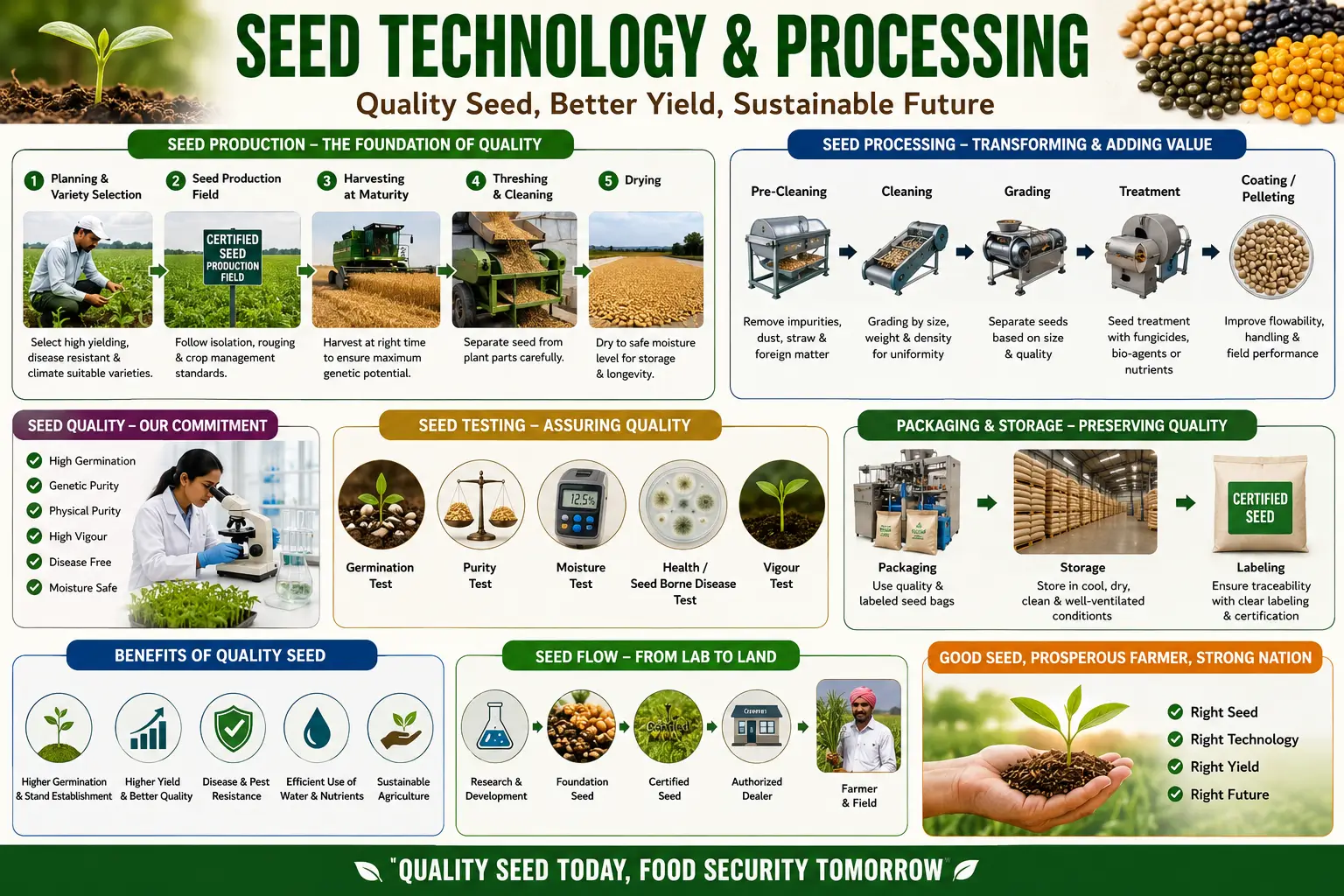
Seed Technology & Processing: Enhancing Crop Quality and Agricultural Productivity
The Seed Technology & Processing course provides learners with in‑depth knowledge of modern seed science, production, and post‑harvest processing techniques. Seeds are the foundation of agriculture, and their quality directly impacts crop yield, food security, and sustainability. This course equips learners with practical skills in seed production, testing, certification, and processing methods to ensure high‑quality planting material.
What You’ll Learn
- Seed Biology: Understand seed structure, physiology, and germination processes.
- Seed Production: Learn methods for producing genetically pure and high‑yielding seeds.
- Seed Processing: Explore cleaning, grading, drying, and packaging techniques.
- Seed Testing: Gain expertise in germination tests, purity analysis, and vigor assessment.
- Seed Certification: Understand national and international certification systems.
- Storage & Preservation: Learn how to maintain seed viability and longevity.
- Modern Technologies: Discover mechanized seed processing plants and advanced equipment.
- Business Opportunities: Explore entrepreneurship in seed production, processing, and distribution.
Why This Course Matters
High‑quality seeds are critical for achieving food security and sustainable agriculture. By mastering seed technology and processing, learners will:
- Improve crop yield and resilience.
- Ensure genetic purity and seed quality.
- Reduce post‑harvest losses through proper storage and processing.
- Contribute to agricultural innovation and rural development.
Career Opportunities
Graduates of this course can pursue roles such as:
- Seed Technologist
- Seed Processing Plant Manager
- Quality Control Analyst
- Agricultural Extension Officer
- Agribusiness Entrepreneur
FAQ SECTION
1. What is seed technology?
Seed technology involves the production, processing, testing, storage, and quality management of seeds used in agriculture.
2. Who should enroll in this course?
Agriculture students, seed industry professionals, farmers, agribusiness entrepreneurs, and agricultural extension workers can benefit from this course.
3. Do I need prior agricultural experience?
No, the course is suitable for beginners as well as experienced professionals seeking specialized seed industry knowledge.
4. What topics are covered in the course?
Topics include seed production, processing, testing, certification, storage, quality control, and seed industry regulations.
5. Will I learn seed testing techniques?
Yes, the course includes training in germination testing, purity analysis, moisture testing, and quality evaluation.
6. Does the course cover seed certification?
Yes, learners are introduced to certification systems, standards, and compliance requirements.
7. Is certification provided?
Yes, participants receive a certificate upon successful completion of the course.
8. What career opportunities are available?
Graduates may work in seed companies, agricultural laboratories, quality control departments, agribusiness firms, and agricultural research organizations.
9. Does the course discuss modern seed technologies?
Yes, emerging technologies and innovations in seed science are covered throughout the curriculum.
10. Why is seed quality important?
High-quality seeds improve crop establishment, productivity, disease resistance, and overall agricultural performance.



Reviews
There are no reviews yet.