
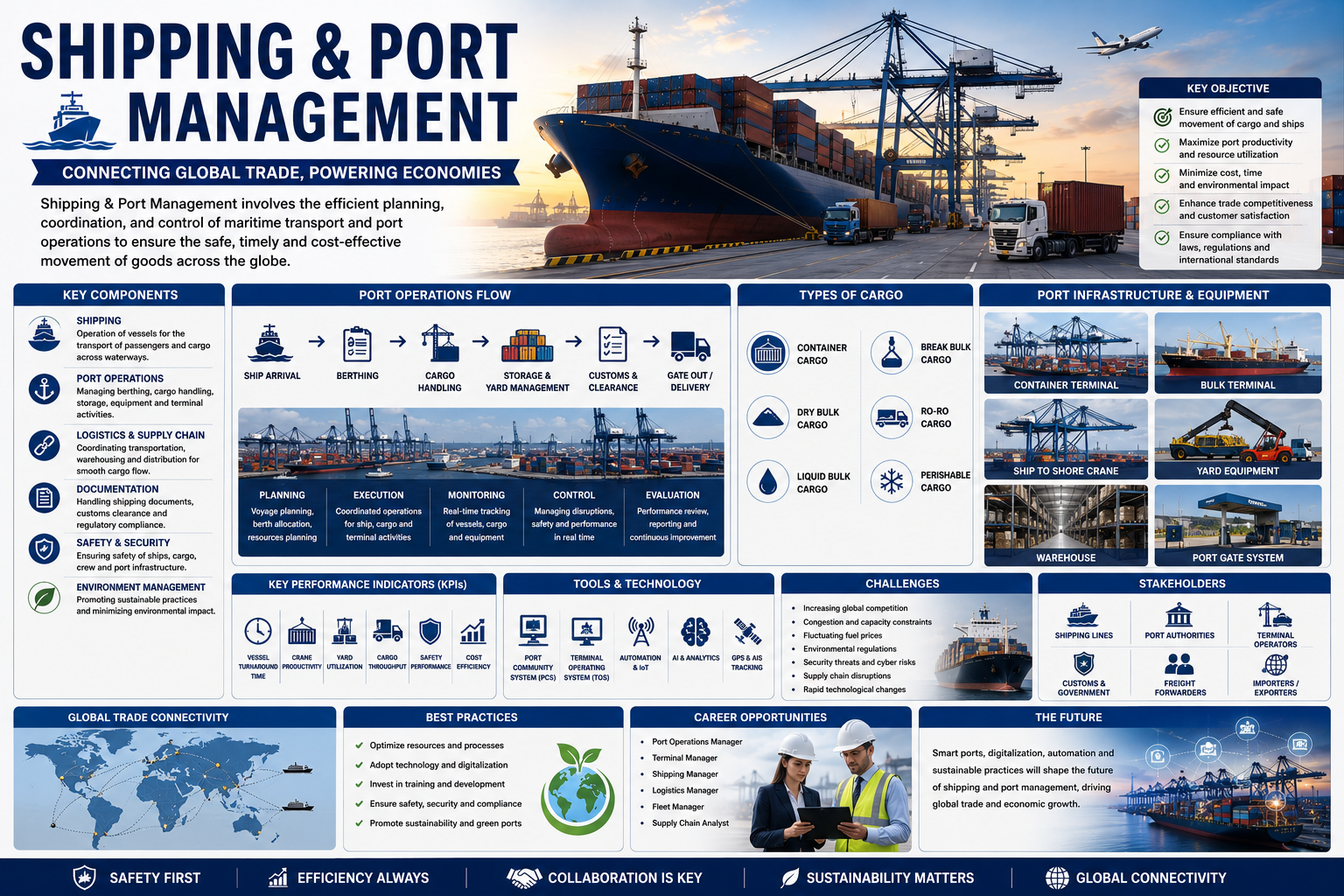
Shipping & Port Management is a specialized course designed to provide learners with the knowledge and skills required to manage maritime logistics and port operations effectively. This program introduces the fundamentals of shipping practices, port administration, cargo handling, and international trade regulations.
Students will gain insights into shipping documentation, freight forwarding, customs clearance, and the role of ports in global supply chains. The course also covers safety standards, environmental sustainability, and the use of modern technologies such as automation and digital tracking in port operations.
By the end of this course, participants will be able to:
- Understand the principles of shipping and port management.
- Manage cargo handling, warehousing, and logistics operations.
- Apply international trade regulations and customs procedures.
- Explore shipping documentation including bills of lading and charter parties.
- Evaluate the role of ports in global trade and supply chains.
- Implement safety, security, and environmental practices in port operations.
- Use digital tools and automation for efficient shipping management.
This course is ideal for students, logistics professionals, and entrepreneurs seeking careers in maritime trade, shipping companies, and port administration. With case studies, practical assignments, and industry-focused training, you’ll gain the confidence to manage shipping operations and contribute to global commerce.
FAQ SECTION
What is shipping and port management?
Shipping and port management involves overseeing maritime transportation, cargo movement, port operations, and logistics activities related to global trade.
Who should enroll in the Shipping and Port Management Course?
Logistics professionals, supply chain specialists, business students, shipping industry aspirants, and international trade professionals can benefit from this course.
Do I need prior maritime experience?
No. The course is designed for beginners and professionals interested in maritime logistics and port operations.
What skills will I learn?
You will learn shipping operations, port management, cargo handling, logistics coordination, maritime documentation, and supply chain concepts.
Does the course cover international trade?
Yes. The curriculum includes international shipping, maritime commerce, and global trade concepts.
Will I learn about port operations?
Yes. Port administration, terminal management, and vessel handling processes are important parts of the course.
Will I receive a certificate?
Yes. Participants receive a course completion certificate after successfully completing the training.
What career opportunities are available after this course?
Career opportunities include Port Operations Executive, Shipping Coordinator, Maritime Logistics Executive, Freight Associate, and Supply Chain Coordinator.
Is the shipping industry a growing sector?
Yes. Global trade expansion continues to create demand for skilled professionals in shipping, logistics, and port management.
Can this course help me start a career in maritime logistics?
Yes. The course provides a strong foundation for entry-level roles and further specialization in maritime logistics and shipping management.



Reviews
There are no reviews yet.