
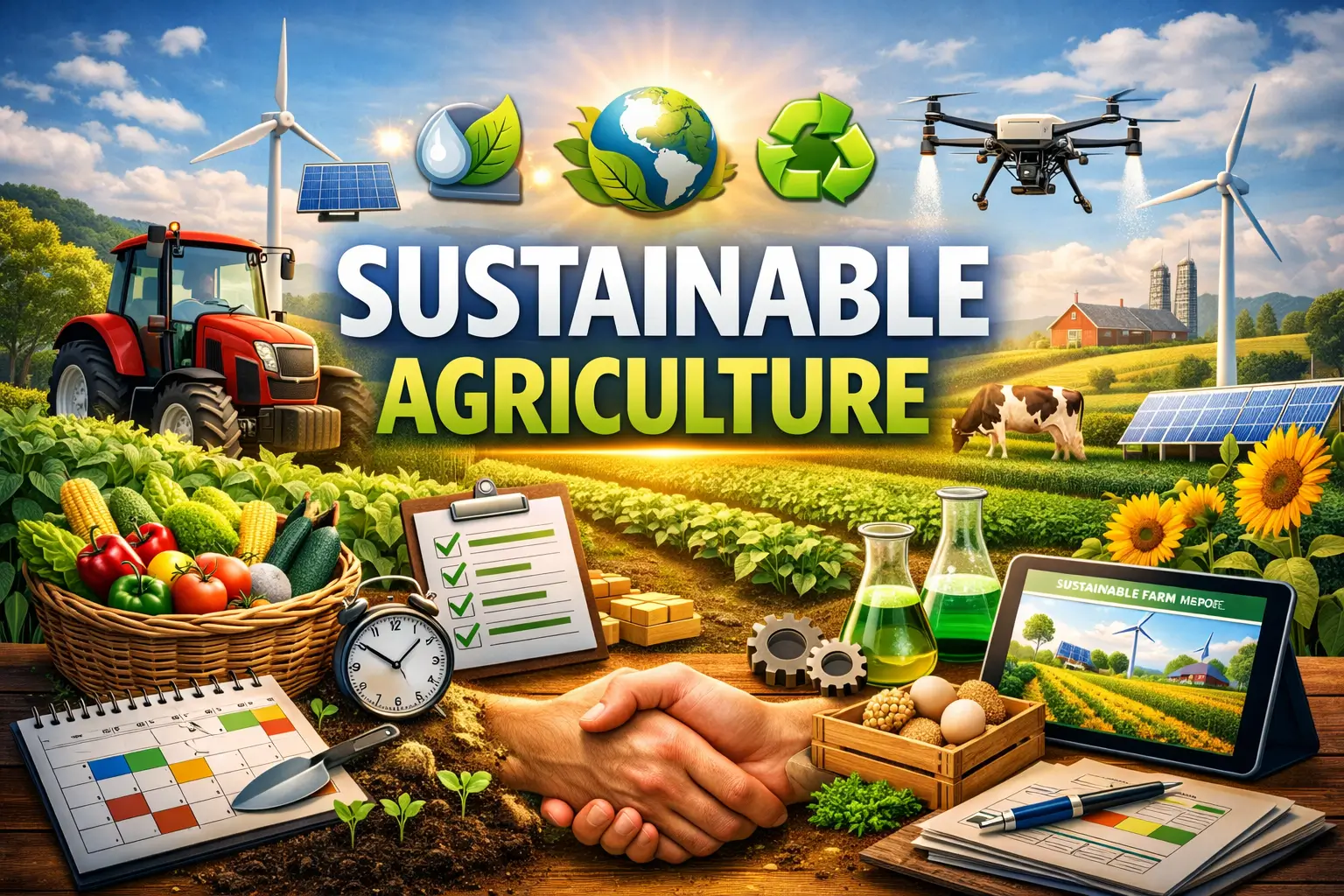
Introduction to Sustainable Agriculture
The Sustainable Agriculture Course is designed to help learners understand modern farming practices that balance agricultural productivity with environmental responsibility. As the demand for sustainable food production continues to grow, farmers and agricultural professionals must adopt methods that protect natural resources while maintaining profitable farming operations.
This course introduces the principles of sustainable agriculture and explores practical strategies for improving crop production, conserving resources, and promoting long-term agricultural success.
Sustainable Agriculture Course Overview
Sustainable agriculture focuses on meeting current food production needs without compromising the ability of future generations to meet their own needs. It combines environmental stewardship, economic viability, and social responsibility to create resilient agricultural systems.
Throughout this course, learners will explore sustainable farming methods, soil conservation practices, water management techniques, biodiversity protection, and efficient resource utilization. The course provides practical knowledge that can be applied across various agricultural settings.
Importance of Sustainable Agriculture
Modern agriculture faces challenges such as soil degradation, water scarcity, climate change, and increasing food demand. Sustainable agriculture helps address these challenges by encouraging farming practices that preserve ecosystems and improve resource efficiency.
By adopting sustainable methods, farmers can enhance productivity while reducing environmental impact and supporting long-term food security.
Sustainable Farming Practices
This course covers key sustainable farming approaches, including:
- Soil conservation techniques
- Organic farming principles
- Crop rotation and diversification
- Integrated pest management
- Efficient irrigation systems
- Natural resource conservation
- Climate-smart agriculture
- Sustainable crop production methods
- Biodiversity enhancement
- Farm waste management
Skills You Will Gain from the Sustainable Agriculture Course
After completing this course, learners will be able to:
- Apply sustainable farming techniques
- Improve soil fertility naturally
- Manage water resources efficiently
- Reduce environmental impact in agriculture
- Support biodiversity conservation
- Implement sustainable crop management strategies
- Improve farm productivity responsibly
- Understand agricultural sustainability principles
- Evaluate sustainable farming systems
- Promote environmentally friendly agriculture
Benefits of the Sustainable Agriculture Course
The Sustainable Agriculture Course helps learners develop practical knowledge that supports environmentally responsible farming. Participants gain valuable insights into balancing productivity with conservation while improving the long-term sustainability of agricultural operations.
Additionally, the course helps learners understand emerging agricultural trends and sustainable technologies that are shaping the future of farming worldwide.
Who Should Enroll in the Sustainable Agriculture Course?
This course is ideal for:
- Farmers
- Agriculture students
- Farm managers
- Agribusiness professionals
- Agricultural consultants
- Rural development professionals
- Organic farming enthusiasts
- Agricultural entrepreneurs
- Extension workers
- Anyone interested in sustainable farming
No prior agricultural experience is required.
Career Opportunities in Sustainable Agriculture
Completing the Sustainable Agriculture Course can support careers such as:
- Sustainable Agriculture Specialist
- Farm Manager
- Organic Farming Consultant
- Agricultural Extension Officer
- Agribusiness Advisor
- Rural Development Coordinator
- Agricultural Project Manager
- Sustainability Consultant
The course also supports individuals interested in starting sustainable farming businesses.
Sustainable Agriculture Course Certification
Upon successful completion, learners receive a certification recognizing their knowledge of sustainable agriculture principles, resource conservation, and environmentally responsible farming practices.
This certification demonstrates commitment to modern agricultural development and sustainable food production.
Conclusion
The Sustainable Agriculture Course provides a practical foundation for understanding sustainable farming systems and responsible agricultural management. By learning effective conservation practices, resource management techniques, and sustainable production methods, participants can contribute to a healthier agricultural future while improving farming outcomes.
FAQ SECTION
1. What is the Sustainable Agriculture Course?
The Sustainable Agriculture Course teaches environmentally responsible farming practices that improve productivity while protecting natural resources.
2. Who should enroll in this course?
Farmers, students, agribusiness professionals, and anyone interested in sustainable farming can enroll.
3. Do I need farming experience?
No, this course is beginner-friendly and suitable for learners from all backgrounds.
4. What skills will I learn?
You will learn sustainable farming techniques, soil conservation, water management, biodiversity protection, and crop management.
5. Is sustainable agriculture important today?
Yes. Sustainable agriculture helps address environmental challenges while supporting long-term food production and farm profitability.
6. Will I receive a certificate?
Yes, participants receive a certificate after successfully completing the course.
7. What career opportunities are available?
Career paths include Sustainable Agriculture Specialist, Farm Manager, Agricultural Consultant, and Rural Development Officer.
8. Does the course cover organic farming?
Yes. The course introduces organic farming principles as part of sustainable agricultural practices.
9. How long does the course take?
The duration depends on the course format and learning schedule.
10. Why should I choose this course?
This course provides practical knowledge and modern farming strategies that support environmental sustainability and agricultural success.




Reviews
There are no reviews yet.