
Introduction
The Technical Operations Management Course is a comprehensive training program designed to help learners develop the knowledge and practical skills required to manage technical operations efficiently across engineering, manufacturing, industrial, and technology-focused organizations. In today’s competitive business environment, organizations depend on well-managed technical operations to maintain productivity, deliver high-quality products and services, optimize resources, and achieve long-term operational success. Therefore, technical operations management has become an essential function in modern industries.
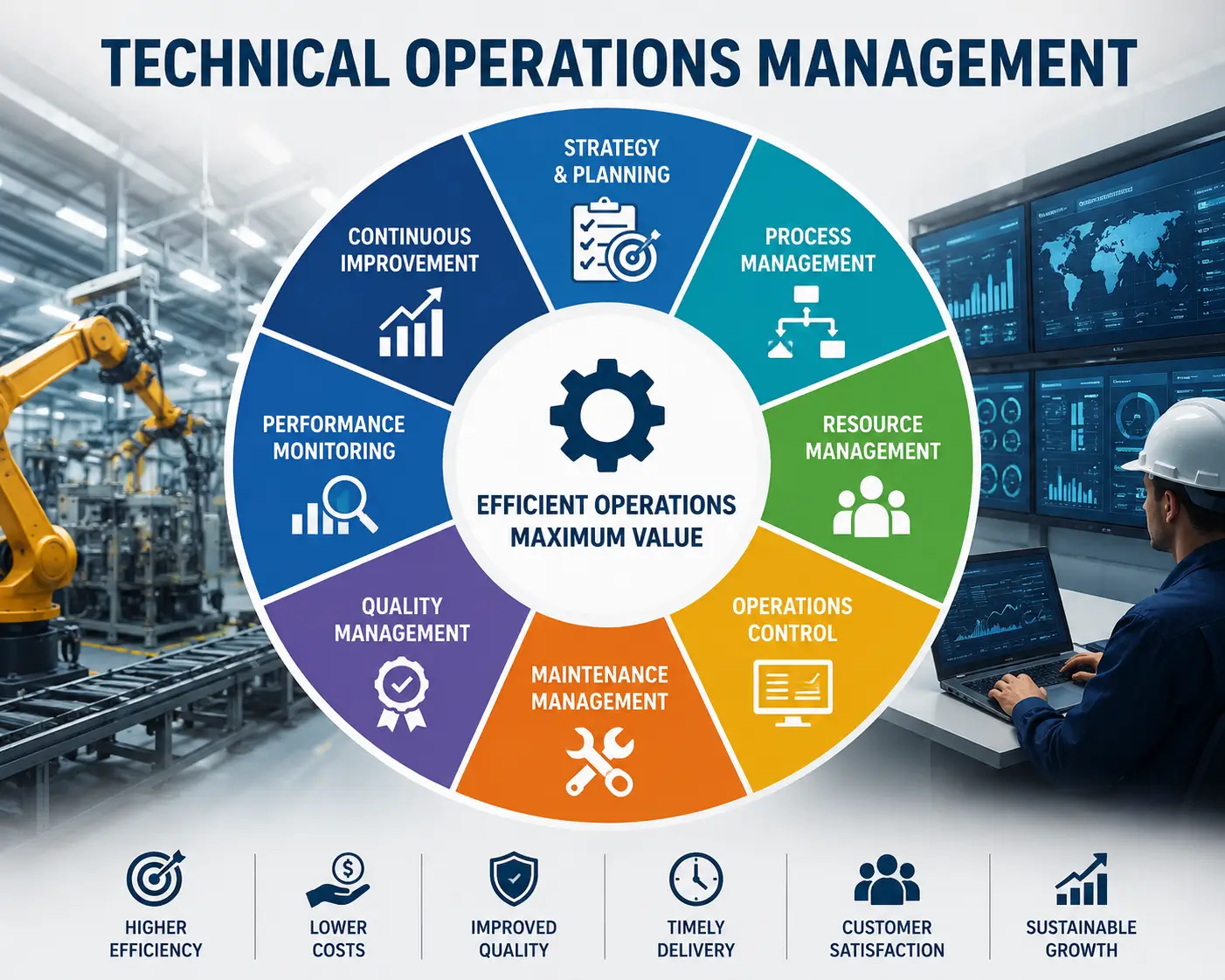
Technical operations management involves planning, organizing, coordinating, monitoring, and continuously improving technical activities that support production, engineering projects, maintenance, quality assurance, and business operations. Strong operational management ensures that people, equipment, materials, and processes work together efficiently while meeting safety, quality, and regulatory requirements.
This course provides learners with a practical understanding of technical operations management by combining operations planning, process improvement, quality management, maintenance coordination, leadership, performance monitoring, and digital operations. Whether you are an engineer, operations supervisor, project coordinator, maintenance professional, manufacturing specialist, engineering student, or someone interested in technical leadership, this course provides valuable knowledge that supports career growth and operational excellence.
Course Overview
Technical operations management focuses on ensuring that engineering and operational activities are performed efficiently, safely, and consistently. Instead of addressing operational issues only after they occur, organizations use structured management systems to improve planning, coordination, communication, and continuous improvement.
First, learners explore the importance of technical operations management in engineering and industrial environments. Next, they understand how operational planning, workflow coordination, and effective leadership contribute to organizational performance.
Additionally, the course explains production planning, maintenance management, quality assurance, resource allocation, inventory control, project coordination, and operational performance measurement. Learners also gain practical knowledge of Lean Manufacturing, process optimization, risk management, workplace safety, compliance, and digital operations.
Furthermore, the curriculum combines theoretical concepts with practical industry applications, helping learners understand how technical operations support productivity, quality, and sustainable business growth.
What You Will Learn
The Technical Operations Management Course covers a broad range of topics related to managing technical operations and improving organizational performance.
First, learners study the fundamentals of technical operations management and understand how operational planning supports productivity, efficiency, customer satisfaction, and business success. They also explore the responsibilities of technical operations managers in different industries.
Next, participants learn about operations planning, workflow coordination, production scheduling, capacity planning, and resource allocation. These techniques help organizations balance workloads, improve efficiency, and meet project deadlines.
Additionally, the course introduces process optimization and continuous improvement strategies. Learners discover how Lean Manufacturing principles, workflow analysis, waste reduction, and performance monitoring improve operational efficiency.
Furthermore, participants study quality management systems, quality assurance, quality control, inspections, corrective actions, preventive actions, and compliance practices that help maintain consistent operational standards.
The course also explains maintenance management, including preventive maintenance, predictive maintenance, maintenance scheduling, asset management, equipment reliability, and maintenance documentation. These practices improve equipment performance while reducing operational downtime.
Moreover, learners explore project coordination and technical project management. They understand how planning, scheduling, budgeting, communication, documentation, and progress monitoring contribute to successful project execution.
In addition, the curriculum introduces inventory management, procurement coordination, supply chain collaboration, warehouse operations, and material planning that support uninterrupted technical operations.
Participants also gain knowledge of workplace safety, hazard identification, risk assessment, emergency response planning, environmental responsibility, and regulatory compliance. These topics help organizations maintain safe and sustainable operations.
Additionally, the course explains technical documentation, engineering reports, standard operating procedures (SOPs), work instructions, document control, and communication practices that improve collaboration across departments.
The curriculum also covers leadership, team management, employee engagement, conflict resolution, decision-making, coaching, and performance evaluation. Learners understand how effective leadership contributes to successful technical operations.
Furthermore, participants explore digital technologies used in modern operations management, including Industrial Internet of Things (IIoT), automation, enterprise resource planning (ERP), computerized maintenance management systems (CMMS), manufacturing execution systems (MES), and data analytics.
Finally, learners study Key Performance Indicators (KPIs), operational dashboards, benchmarking, continuous improvement planning, innovation strategies, and business performance evaluation that support long-term operational excellence.
Skills You Will Gain
Upon successful completion of the course, learners will develop valuable professional skills, including:
- Technical operations management
- Operations planning
- Workflow coordination
- Production scheduling
- Resource allocation
- Process optimization
- Quality management
- Maintenance management
- Project coordination
- Inventory management
- Risk management
- Technical leadership
- Performance measurement
- Continuous improvement
- Operational decision-making
These skills are highly valued across manufacturing companies, engineering firms, energy organizations, construction companies, technology businesses, logistics providers, utilities, automotive industries, aerospace companies, and industrial operations.
Benefits of the Course
The Technical Operations Management Course provides learners with practical knowledge and management skills that improve operational performance.
First, the course helps learners understand how technical operations support productivity, quality, customer satisfaction, and business growth.
Additionally, participants strengthen their ability to coordinate resources, improve workflows, manage technical teams, and optimize daily operations.
Furthermore, learners develop practical skills in maintenance management, project coordination, quality assurance, inventory planning, risk management, and performance measurement.
The course also improves communication, leadership, analytical thinking, problem-solving, teamwork, and decision-making skills that support technical management careers.
As organizations continue investing in operational excellence and digital transformation, professionals with technical operations management expertise remain in strong demand.
Finally, learners gain the confidence to manage technical operations efficiently while supporting continuous organizational improvement.
Who Should Enroll?
This course is ideal for:
- Operations managers
- Engineering managers
- Production supervisors
- Manufacturing professionals
- Maintenance managers
- Project coordinators
- Industrial engineers
- Mechanical engineers
- Electrical engineers
- Plant supervisors
- Technical team leaders
- Operations coordinators
- Engineering students
- Technical support professionals
- Anyone interested in technical operations management
No prior operations management experience is required. Therefore, beginners and experienced professionals can both benefit from this course.
Career Opportunities
After completing the course, learners may pursue opportunities such as:
- Technical Operations Manager
- Operations Supervisor
- Production Manager
- Engineering Operations Coordinator
- Plant Operations Manager
- Maintenance Manager
- Project Operations Coordinator
- Manufacturing Operations Specialist
- Technical Services Manager
- Operations Analyst
- Industrial Operations Coordinator
- Engineering Project Manager
- Process Improvement Manager
- Technical Support Manager
- Operations Consultant
Additionally, learners can apply these skills across engineering, manufacturing, construction, energy, utilities, transportation, logistics, aerospace, technology, and industrial organizations.
Certification
Upon successful completion of the Technical Operations Management Course, participants receive a certification recognizing their understanding of operations planning, maintenance management, process optimization, quality management, technical leadership, project coordination, performance measurement, and continuous improvement. This certification strengthens professional credibility and supports career advancement in engineering, operations management, manufacturing, and industrial leadership.
Why Choose This Course?
The Technical Operations Management Course combines operational management principles with practical technical applications to provide a comprehensive learning experience.
First, learners develop a strong understanding of technical operations, workflow coordination, resource planning, and operational leadership.
Additionally, the curriculum focuses on quality management, maintenance coordination, project execution, inventory management, performance monitoring, digital operations, risk management, and continuous improvement.
Furthermore, participants gain industry-relevant knowledge that supports career development in engineering, manufacturing, operations management, industrial leadership, and technical project coordination.
Whether your goal is to become an operations manager, engineering supervisor, plant manager, production manager, maintenance manager, or technical consultant, this course provides the knowledge, practical skills, and confidence needed to succeed.
Enroll today and build a strong foundation in technical operations management, operational excellence, engineering leadership, and continuous improvement.
FAQ Section
1. What is the Technical Operations Management Course?
The course teaches how to plan, coordinate, manage, and improve technical operations across engineering, manufacturing, industrial, and technology-driven organizations.
2. Is this course suitable for beginners?
Yes. The course is designed for beginners as well as professionals who want to strengthen their operations management skills.
3. What topics are covered?
Topics include operations planning, workflow management, maintenance management, project coordination, quality assurance, process optimization, inventory management, risk management, leadership, and performance measurement.
4. Will I receive a certificate?
Yes. Participants receive a certificate upon successfully completing the course.
5. Do I need prior operations management experience?
No. The course introduces technical operations management concepts in a simple and beginner-friendly format.
6. Who should enroll in this course?
Engineers, supervisors, operations managers, maintenance professionals, project coordinators, manufacturing staff, engineering students, and technical team leaders can benefit from this course.
7. Is the course fully online?
Yes. The course offers flexible online learning, allowing participants to learn at their own pace.
8. What skills will I gain?
You will gain skills in operations planning, workflow coordination, maintenance management, project management, quality assurance, inventory management, leadership, risk management, and continuous improvement.
9. Can this course help my career?
Yes. Technical operations management skills are highly valued across engineering, manufacturing, construction, energy, logistics, utilities, technology, aerospace, and industrial sectors.
10. Why is technical operations management important?
Technical operations management helps organizations improve efficiency, reduce costs, optimize resources, enhance quality, increase equipment reliability, strengthen teamwork, and achieve long-term operational success.




Reviews
There are no reviews yet.