
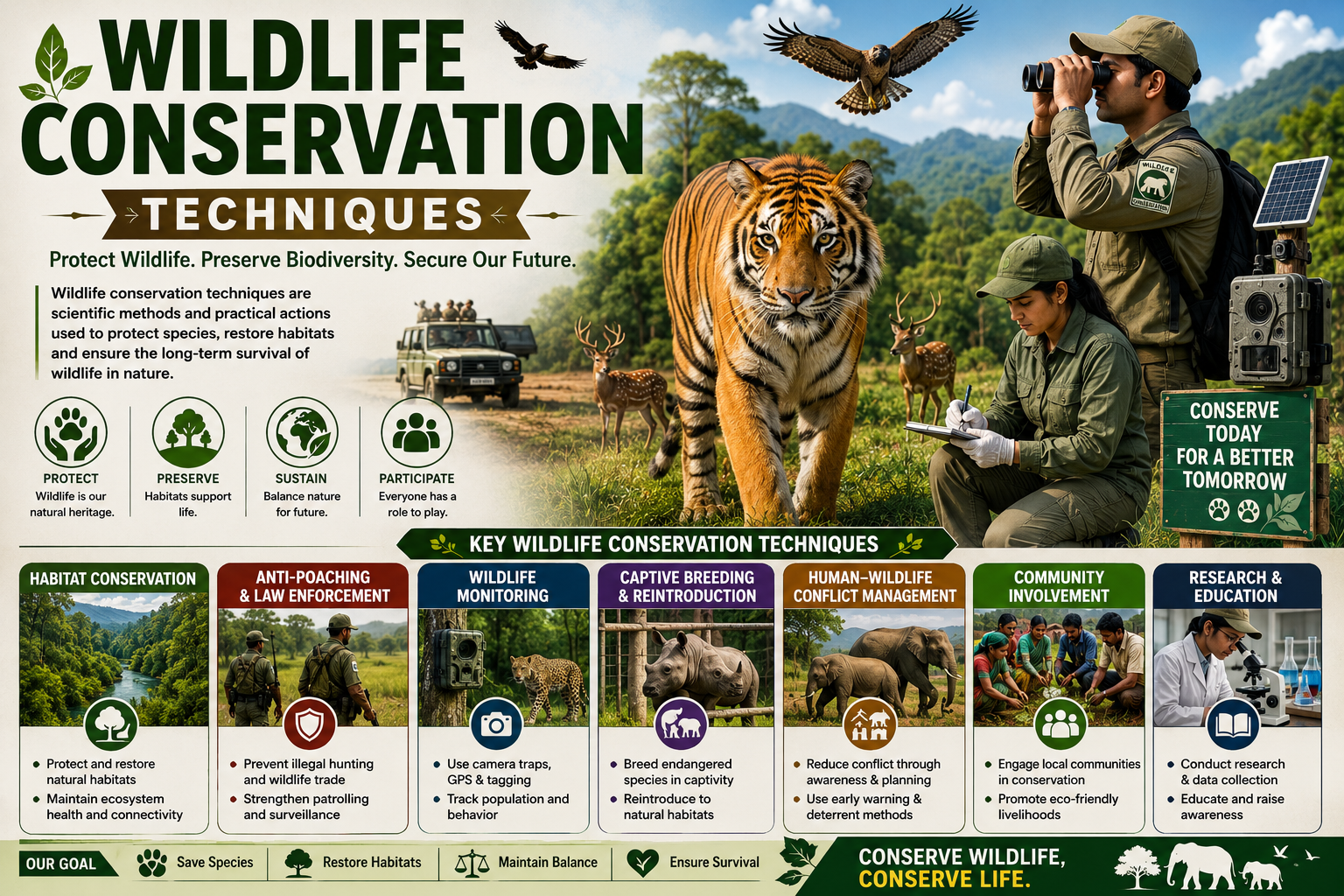
Wildlife Conservation Techniques is a specialized course designed to equip learners with the knowledge and skills required to protect biodiversity and preserve ecosystems. This program introduces the principles of conservation biology, ecological monitoring, habitat restoration, and species management.
Students will gain practical insights into fieldwork methods such as population surveys, radio tracking, camera trapping, and GIS mapping. The course also explores community-based conservation, policy frameworks, and the role of technology in safeguarding endangered species. Real-world case studies highlight successful conservation projects across forests, wetlands, and marine ecosystems.
By the end of this course, participants will be able to:
- Understand the fundamentals of wildlife conservation and ecological balance.
- Conduct population surveys and habitat assessments using modern tools.
- Apply techniques like radio tracking, camera trapping, and GIS mapping.
- Develop strategies for habitat restoration and species protection.
- Evaluate conservation policies and community-based initiatives.
- Explore global challenges such as climate change, poaching, and deforestation.
This course is ideal for students, environmentalists, researchers, and professionals seeking to contribute to sustainable development and biodiversity preservation. With SEO-optimized keywords such as wildlife conservation training, biodiversity protection course, habitat restoration techniques, and species management skills, the content is crafted to rank highly on search engines while remaining accessible and engaging.
FAQ SECTION
What is wildlife conservation?
Wildlife conservation involves protecting animal species, preserving habitats, and maintaining biodiversity to ensure ecological balance and environmental sustainability.
Who should enroll in the Wildlife Conservation Techniques Course?
Students, environmental professionals, conservation enthusiasts, researchers, educators, NGO workers, and sustainability practitioners can benefit from this course.
Do I need prior conservation experience?
No. The course is designed for beginners and individuals interested in learning wildlife conservation fundamentals.
What skills will I learn?
You will learn biodiversity conservation, habitat management, wildlife monitoring, ecosystem protection, conservation planning, and sustainability principles.
Does the course cover endangered species conservation?
Yes. The curriculum includes species protection strategies, threat assessment methods, and conservation planning techniques.
Will I learn about habitat restoration?
Yes. Habitat conservation and ecosystem restoration methods are important components of the course.
Will I receive a certificate?
Yes. Participants receive a course completion certificate after successfully completing the training.
What career opportunities are available after this course?
Career opportunities include Wildlife Conservation Assistant, Environmental Project Coordinator, Biodiversity Associate, Conservation Field Assistant, and Wildlife Research Assistant.
Is wildlife conservation important for environmental sustainability?
Yes. Wildlife conservation supports biodiversity, ecosystem health, climate resilience, and sustainable environmental management.
Can this course help me pursue advanced environmental studies?
Yes. The course provides a strong foundation for further studies in wildlife management, conservation biology, ecology, and environmental science.





Reviews
There are no reviews yet.