
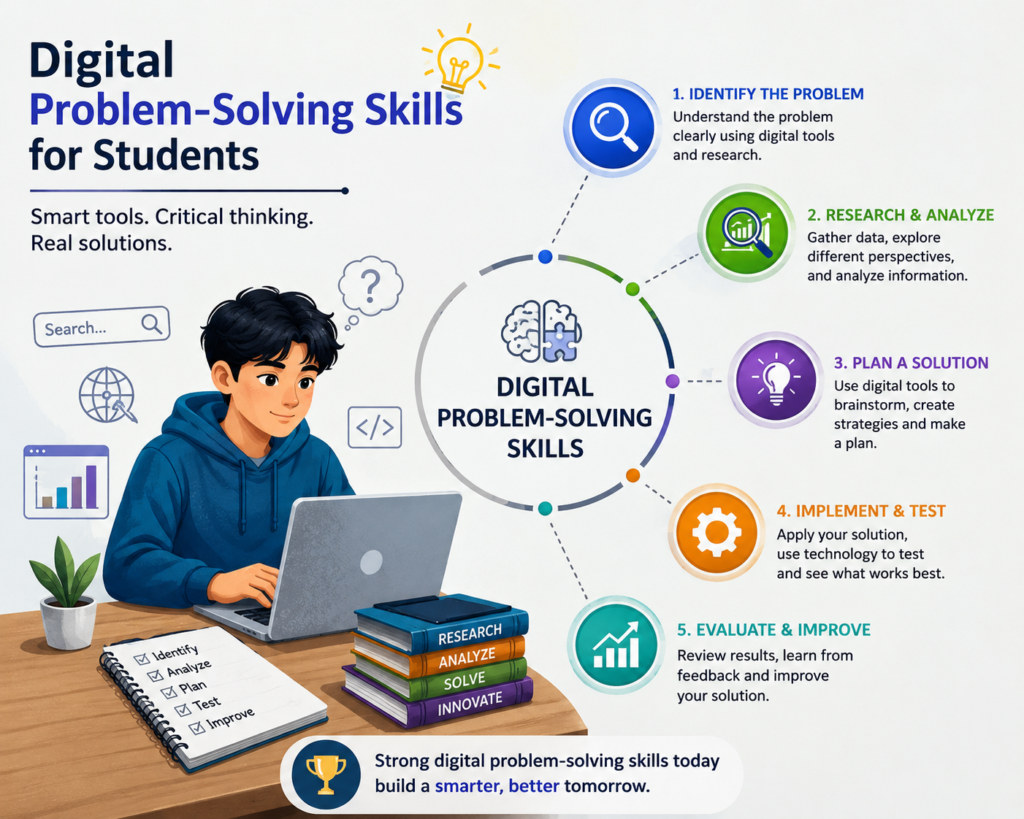
Introduction
In today’s fast‑paced digital world, students face challenges that go beyond textbooks. From troubleshooting software to navigating online platforms, digital problem‑solving skills are essential for academic success and career readiness.
This article explores what digital problem‑solving skills are, why they matter, and how students can develop them to thrive in 2026 and beyond.
What Are Digital Problem‑Solving Skills?
Digital problem‑solving skills refer to the ability to identify, analyze, and resolve issues using digital tools and technologies. They combine critical thinking with technical know‑how.
Key Components:
- Technical Literacy – understanding how digital tools work
- Critical Thinking – analyzing problems logically
- Creativity – finding innovative solutions
- Adaptability – adjusting to new technologies
- Collaboration – solving problems in teams using digital platforms
Why Digital Problem‑Solving Skills Matter for Students
1. Academic Success
Students use digital tools for research, assignments, and presentations. Problem‑solving ensures smooth learning.
2. Career Readiness
Employers value candidates who can troubleshoot and adapt to digital challenges.
3. Innovation & Creativity
Digital problem‑solving encourages students to think outside the box.
4. Global Collaboration
Students can work with peers worldwide using digital platforms.
5. Lifelong Learning
Technology evolves rapidly; problem‑solving skills help students stay relevant.
Examples of Digital Problem‑Solving in Student Life
- Fixing connectivity issues during online exams
- Using cloud storage to recover lost files
- Troubleshooting software errors in projects
- Managing group assignments on collaboration tools like Trello or Notion
- Protecting devices from malware with cybersecurity practices
Future of Digital Problem‑Solving in Education
By 2026, digital problem‑solving will be part of every curriculum. Students will learn:
- AI‑powered troubleshooting
- Virtual reality problem‑solving simulations
- Cybersecurity awareness
- Data‑driven decision making
How Students Can Improve Digital Problem‑Solving Skills
1. Practice Critical Thinking
Break problems into smaller parts and analyze logically.
2.Learn Digital Tools
Master platforms like Google Workspace, Canva, and Trello.
3. Collaborate Online
Work with peers using digital project management tools.
4. Stay Updated
Follow tech blogs and online courses to learn new skills.
5. Build Resilience
View challenges as opportunities to learn and grow.