
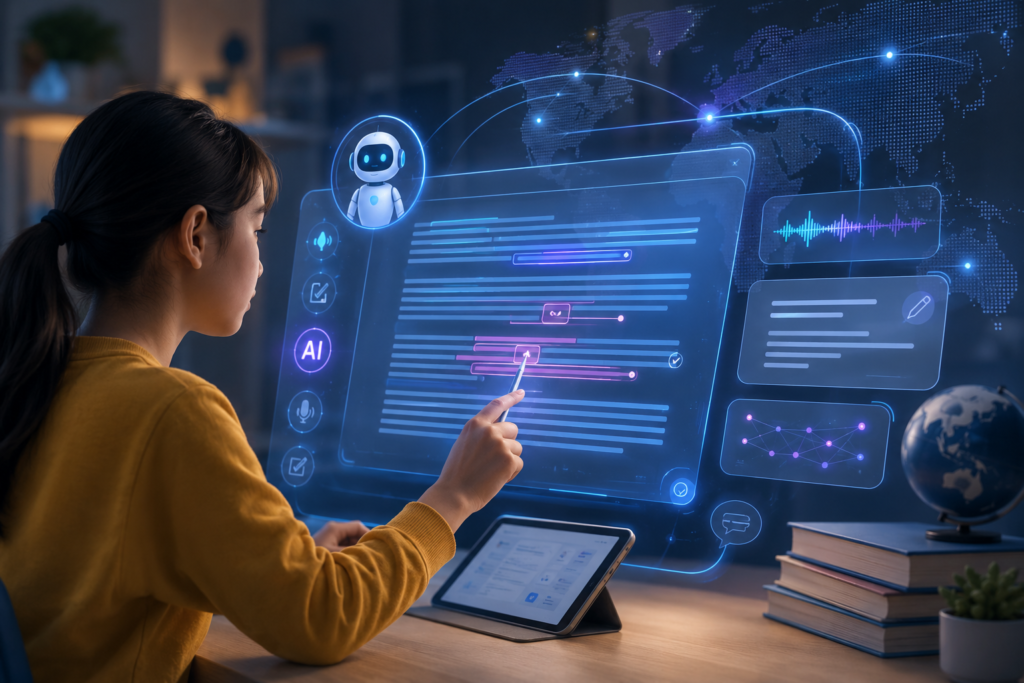
Future of Language Editing in Digital Learning
1. Introduction
Language editing is becoming a cornerstone of digital learning. As education moves online, the ability to communicate clearly and effectively across languages is more important than ever. The future of language editing lies in AI‑driven tools, machine learning, and multilingual platforms that make learning accessible to everyone.
2. What Is Language Editing in Digital Learning?
Language editing refers to improving written or spoken content for clarity, grammar, and tone. In digital learning, it ensures that educational materials are accurate, inclusive, and easy to understand — regardless of the learner’s native language.
3. Evolution of Language Editing Tools
- Early Stage: Manual proofreading and human editors.
- Modern Era: AI tools like Grammarly, QuillBot, and DeepL.
- Future Trend: Context‑aware editing powered by natural language processing (NLP).
4. Role of AI in Language Editing
- Grammar Correction: AI detects errors instantly.
- Tone Adjustment: Tools adapt writing style for academic or professional use.
- Multilingual Support: Real‑time translation and localization.
- Personalized Feedback: AI learns from user patterns to improve writing.
5. Impact on Digital Learning Platforms
Platforms like Eduvish integrate language editing to:
- Enhance course readability.
- Support multilingual learners.
- Improve communication between students and mentors.
- Ensure consistency in academic writing.
6. Benefits for Students and Educators
| Benefit | For Students | For Educators |
|---|---|---|
| Improved Writing Skills | Learners get instant feedback | Teachers save time on corrections |
| Global Communication | Easier collaboration across languages | Broader reach for courses |
| Confidence Building | Clearer expression of ideas | Better student engagement |
7. Challenges in Language Editing
- Over‑reliance on AI tools.
- Cultural and linguistic nuances missed by algorithms.
- Need for human oversight in academic contexts.
8. Future Innovations
- Voice‑based editing: AI correcting spoken language in real time.
- Emotion‑aware writing assistants: Adjust tone based on context.
- Cross‑platform integration: Seamless editing across apps and devices.
- AI‑powered translation for regional languages: Bridging India’s linguistic diversity.
9. Eduvish’s Role in the Future of Language Editing
Eduvish aims to make education inclusive by integrating smart language editing tools into its learning ecosystem. Students can write, edit, and communicate effectively — whether in English, Hindi, or regional languages — ensuring equal access to quality education.
10. Conclusion
The future of language editing in digital learning is bright and transformative. With AI, machine learning, and multilingual support, platforms like Eduvish are paving the way for a world where language is no longer a barrier to education but a bridge to global understanding.