
Introduction
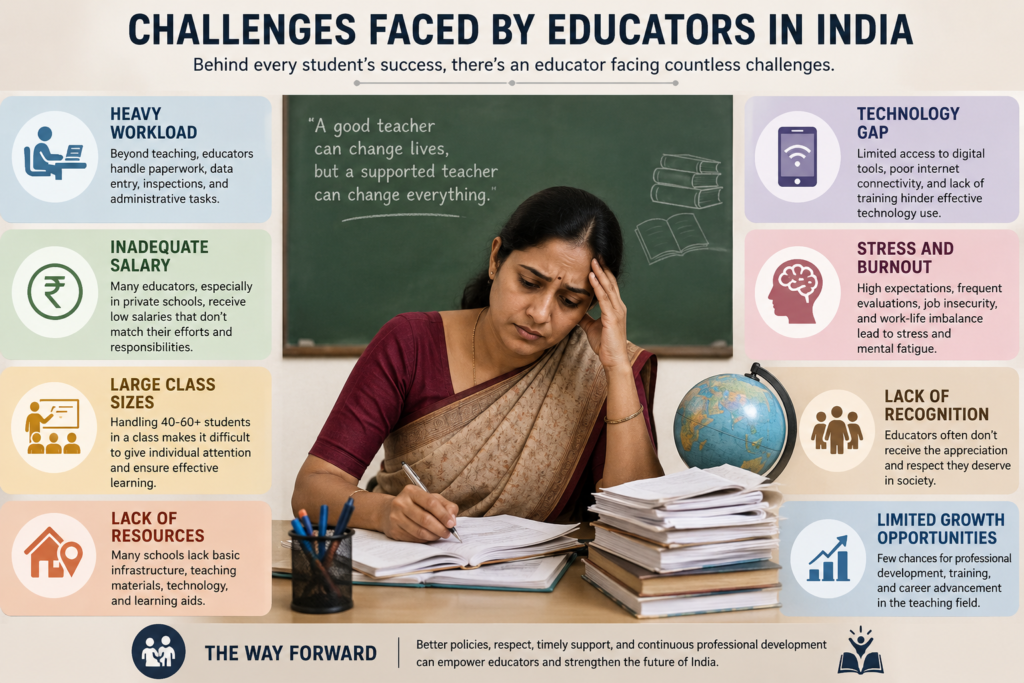
Challenges faced by educators in India continue to evolve as the education system adapts to technological advancements, changing student expectations, and policy reforms. Teachers today must balance classroom management, administrative responsibilities, digital learning tools, and student engagement while maintaining educational quality.
Key Challenges Faced by Educators
1. Infrastructure Limitations
Many schools, especially in rural areas, lack proper classrooms, libraries, and digital tools.
2. Large Class Sizes
Teachers often manage 50–70 students in one class, reducing individual attention.
3. Low Pay and Job Security
Educators in private schools often face low salaries and limited benefits compared to government institutions.
4. Curriculum Overload
Heavy syllabi and exam pressure make teaching stressful and less creative.
5. Technology Gap
While digital learning is growing, many teachers lack training in using modern tools like Google Classroom or AI‑based platforms.
6. Work-Life Balance
Excessive workload, administrative duties, and exam responsibilities affect personal well‑being.
7. Student Engagement
Maintaining interest in classrooms is difficult due to rote learning practices.
8. Policy and Bureaucracy
Frequent policy changes and administrative hurdles slow down reforms.
Comparison Table
| Challenge | Impact on Teachers | Impact on Students |
|---|---|---|
| Infrastructure | Limited resources | Poor learning environment |
| Large Class Sizes | Less personal attention | Lower performance |
| Low Pay | Demotivation | Teacher attrition |
| Curriculum Overload | Stress, burnout | Exam pressure |
| Technology Gap | Lack of digital skills | Missed opportunities |
| Work-Life Balance | Fatigue | Reduced teaching quality |
| Student Engagement | Difficulty in teaching | Passive learning |
| Policy Issues | Frustration | Slow progress |
Solutions to Overcome Challenges
- Digital training programs for educators.
- Smaller class sizes to improve attention.
- Better pay structures to retain talent.
- Curriculum reforms to reduce overload.
- Mental health support for work‑life balance.
- Policy stability to ensure smoother implementation.

