
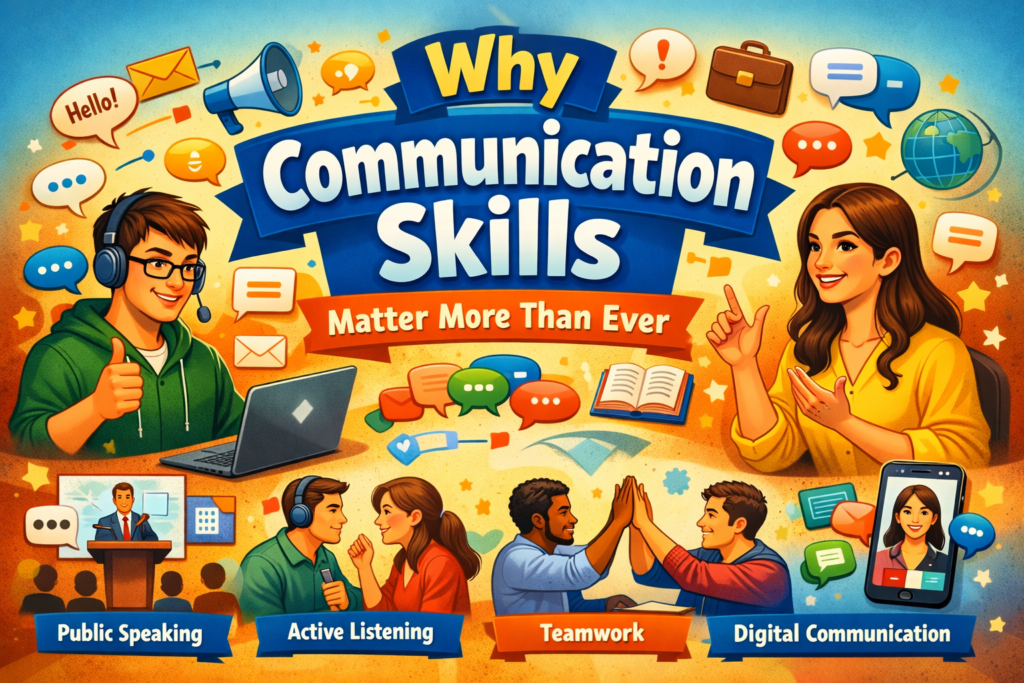
Introduction
In today’s fast‑paced, digitally connected world, communication skills have become more important than ever before. Whether you’re a student, a professional, or an entrepreneur, your ability to express ideas clearly and confidently determines how far you go.
Good communication isn’t just about speaking well — it’s about connecting, listening, and understanding. In 2026, where technology bridges distances but often weakens human connection, mastering communication is the key to success.
What Are Communication Skills?
Communication skills are the ability to share information effectively through speaking, writing, listening, and non‑verbal cues. They help you convey ideas, emotions, and intentions clearly.
Types of Communication Skills:
| Type | Description | Example |
|---|---|---|
| Verbal Communication | Using words to express ideas | Presenting in meetings or interviews |
| Non‑Verbal Communication | Body language, tone, and gestures | Maintaining eye contact and posture |
| Written Communication | Expressing thoughts through text | Writing emails, reports, or blogs |
| Digital Communication | Using technology to communicate | Video calls, social media, and messaging |
Why Communication Skills Matter More Than Ever
The modern world thrives on collaboration and connection. Communication skills are the foundation of every successful relationship — personal or professional.
1. Global Connectivity
With remote work and global teams, communication bridges cultural and geographical gaps. 💡 Example: A designer in India can collaborate seamlessly with a client in Canada through clear communication.
2. Digital Transformation
Emails, video calls, and social media dominate professional life. Knowing how to communicate digitally ensures clarity and professionalism.
3. Career Growth
Employers value communication more than technical skills. It’s essential for leadership, teamwork, and negotiation.
4. Building Relationships
Strong communication fosters empathy and trust — vital for teamwork and collaboration.
5. Problem Solving & Innovation
Clear communication encourages creativity and helps teams find solutions faster.
Core Elements of Effective Communication
Clarity
Speak and write with precision. Avoid jargon and keep messages simple.
Active Listening
Listen to understand, not just to respond. It builds trust and reduces misunderstandings.
Empathy
Understand others’ perspectives. Empathy makes communication human and impactful.
Confidence
Confidence in speech and body language enhances credibility.
Feedback
Constructive feedback improves relationships and performance.
Communication Skills in the Workplace
In professional settings, communication determines success.
Applications:
- Negotiating deals
- Managing teams
- Presenting ideas
- Resolving conflicts
- Networking effectively
Example: A manager who communicates clearly can motivate employees and achieve goals faster.
Communication Skills in Education
Students with strong communication skills perform better academically and socially.
Tips for Students:
- Participate actively in class discussions.
- Practice writing essays and reports.
- Join extracurricular activities that involve teamwork.
- Learn digital communication tools early.
Communication Skills in the Digital Age
Technology has changed how we communicate — but not the need for clarity and connection.
Digital Communication Tips:
- Use professional language in emails and chats.
- Avoid misinterpretation by being concise.
- Respect digital etiquette — reply promptly and politely.
- Use emojis sparingly and appropriately.
- Maintain professionalism on social media.
Example: A well‑written LinkedIn post can attract opportunities, while poor communication can harm your reputation.
How to Improve Communication Skills
Practice Public Speaking
Join clubs like Toastmasters or participate in debates to build confidence.
Read & Write Daily
Reading improves vocabulary; writing enhances clarity.
Record Yourself
Listening to your own speech helps identify areas for improvement.
Engage in Conversations
Talk to people from different backgrounds to expand your perspective.
Seek Feedback
Ask mentors or peers for constructive criticism.

