
Introduction
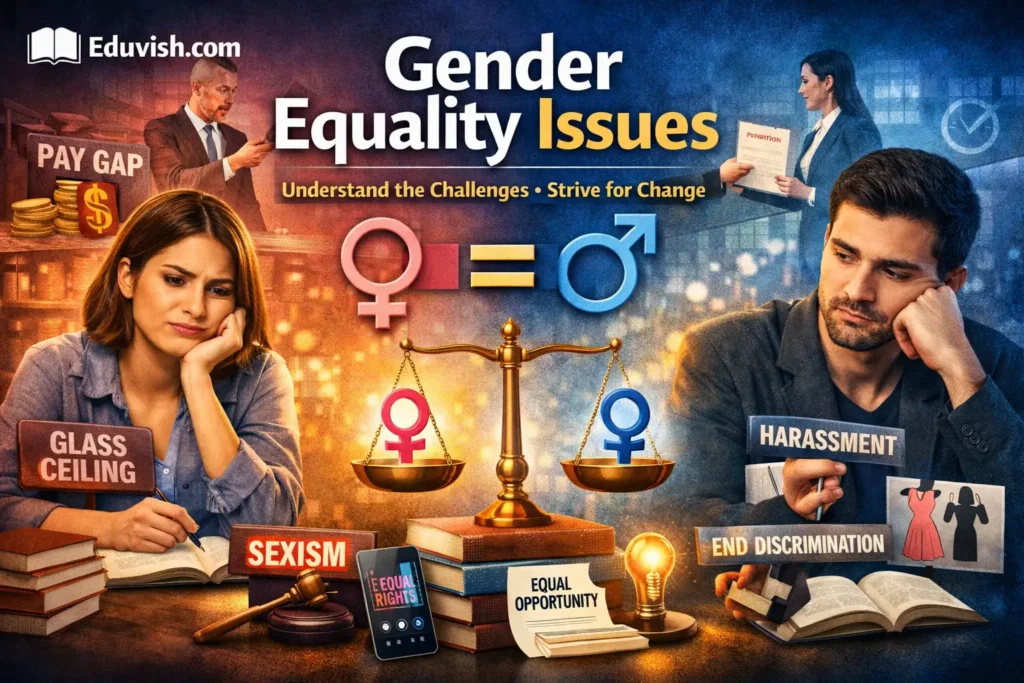
Gender equality means equal access to opportunities, rights, and resources for all genders. It’s about ensuring that men, women, and non‑binary individuals are treated fairly and have equal chances to succeed. However, gender bias, stereotypes, and systemic barriers continue to hinder progress globally.
What Are Gender Equality Issues?
Gender equality issues refer to disparities in treatment, representation, and access based on gender. These issues affect both men and women but disproportionately impact women and marginalized genders.
Key areas of concern:
- Gender pay gap: Women earn less than men for the same work.
- Workplace discrimination: Unequal hiring, promotions, and leadership opportunities.
- Educational inequality: Limited access to education for girls in some regions.
- Gender‑based violence: Physical, emotional, and sexual abuse rooted in power imbalance.
- Political underrepresentation: Fewer women in leadership and decision‑making roles.
Causes of Gender Inequality
- Cultural norms: Traditional beliefs that define gender roles.
- Economic barriers: Limited financial independence for women.
- Lack of education: Fewer opportunities for skill development.
- Legal gaps: Weak enforcement of equality laws.
- Media stereotypes: Misrepresentation that reinforces bias.
Gender Equality in the Workplace
Workplaces are key battlegrounds for gender equality. Despite progress, women remain underrepresented in leadership roles and overrepresented in lower‑paying positions.
Solutions:
- Promote equal pay policies.
- Encourage mentorship programs for women.
- Implement anti‑harassment training.
- Support parental leave for all genders.
Gender Equality in Education
Education empowers individuals and drives social change. Yet, millions of girls worldwide still lack access to basic education.
Steps toward equality:
- Provide scholarships and safe learning environments.
- Challenge gender stereotypes in curricula.
- Encourage STEM participation among girls.
Gender Equality in Politics
Political representation is vital for inclusive governance. Women’s voices in policymaking lead to more equitable societies.
Progressive measures:
- Gender quotas in elections.
- Leadership training for women.
- Awareness campaigns promoting female participation.
Global Efforts Toward Gender Equality
Organizations like the United Nations and UN Women advocate for gender equality through initiatives such as:
- Sustainable Development Goal 5 (SDG 5) — Achieve gender equality and empower all women and girls.
- HeForShe Campaign — Encourages men to support gender equality.
- CEDAW (Convention on the Elimination of All Forms of Discrimination Against Women) — A global treaty promoting women’s rights.
How Individuals Can Promote Gender Equality
- Speak up against bias: Challenge stereotypes and unfair treatment.
- Support equal opportunities: Encourage inclusivity in workplaces and schools.
- Educate yourself and others: Awareness leads to change.
- Empower women and girls: Provide mentorship and resources.