
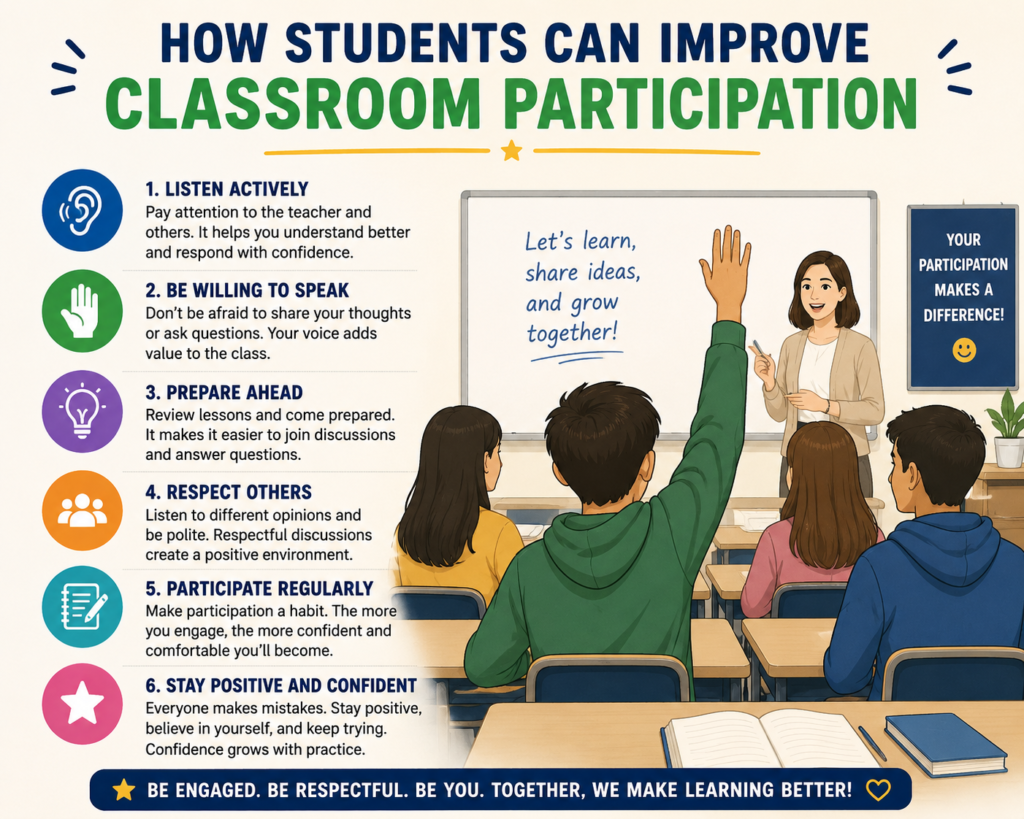
Introducation
lassroom participation is more than just answering questions—it’s about engaging with lessons, sharing ideas, and building confidence. Active participation helps students understand subjects better, develop communication skills, and create a positive learning environment.
In this article, we’ll explore practical strategies to help students improve classroom participation and become more confident learners.
1. Understanding Classroom Participation
Classroom participation means being actively involved in discussions, asking questions, and contributing ideas. It’s not limited to speaking—it also includes listening, note-taking, and collaborating with peers
Why It Matters:
- Builds confidence and communication skills.
- Improves understanding of lessons.
- Encourages teamwork and critical thinking.
- Helps teachers assess student progress.
SEO Keywords: classroom participation tips, how students can participate in class, student engagement strategies
2. Overcome Fear and Shyness
Many students hesitate to speak up due to fear of making mistakes or being judged.
Tips:
- Remember, everyone learns by trying.
- Start with small contributions like asking short questions.
- Practice speaking in front of a mirror or with friends.
Result: Confidence grows with every attempt.
3. Prepare Before Class
Preparation helps students feel ready to participate.
Tips:
- Review notes and readings before class.
- Write down questions or points you want to discuss.
- Understand key concepts to contribute meaningfully.
SEO Keywords: student preparation for class, effective study habits, active learning techniques
4. Listen Actively
Participation isn’t just about talking—it’s also about listening.
Tips:
- Pay attention to what others say.
- Take notes during discussions.
- Respond thoughtfully to classmates’ ideas.
Result: Active listening improves comprehension and builds respect.
5. Ask Questions
Questions show curiosity and engagement.
Tips:
- Don’t hesitate to ask for clarification.
- Use phrases like “Can you explain that again?” or “What does that mean?”
- Ask open-ended questions to spark discussion.
SEO Keywords: asking questions in class, student curiosity, effective communication in education
6. Collaborate with Peers
Group activities encourage participation and teamwork.
Tips:
- Join study groups or peer discussions.
- Share ideas and listen to others’ perspectives.
- Support classmates who are shy or hesitant.
Result: Collaboration builds confidence and social skills.
7. Engage with the Teacher
Building a positive relationship with teachers encourages participation.
Tips:
- Make eye contact and smile during discussions.
- Ask for feedback on your contributions.
- Show interest in the subject by asking follow-up questions.
SEO Keywords: student-teacher communication, classroom engagement strategies, improving participation in school
8. Take Notes and Reflect
Writing down key points helps students stay engaged and remember discussions.
Tips:
- Summarize what you learned after class.
- Reflect on how you can contribute more next time.
Result: Reflection turns participation into continuous improvement.
9. Be Respectful and Supportive
Respectful communication creates a positive classroom environment.
Tips:
- Listen without interrupting.
- Appreciate others’ opinions even if you disagree.
- Encourage classmates to share their thoughts.
Result: A supportive atmosphere motivates everyone to participate.
10. Use Technology Wisely
Digital tools can enhance participation in modern classrooms.
Tips:
- Use online platforms for discussions and assignments.
- Participate in virtual Q&A sessions.
- Share resources or ideas through class forums.
SEO Keywords: digital classroom participation, online learning engagement, student interaction tools
11. Practice Public Speaking
Public speaking builds confidence and helps students express ideas clearly.
Tips:
- Volunteer for presentations or debates.
- Practice speaking slowly and clearly.
- Focus on the message, not the fear.
Result: You’ll become more comfortable sharing ideas in class.
12. Set Personal Goals
Setting goals helps track progress and stay motivated.
Tips:
- Aim to speak at least once in every class.
- Challenge yourself to ask one question per session.
- Celebrate small achievements.
Result: Consistent effort leads to lasting improvement.
13. Seek Feedback
Feedback helps students understand how they can improve.
Tips:
- Ask teachers for advice on participation.
- Reflect on feedback and apply it next time.
SEO Keywords: student feedback in classroom, improving communication skills, learning through feedback
14. Encourage a Growth Mindset
A growth mindset helps students see participation as a learning opportunity.
Tips:
- View mistakes as part of learning.
- Focus on progress, not perfection.
- Stay positive and persistent.
Result: You’ll become more confident and resilient.
Conclusion
Improving classroom participation is a journey of confidence, preparation, and communication. By listening actively, asking questions, collaborating with peers, and engaging with teachers, students can transform their learning experience .

