
Introducation
Key to Success in the Scientific World
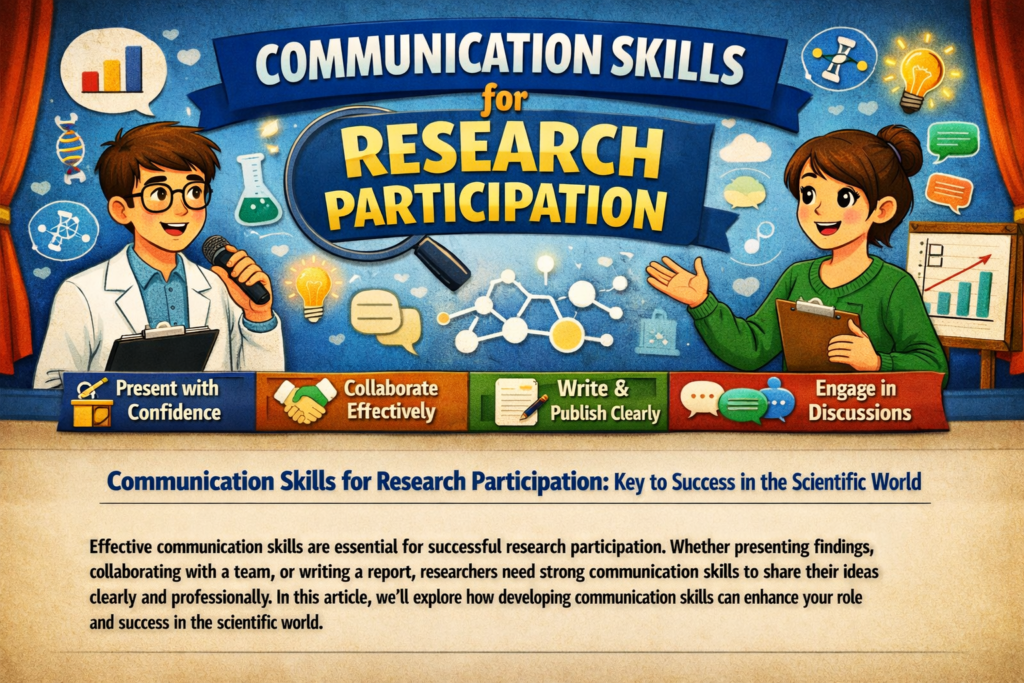
Effective communication is the foundation of successful research participation. Whether you’re presenting findings, collaborating with a team, or writing a report, strong communication skills help researchers share ideas clearly and professionally. In today’s academic and scientific environment, communication is not just about speaking—it’s about connecting, understanding, and contributing meaningfully.
Let’s explore how developing communication skills can enhance your role and success in research participation.
1. Understanding Communication in Research
Communication in research involves sharing information, ideas, and results among researchers, participants, and the public. It ensures transparency, collaboration, and ethical engagement.
Why It Matters:
- Builds trust between researchers and participants.
- Promotes teamwork and collaboration.
- Helps convey complex ideas in simple terms.
- Encourages feedback and continuous improvement.
SEO Keywords: communication skills for researchers, research participation tips, effective communication in science
2. Types of Communication in Research
Research communication can take many forms. Understanding these helps you adapt your approach.
| Type | Purpose | Example |
|---|---|---|
| Verbal Communication | Sharing ideas through speech. | Presenting findings at a conference. |
| Written Communication | Documenting research clearly. | Writing reports, proposals, or papers. |
| Non-Verbal Communication | Using body language and tone. | Maintaining eye contact during interviews. |
| Digital Communication | Sharing information online. | Emails, virtual meetings, or research platforms. |
3. Building Effective Communication Skills
Strong communication skills make research participation smoother and more impactful.
Tips:
- Speak clearly and confidently.
- Use simple language to explain complex ideas.
- Listen actively to others’ perspectives.
- Be open to feedback and constructive criticism.
Result: Better collaboration and understanding among team members.
4. Active Listening in Research
Listening is as important as speaking. Researchers must pay attention to participants, colleagues, and mentors.
How to Practice Active Listening:
- Maintain eye contact.
- Avoid interrupting.
- Summarize what others say to confirm understanding.
- Ask clarifying questions.
SEO Keywords: active listening in research, communication improvement for researchers
5. Writing Skills for Research
Clear writing is essential for publishing and sharing research.
Tips:
- Use concise and structured language.
- Avoid jargon when addressing non-specialists.
- Proofread and edit thoroughly.
- Follow academic formatting guidelines.
Result: Your research becomes accessible and credible.
6. Collaboration and Team Communication
Research often involves teamwork. Effective communication ensures smooth collaboration.
Tips:
- Respect diverse opinions.
- Share updates regularly.
- Use collaborative tools like Google Docs or Slack.
- Resolve conflicts through discussion, not argument.
SEO Keywords: team communication in research, collaboration skills for researchers
7. Presentation Skills
Presenting research findings requires confidence and clarity.
Tips:
- Structure your presentation logically.
- Use visuals like charts and graphs.
- Practice your speech beforehand.
- Engage the audience with questions or examples.
Result: Your message becomes memorable and impactful.
8. Ethical Communication
Ethics are vital in research communication. Always maintain honesty and transparency.
Tips:
- Respect participant confidentiality.
- Report findings truthfully.
- Avoid plagiarism and misrepresentation.
SEO Keywords: ethical communication in research, research integrity and ethics
9. Feedback and Continuous Improvement
Feedback helps researchers refine their communication and research methods.
Tips:
- Ask mentors or peers for feedback.
- Reflect on suggestions and apply them.
- Stay open to learning new communication techniques.
Result: Continuous improvement and professional growth.
10. Cross-Cultural Communication
Research often involves participants from diverse backgrounds.
Tips:
- Be culturally sensitive.
- Avoid assumptions or stereotypes.
- Use inclusive language.
- Learn basic phrases if working internationally.
SEO Keywords: cross-cultural communication in research, global research collaboration
11. Digital Communication Tools
Modern research relies on technology for communication.
Examples:
- Email: For formal correspondence.
- Video Conferencing: For virtual meetings.
- Research Portals: For sharing data securely.
- Social Media: For promoting research findings.
Result: Faster collaboration and wider reach.
12. Developing Confidence
Confidence enhances your ability to communicate effectively.
Tips:
- Practice public speaking.
- Prepare thoroughly before meetings or presentations.
- Focus on your strengths and achievements.
Result: You’ll express ideas clearly and professionally.
13. Common Communication Challenges
Researchers often face communication barriers.
Challenges:
- Technical jargon confusing non-experts.
- Misunderstandings in multicultural teams.
- Lack of feedback or clarity.
Solutions:
- Simplify language.
- Encourage open dialogue.
- Use visuals and examples.
Conclusion
Strong communication skills are essential for successful research participation. They help researchers share ideas, collaborate effectively, and contribute meaningfully to scientific progress.
By mastering listening, writing, presentation, and teamwork, you can become a confident communicator and a valuable contributor to the research community.
Remember, communication is not just about speaking—it’s about connecting minds and advancing knowledge.

