
INTRODUCTION
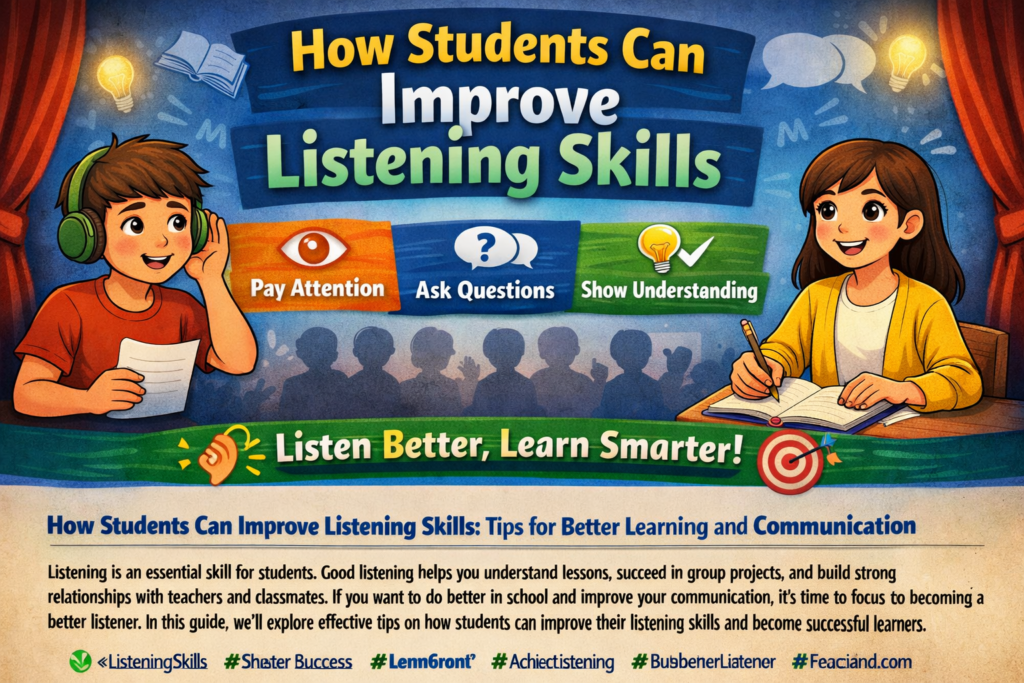
Listening is one of the most powerful yet underrated skills for students. It’s not just about hearing words—it’s about understanding, interpreting, and responding effectively. Whether you’re in a classroom, group discussion, or online lecture, improving your listening skills can transform your academic performance and communication abilities.
Let’s explore practical ways students can become better listeners and achieve success through effective communication.
. Why Listening Skills Matter
Good listening helps students:
- Understand lessons clearly
- Retain information better
- Strengthen relationships with teachers and peers
- Perform well in exams and presentations
Fact: Active listening improves comprehension and boosts confidence in communication.
2. Be Fully Present
Distractions are the biggest barrier to effective listening. Tips:
- Put away your phone or gadgets.
- Maintain eye contact with the speaker.
- Focus on what’s being said, not what you’ll say next.
Result: You’ll absorb more information and respond thoughtfully.
3. Ask Questions
Asking questions shows interest and helps clarify doubts. Tips:
- Use phrases like “Can you explain that again?” or “What do you mean by that?”
- Don’t hesitate to ask for examples or details.
Result: You’ll understand topics deeply and stay engaged.
4. Avoid Interrupting
Interrupting breaks the flow of conversation and can seem disrespectful. Tips:
- Wait until the speaker finishes.
- Take notes instead of cutting in.
- Respond after processing the message.
Result: You’ll gain respect and better comprehension.
5. Practice Active Listening
Active listening means fully engaging with the speaker. Tips:
- Nod occasionally to show understanding.
- Use short verbal cues like “I see” or “That’s interesting.”
- Summarize what you heard before responding.
Result: You’ll build stronger connections and avoid misunderstanding .
6. Take Effective Notes
Note-taking reinforces memory and helps you recall key points later. Tips:
- Write down main ideas, not every word.
- Use bullet points and highlight important details.
- Review notes after class to strengthen retention.
Result: You’ll remember lessons better and perform well in exams.
7. Pay Attention to Body Language
Communication isn’t just verbal—body language matters too. Tips:
- Observe facial expressions, gestures, and tone.
- Notice when someone seems excited, confused, or serious.
Result: You’ll understand emotions and intentions more accurately.
8. Show Empathy
Empathy helps you connect emotionally with the speaker. Tips:
- Try to understand their feelings and perspective.
- Respond with kindness and patience.
Result: You’ll build trust and improve interpersonal communication.
9. Give Constructive Feedback
Feedback shows you’re engaged and paying attention. Tips:
- Use phrases like “That’s a great point” or “I agree with that idea.”
- Ask follow-up questions to show interest.
Result: You’ll encourage meaningful conversations and collaboration.
10. Practice Listening Daily
Listening is a skill that improves with practice. Tips:
- Listen to podcasts or audiobooks.
- Watch educational videos and focus on understanding.
- Practice listening during group discussions.
Result: You’ll become more attentive and confident in communication.
11. Avoid Multitasking
Trying to do multiple things while listening reduces focus. Tips:
- Dedicate full attention to the speaker.
- Avoid checking messages or browsing during lectures.
Result: You’ll retain more information and respond accurately.
12. Improve Vocabulary
A strong vocabulary helps you understand complex ideas easily. Tips:
- Read books and articles regularly.
- Learn new words and their meanings.
Result: You’ll interpret messages better and communicate effectively.
13. Be Patient
Listening requires patience—don’t rush to respond. Tips:
- Take a moment to process information.
- Respond thoughtfully instead of reacting instantly.
Result: You’ll appear calm, confident, and respectful.
14. Join Communication Workshops
Workshops and seminars help students practice listening in real scenarios
. Tips:
- Participate in debates, group discussions, and presentations.
- Observe how others communicate effectively.
Result: You’ll gain practical experience and confidence.
15. Reflect After Listening
Reflection helps you internalize what you’ve learned. Tips:
- Summarize key points in your own words.
- Think about how the information applies to your studies.
Result: You’ll strengthen memory and critical thinking.

