
Introduction
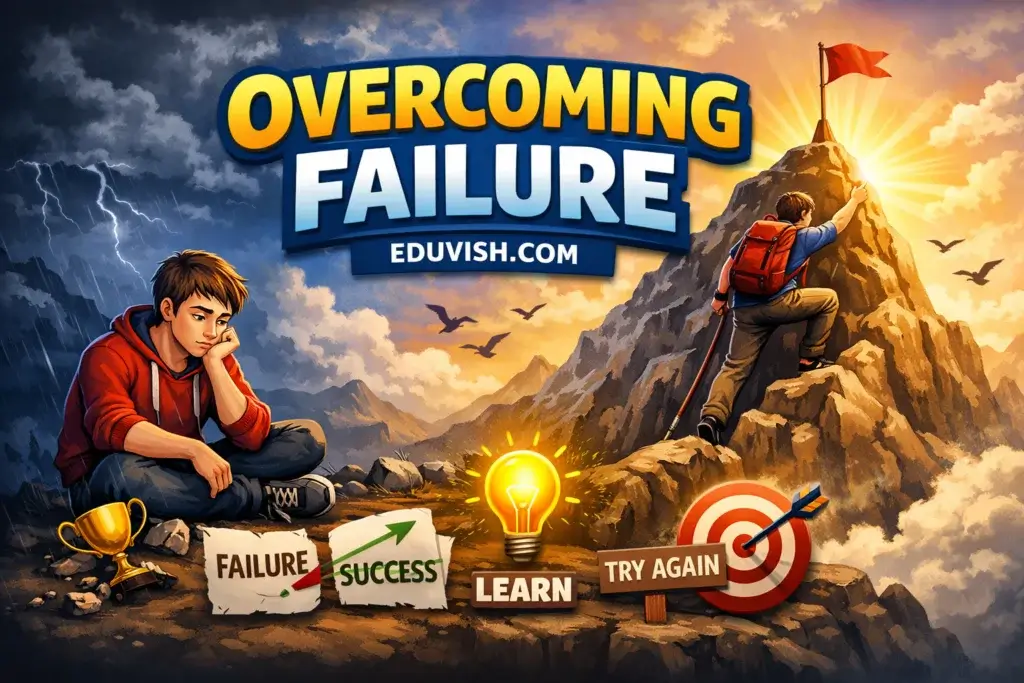
Overcoming failure is an essential life skill that helps individuals grow, learn, and achieve long-term success. Whether failure occurs in academics, careers, business, or personal goals, learning how to respond positively can transform setbacks into valuable opportunities for improvement and resilience.
Understanding Failure
- What is failure: Failure is simply an outcome that didn’t meet expectations. It’s not a reflection of your worth.
- Why failure happens: Lack of preparation, fear, or unrealistic goals can lead to setbacks.
- Learning from mistakes: Each failure teaches valuable lessons that success often hides.
The Psychology Behind Failure
- Fear of failure: Many people avoid challenges because they fear embarrassment or judgment.
- Growth mindset: Believing that abilities can improve through effort helps you bounce back faster.
- Resilience building: Resilience is the ability to recover quickly from difficulties—it’s the foundation of success.
Steps to Overcome Failure
- Accept responsibility – Own your mistakes without blaming others.
- Analyze what went wrong – Identify the root cause to avoid repeating it.
- Learn and adapt – Turn lessons into actionable strategies.
- Set realistic goals – Break big dreams into achievable milestones.
- Stay positive – Focus on progress, not perfection.
- Seek support – Talk to mentors, friends, or counselors for guidance.
- Try again – Persistence is the ultimate weapon against failure.
FAQ SECTION
What does overcoming failure mean?
Overcoming failure means learning from setbacks, adapting to challenges, and continuing to pursue goals despite difficulties.
Why is failure important for success?
Failure provides valuable lessons, helps develop resilience, and encourages personal growth, which are essential for long-term success.
How can I overcome failure?
You can overcome failure by accepting mistakes, analyzing what went wrong, learning from the experience, and taking positive action toward improvement.
What are the benefits of learning from failure?
Learning from failure improves problem-solving skills, confidence, adaptability, and resilience.
Can failure help build confidence?
Yes. Successfully overcoming setbacks often increases confidence because individuals gain experience and learn how to handle future challenges more effectively.

