
Introduction
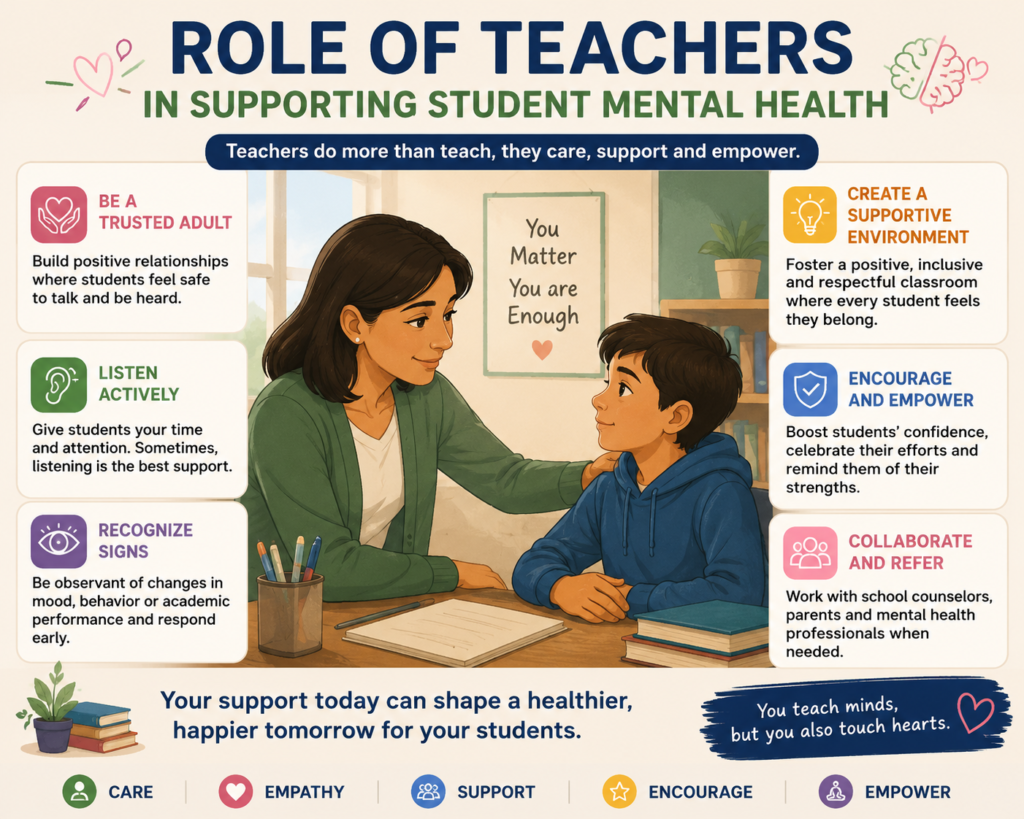
Mental health is a crucial aspect of student success, yet it is often overlooked in schools. Teachers play a vital role in supporting student mental health, as they are the first point of contact for students facing stress, anxiety, or emotional challenges. By creating a supportive environment, educators can help students thrive academically and personally.
Why Teachers Are Important in Student Mental Health
- Early identification: Teachers notice behavioral changes quickly.
- Safe environment: Classrooms can be safe spaces for students.
- Emotional support: Teachers provide encouragement and empathy.
- Academic success: Healthy students perform better in studies.
- Reducing stigma: Teachers normalize conversations about mental health.
Strategies Teachers Can Use
1. Active Listening
Pay attention to students’ concerns without judgment.
2. Creating Inclusive Classrooms
Encourage respect, diversity, and acceptance.
3. Stress Management Activities
Introduce mindfulness, yoga, or relaxation techniques.
4. Collaboration with Parents
Work with families to support students outside school.
5. Referral to Professionals
Guide students to counselors or psychologists when needed.
6. Building Resilience
Teach coping skills and problem‑solving strategies.
Comparison Table
| Strategy | Impact on Students | Impact on Teachers |
|---|---|---|
| Active Listening | Builds trust | Stronger teacher‑student bond |
| Inclusive Classrooms | Reduces bullying | Positive environment |
| Stress Management | Lowers anxiety | Improves focus |
| Parent Collaboration | Consistent support | Better communication |
| Professional Referral | Timely help | Shared responsibility |
| Resilience Building | Long‑term coping skills | Reduced classroom stress |
Benefits of Teacher Support in Mental Health
- Improved academic performance
- Better classroom behavior
- Higher student confidence
- Reduced dropout rates

