
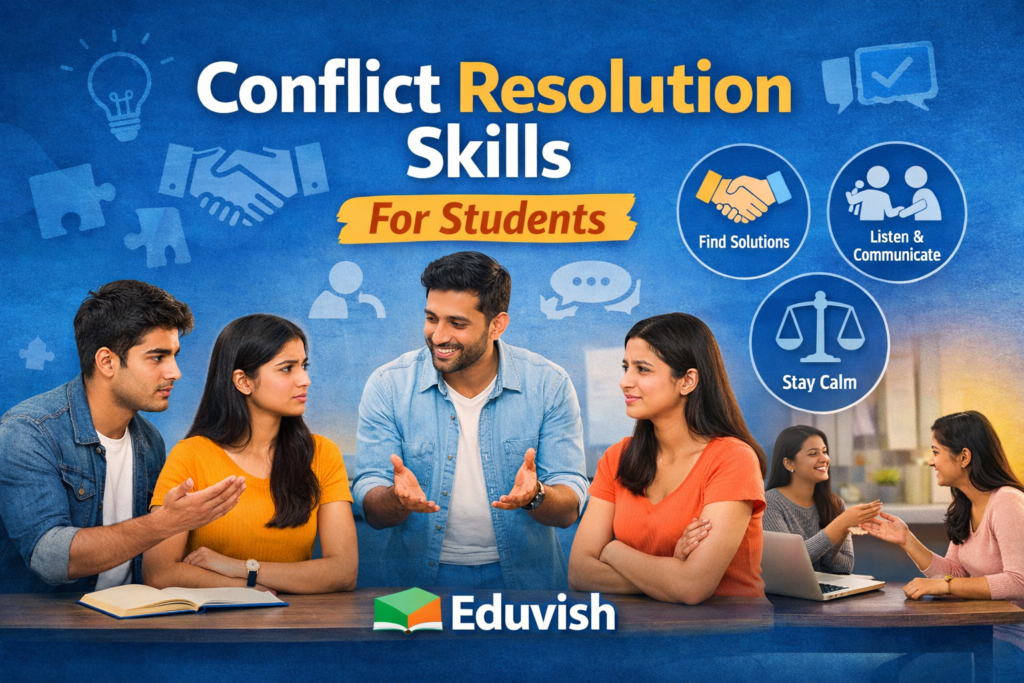
Conflict Resolution Skills for Students
1. Introduction
Conflicts are a natural part of student life — whether in group projects, peer relationships, or classroom discussions. Learning conflict resolution skills helps students manage disagreements constructively, turning challenges into opportunities for growth.
2. Key Conflict Resolution Skills
- Active Listening: Focus on understanding, not just responding.
- Empathy: See situations from others’ perspectives.
- Emotional Control: Stay calm and avoid escalation.
- Assertive Communication: Express needs clearly without aggression.
- Problem‑Solving: Work collaboratively to find win‑win solutions.
- Negotiation & Mediation: Use structured dialogue to resolve disputes.
3. Practical Strategies for Students
| Strategy | How It Helps | Example |
|---|---|---|
| Restorative Circles | Encourages dialogue and repairing harm | Group project disputes |
| Peer Mediation | Students help resolve conflicts | Playground disagreements |
| Pause & Reflect | Prevents emotional outbursts | Counting to 10 before responding |
| Role‑Playing | Builds empathy and communication | Classroom activities |
4. Benefits of Conflict Resolution Skills
- Improves teamwork and collaboration.
- Reduces stress and anxiety in school.
- Strengthens leadership and communication skills.
- Builds resilience and emotional intelligence.
- Creates a safer, more inclusive classroom environment.
5. Challenges Students Face
- Fear of judgment or being wrong.
- Lack of confidence in communication.
- Cultural or language barriers.
- Peer pressure and competitive environments.
6. Future Outlook
With the rise of digital learning and online classrooms, conflict resolution skills are more important than ever. Students must learn to manage disagreements not only face‑to‑face but also in virtual environments.

