
Introduction
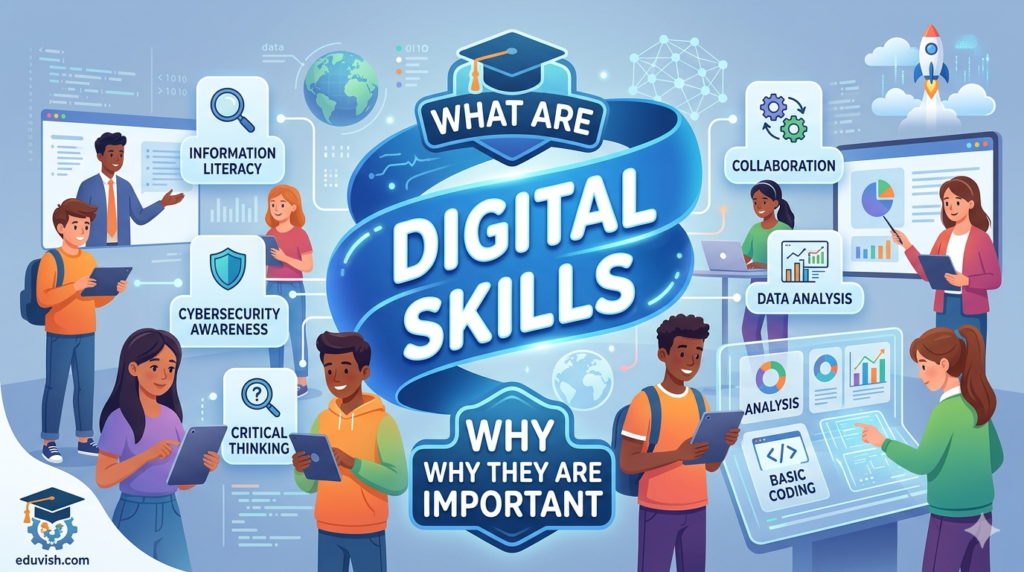
In today’s fast‑changing world, technology is everywhere — from classrooms to careers. To succeed in this digital era, students need more than academic knowledge; they need digital skills.
Digital skills empower students to learn, create, communicate, and innovate using technology. Whether it’s coding, using online tools, or understanding cybersecurity, these skills prepare learners for the future.
This article explores what digital skills are, why they matter for students, and how they can be developed effectively.
What Are Digital Skills?
Digital skills are the abilities required to use digital devices, applications, and networks effectively. They include both basic computer literacy and advanced technical competencies.
Categories of Digital Skills:
| Skill Type | Description | Examples |
|---|---|---|
| Basic Digital Literacy | Using computers, smartphones, and the internet safely | Typing, browsing, email communication |
| Technical Skills | Understanding and applying technology | Coding, data analysis, cloud computing |
| Creative Skills | Using digital tools for innovation | Graphic design, video editing, content creation |
| Analytical Skills | Interpreting digital data | SEO analysis, social media metrics |
| Cybersecurity Skills | Protecting data and privacy online | Password management, safe browsing |
Example: A student who can create presentations, analyze data, and collaborate online demonstrates strong digital competence.
Why Digital Skills Matter for Students
Digital skills are essential for students to thrive academically and professionally. They open doors to opportunities and make learning more interactive and efficient.
1. Enhance Learning Efficiency
Digital tools like Google Classroom, Microsoft Teams, and online libraries make learning faster and more accessible.
2. Prepare for Future Careers
Employers seek candidates who can adapt to technology. Skills like coding, data analysis, and digital marketing are in high demand.
3. Improve Communication and Collaboration
Students can collaborate globally through video calls, shared documents, and online projects.
4. Boost Creativity and Innovation
Digital tools allow students to design, create, and share ideas — from animations to apps.
5. Promote Digital Citizenship
Understanding online ethics and safety helps students become responsible digital citizens.
Essential Digital Skills for Students in 2026
Let’s explore the most important digital skills students should master.
1. Computer Literacy
Basic computer operations like typing, file management, and using productivity software (Word, Excel, PowerPoint).
2. Internet Research
Knowing how to find credible information online and evaluate sources.
3. Digital Communication
Using email, chat, and video conferencing tools effectively and professionally.
4. Social Media Management
Understanding how to use social platforms responsibly and strategically.
5. Coding and Programming
Learning languages like Python, Java, or HTML to build websites and apps.
6. Data Analysis
Interpreting data using tools like Excel, Google Sheets, or Power BI.
7. Cybersecurity Awareness
Protecting personal information and recognizing online threats.
8. Cloud Computing
Using cloud platforms like Google Drive or Dropbox for collaboration and storage.
9. Digital Content Creation
Designing graphics, videos, and presentations using tools like Canva or Adobe Express.
10. Artificial Intelligence (AI) Literacy
Understanding how AI works and how it impacts education and careers.

