
Introduction
In today’s fast‑paced world, social emotional learning (SEL) has become a cornerstone of education and personal growth. SEL empowers individuals to understand emotions, build positive relationships, make responsible decisions, and thrive both academically and socially. For schools, parents, and organizations, SEL is not just a program—it’s a pathway to holistic development.
What is Social Emotional Learning?
- SEL is the process of acquiring skills to manage emotions, set goals, show empathy, maintain relationships, and make responsible choices.
- It integrates emotional intelligence with academic learning.
- SEL is widely used in classrooms, corporate training, and personal development programs.
Importance of SEL in Education
- Improves academic performance by fostering focus and motivation.
- Reduces behavioral issues through emotional regulation.
- Enhances mental health by teaching coping strategies.
- Builds empathy and teamwork, preparing students for real‑world challenges.
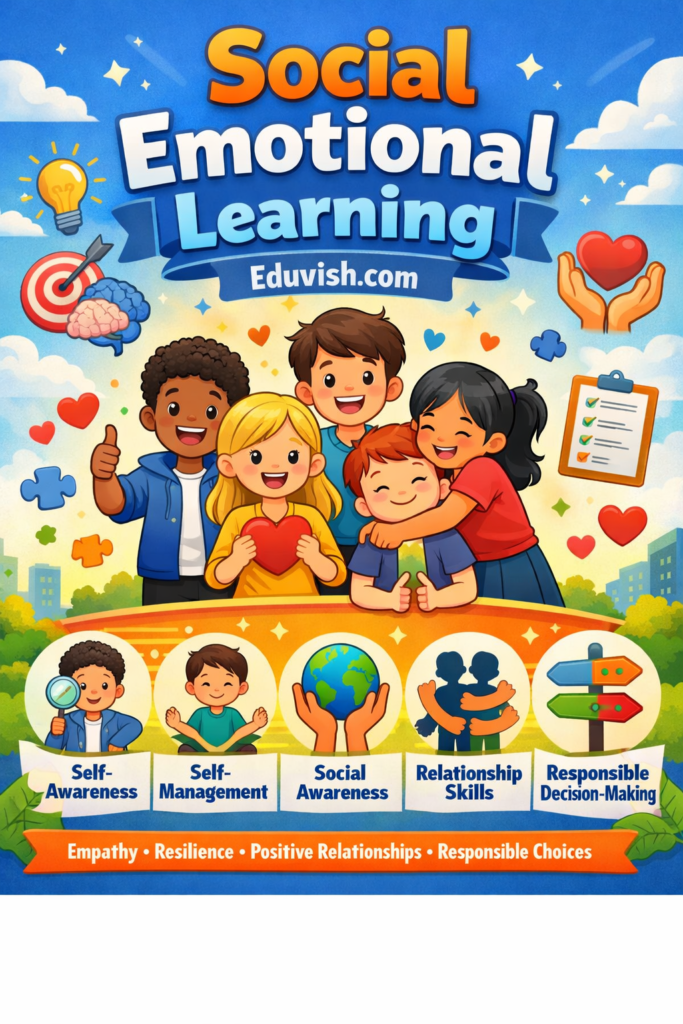
Core Competencies of SEL
According to CASEL (Collaborative for Academic, Social, and Emotional Learning), SEL has five key areas:
- Self‑awareness: Recognizing emotions and values.
- Self‑management: Regulating emotions and behaviors.
- Social awareness: Showing empathy and respect.
- Relationship skills: Building healthy connections.
- Responsible decision‑making: Making ethical and constructive choices.
Benefits of Social Emotional Learning
- Boosts emotional intelligence in students and professionals.
- Encourages inclusivity and respect for diversity.
- Improves classroom climate and workplace culture.
- Supports lifelong success in careers and relationships.
Practical Applications of SEL
- Classroom activities: Role‑plays, group discussions, mindfulness exercises.
- Corporate training: Emotional intelligence workshops, leadership development.
- Parenting strategies: Teaching empathy and resilience at home.
- Community programs: Building inclusive and supportive environments.
Tips for Implementing SEL
- Start with daily mindfulness practices.
- Encourage open communication in classrooms and workplaces.
- Use storytelling and role‑play to teach empathy.
- Integrate SEL into academic subjects for holistic learning.
- Provide teacher training to ensure effective delivery.

