
Introducation
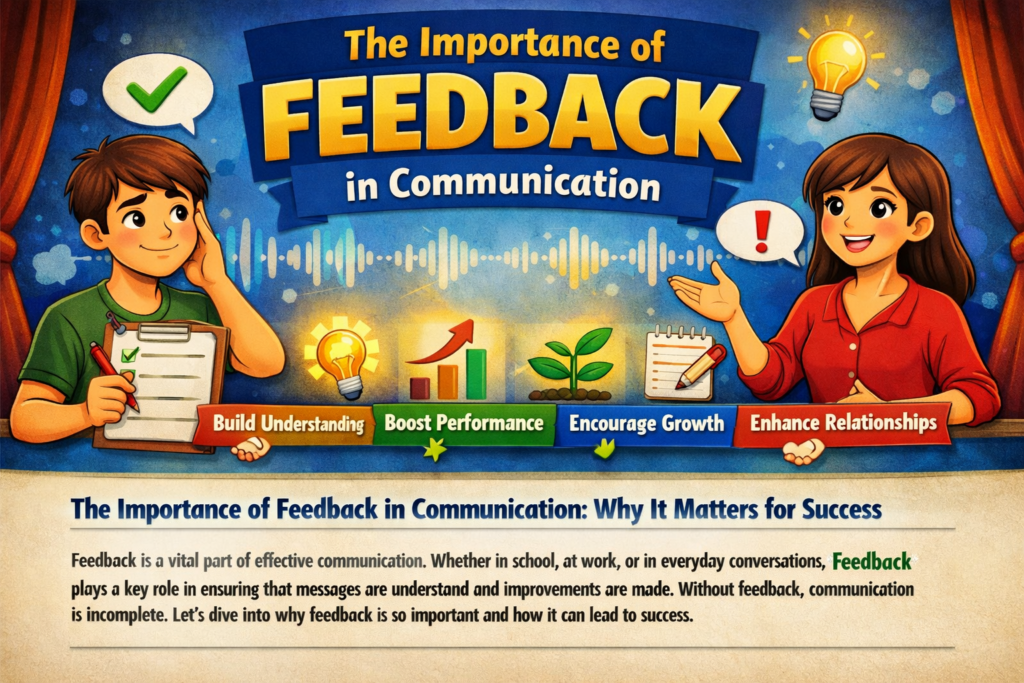
Feedback is the backbone of effective communication. Whether in classrooms, workplaces, or personal relationships, feedback ensures that messages are understood, actions are improved, and relationships grow stronger. Without feedback, communication becomes one-sided and incomplete.
In this article, we’ll explore why feedback is essential, how it enhances communication, and practical ways to give and receive feedback effectively.
1. Understanding Feedback in Communication
Feedback is the response or reaction to a message or action. It helps the sender know whether their message was understood correctly and what impact it had.
Example: When a teacher explains a concept and asks students questions afterward, their answers serve as feedback to gauge understanding.
SEO Keywords: importance of feedback in communication, role of feedback in communication, effective communication skills
2. Why Feedback Matters
Feedback plays a vital role in improving communication and performance.
Key Benefits:
- Builds Understanding: Ensures clarity between sender and receiver.
- Boosts Performance: Constructive feedback helps individuals improve their skills.
- Encourages Growth: Positive feedback motivates continued effort.
- Strengthens Relationships: Honest feedback builds trust and respect.
SEO Keywords: benefits of feedback in communication, constructive feedback tips, communication improvement strategies
3. Types of Feedback
Understanding the different types of feedback helps in using it effectively.
| Type | Purpose | Example |
|---|---|---|
| Positive Feedback | Reinforces good behavior and performance. | “Great job explaining your point clearly!” |
| Constructive Feedback | Suggests improvements while maintaining encouragement. | “Your presentation was good, but adding visuals could make it even better.” |
| Negative Feedback | Highlights areas needing improvement; should be delivered carefully. | “You seemed distracted during the meeting; let’s work on focus next time.” |
| Formal Feedback | Structured and planned, often in professional settings. | Performance reviews or evaluations. |
| Informal Feedback | Casual and spontaneous. | “That idea sounds great!” during a conversation. |
4. The Role of Feedback in Effective Communication
Feedback creates a two-way communication process. It ensures that both parties understand each other and can make necessary adjustments.
How It Helps:
- Promotes clarity and understanding.
- Encourages active participation.
- Builds confidence and motivation.
- Prevents misunderstandings.
SEO Keywords: effective communication feedback, feedback for success, communication improvement techniques
5. How to Give Effective Feedback
Giving feedback requires tact, empathy, and clarity.
Tips for Giving Feedback:
- Be specific — focus on particular actions or behaviors.
- Be constructive — offer solutions, not just criticism.
- Be timely — give feedback soon after the event.
- Be respectful — maintain a positive tone.
- Be balanced — mix positive and corrective points.
Example: Instead of saying, “Your report was bad,” say, “Your report had strong research, but organizing the data more clearly would make it even better.”
6. How to Receive Feedback Gracefully
Receiving feedback is just as important as giving it.
Tips for Receiving Feedback:
- Listen carefully without interrupting.
- Avoid being defensive.
- Ask clarifying questions.
- Reflect on the feedback before reacting.
- Use it as an opportunity for growth.
SEO Keywords: how to receive feedback, communication skills for students, feedback for personal development
7. Feedback in Educational Settings
In schools and colleges, feedback helps students improve academically and personally.
Examples:
- Teachers provide feedback on assignments to help students learn.
- Peer feedback during group projects enhances teamwork.
- Self-assessment encourages reflection and improvement.
Result: Students become more confident, aware, and motivated to perform better.
8. Feedback in the Workplace
In professional environments, feedback drives productivity and teamwork.
Benefits:
- Improves employee performance.
- Encourages innovation and creativity.
- Builds stronger relationships between managers and employees.
- Creates a culture of continuous improvement.
SEO Keywords: workplace feedback importance, employee communication skills, professional growth through feedback
9. Feedback and Relationship Building
Feedback strengthens relationships by promoting trust and understanding.
How It Helps:
- Encourages open communication.
- Resolves conflicts effectively.
- Shows care and respect for others’ opinions.
Tip: Always give feedback with empathy—it’s not about pointing out faults but helping others grow.
9. Feedback and Relationship Building
Feedback strengthens relationships by promoting trust and understanding.
How It Helps:
- Encourages open communication.
- Resolves conflicts effectively.
- Shows care and respect for others’ opinions.
Tip: Always give feedback with empathy—it’s not about pointing out faults but helping others grow.
10. Common Mistakes in Giving Feedback
Avoid these pitfalls to ensure your feedback is effective:
- Being too vague or general.
- Focusing only on negatives.
- Giving feedback publicly instead of privately.
- Ignoring emotional impact.
Solution: Be clear, kind, and supportive.
11. Feedback as a Tool for Growth
Feedback is not criticism—it’s a learning opportunity. When used correctly, it helps individuals and organizations evolve.
Example: Companies that encourage feedback often have higher employee satisfaction and better teamwork.
Conclusion
Feedback is the heart of communication. It bridges gaps, builds understanding, and fosters growth. Whether it’s in education, the workplace, or personal life, feedback helps people connect and improve.
Start embracing feedback today—it’s not just about talking; it’s about listening, learning, and growing together.

