
Introduction
Water is life. Yet, with increasing population, urbanization, and climate change, fresh water is becoming scarce. Conserving water is no longer optional — it’s essential for survival and sustainability. This guide explores water conservation techniques that individuals, communities, and industries can adopt to save water and secure the future.
Why Water Conservation Matters
- Environmental Protection: Conserving water reduces strain on rivers, lakes, and groundwater.
- Economic Savings: Lower water bills and reduced energy costs.
- Food Security: Agriculture depends heavily on water.
- Climate Resilience: Efficient water use helps communities adapt to droughts.
- Future Generations: Ensures availability of clean water for years to come.
Household Water Conservation Techniques
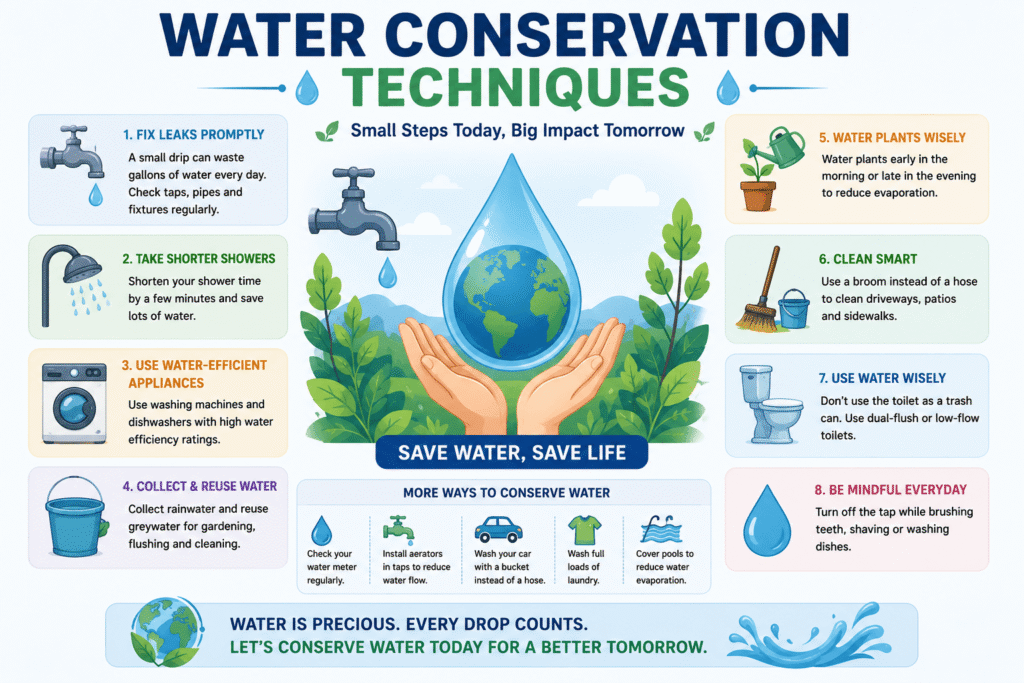
1. Fix Leaks
A dripping tap can waste thousands of liters annually. Regularly check and repair leaks.
2. Install Low-Flow Fixtures
Use low-flow showerheads and faucets to reduce water usage without compromising comfort.
3. Rainwater Harvesting
Collect rainwater from rooftops and store it for household use.
4. Greywater Recycling
Reuse water from sinks and showers for gardening or flushing toilets.
5. Smart Appliances
Modern washing machines and dishwashers use less water and energy.
Industrial Water Conservation Techniques
1. Water Recycling Systems
Reuse wastewater in manufacturing processes.
2. Cooling System Optimization
Switch to closed-loop cooling systems to save water.
3. Process Efficiency
Redesign processes to minimize water usage.
4. Employee Awareness Programs
Train staff to adopt water-saving practices.
Innovative Water Conservation Technologies
- AI-powered irrigation systems
- Smart water meters
- Desalination plants
- Nanotechnology filters
- IoT-based leak detection systems
Common Mistakes to Avoid
- Overwatering lawns and gardens.
- Ignoring leaks.
- Using outdated appliances.
- Lack of awareness about water-saving habits.

