
Introduction
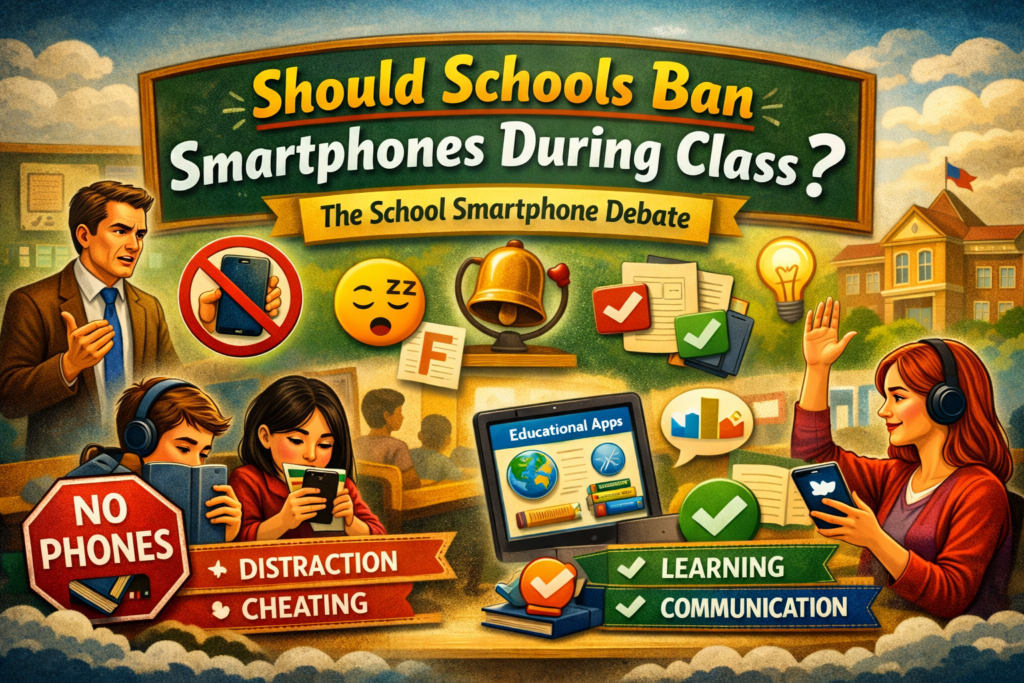
Smartphones have become an inseparable part of modern life. They connect us, entertain us, and help us learn. But when it comes to classrooms, the debate over whether schools should ban smartphones is heating up. Are they a distraction or a learning tool? This article explores both sides of the argument and provides insights into how schools can strike the right balance between technology and education.
The Rise of Smartphones in Education
Smartphones have revolutionized how students access information. With apps, online courses, and instant communication, they’ve made learning more interactive. However, excessive use during class can lead to distractions, reduced attention spans, and poor academic performance.
High-ranking keywords: smartphone ban in schools, mobile phones in education, classroom distractions, digital learning, student focus, school discipline.
Why Schools Consider Banning Smartphones
Many educators believe that banning smartphones can improve classroom engagement and discipline. Here’s why:
- Reduced distractions: Notifications, games, and social media divert attention from lessons.
- Improved concentration: Without phones, students focus better on teachers and discussions.
- Better social interaction: Encourages communication and teamwork among peers.
- Academic integrity: Prevents cheating during exams or assignments.
- Mental health benefits: Reduces anxiety and comparison caused by social media.
Arguments Against a Complete Ban
While banning smartphones may seem effective, it’s not always practical. Here’s the other side:
- Educational apps: Smartphones can be used for research, language learning, and note-taking.
- Emergency communication: Students can contact parents in urgent situations.
- Digital literacy: Learning to use technology responsibly is a vital skill.
- Blended learning: Smartphones support hybrid education models.
Finding a Balanced Approach
Instead of a complete ban, schools can adopt controlled smartphone policies:
- Designated phone zones – Allow usage during breaks or specific lessons.
- Teacher supervision – Teachers can monitor usage during educational activities.
- Digital etiquette training – Educate students on responsible smartphone use.
- Parental involvement – Encourage parents to reinforce school rules at home.
Psychological Impact of Smartphone Use
Studies show that excessive smartphone use can lead to:
- Reduced attention span.
- Increased stress and anxiety.
- Poor sleep quality.
- Lower academic performance.
However, moderate and mindful use can enhance creativity and problem-solving skills.
Case Studies: Schools That Implemented Smartphone Policies
- France: Implemented a nationwide ban on smartphones in schools for students under 15.
- Japan: Encourages limited use for educational purposes only.
- India: Many private schools restrict phones during class hours but allow them for research projects.
These examples show that balanced policies often work better than strict bans.
How Smartphones Can Support Learning
When used wisely, smartphones can enhance education:
- Access to online resources
- Interactive learning apps
- Instant feedback tools
- Language translation apps
Teachers can integrate these tools into lessons to make learning more engaging.
Challenges in Implementation
Schools face challenges in enforcing smartphone policies:
- Resistance from students and parents.
- Difficulty monitoring usage.
- Need for teacher training.
- Balancing technology with traditional teaching methods.
Expert Opinions
Education experts suggest that banning smartphones entirely may not be the best solution. Instead, schools should focus on digital responsibility and self-regulation. Teaching students how to manage their screen time prepares them for the real world.
Recommendations for Schools
- Create clear smartphone policies.
- Use technology for learning, not entertainment.
- Conduct workshops on digital well-being.
- Encourage offline activities and group discussions.
- Regularly review and update policies based on feedback.
Conclusion
Smartphones are powerful tools — but only when used responsibly. Schools should aim to educate students about balance rather than impose strict bans. By promoting awareness, discipline, and digital literacy, we can create classrooms that embrace technology without letting it control the learning process.