
Introduction to Tourism Business Planning
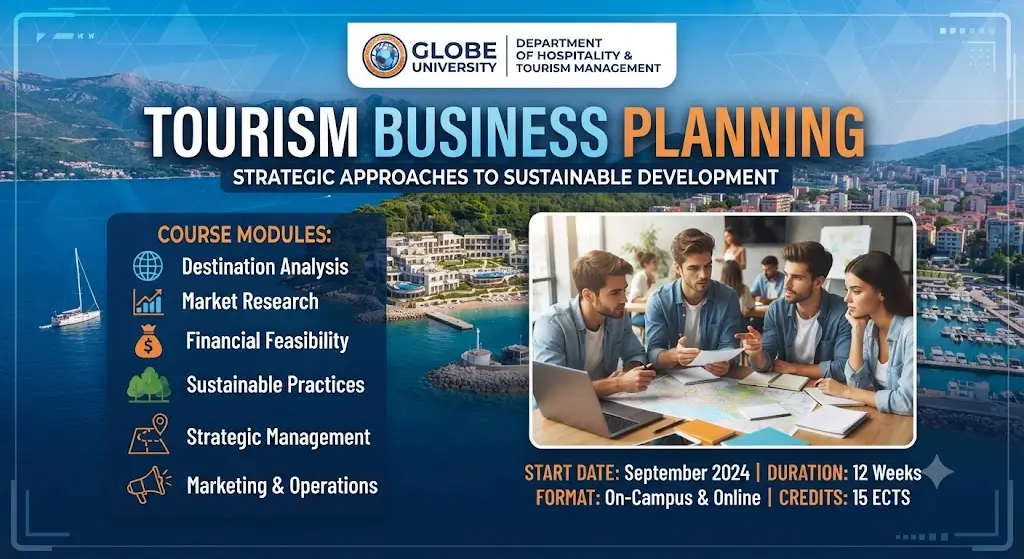
The Tourism Business Planning Course is a comprehensive professional training program designed to help learners develop the strategic planning skills required to establish and manage successful tourism businesses. The tourism industry includes travel agencies, tour operators, hotels, resorts, transportation providers, destination management companies, eco-tourism enterprises, cultural tourism businesses, and adventure tourism organizations. Every successful tourism venture depends on careful planning, effective resource management, sound financial decisions, and a strong understanding of customer needs.
Business planning provides a structured approach to defining business objectives, identifying target markets, analyzing competitors, forecasting revenue, managing risks, and developing sustainable growth strategies. It also helps tourism businesses adapt to changing travel trends, technological advancements, environmental challenges, and evolving customer expectations.
This course combines tourism management principles with practical business planning techniques to prepare learners for careers in tourism entrepreneurship, management, and strategic planning. Whether launching a new tourism venture or improving an existing business, participants gain valuable knowledge applicable across the tourism sector.
Why Tourism Business Planning Matters
The tourism industry is dynamic and influenced by economic conditions, traveler preferences, government policies, technological innovation, and environmental factors. Successful tourism businesses must plan carefully to remain competitive, deliver high-quality customer experiences, and respond effectively to changing market conditions.
A well-prepared business plan supports investment decisions, operational planning, marketing strategies, financial management, and long-term sustainability. It enables organizations to identify opportunities, minimize risks, optimize resources, and improve business performance.
The Tourism Business Planning Course helps learners understand how strategic planning contributes to tourism business success while supporting sustainable development and customer satisfaction.
Course Overview
The Tourism Business Planning Course introduces learners to the processes and strategies involved in planning, launching, managing, and expanding tourism businesses.
Participants begin by studying tourism industry fundamentals, business models, entrepreneurship, market research, and customer analysis. The course explores business plan preparation, financial forecasting, budgeting, pricing strategies, tourism marketing, digital promotion, operational planning, and destination management.
Learners also study sustainability, tourism technology, legal and regulatory requirements, risk management, quality assurance, performance measurement, leadership, and innovation.
Practical case studies demonstrate how successful tourism businesses create effective plans that support profitability, customer loyalty, operational excellence, and sustainable growth.
Topics Covered
Throughout the Tourism Business Planning Course, learners will study:
Tourism Industry Fundamentals
Understand tourism sectors, travel markets, tourism products, customer behavior, and industry trends.
Business Planning Principles
Learn how to prepare comprehensive business plans, define objectives, develop strategies, and measure business performance.
Market Research and Analysis
Study market segmentation, competitor analysis, customer profiling, demand forecasting, and tourism market opportunities.
Financial Planning
Explore budgeting, pricing strategies, revenue forecasting, investment planning, cash flow management, and financial performance evaluation.
Tourism Marketing
Understand branding, digital marketing, search engine optimization (SEO), social media marketing, content marketing, and promotional campaigns.
Destination and Product Development
Learn tourism product design, destination planning, experience development, and service innovation.
Operations Planning
Study resource allocation, workforce planning, supplier coordination, operational workflows, quality assurance, and service management.
Risk Management and Legal Compliance
Explore tourism regulations, licensing requirements, insurance, emergency planning, business continuity, and legal responsibilities.
Tourism Technology
Understand online booking systems, Customer Relationship Management (CRM), digital payment solutions, business analytics, and tourism management software.
Sustainability and Business Growth
Study responsible tourism, environmental sustainability, community engagement, strategic expansion, and continuous business improvement.
Skills You Will Gain
After completing the Tourism Business Planning Course, learners will develop valuable professional skills including:
- Tourism business planning
- Market research
- Financial planning
- Tourism marketing
- Business strategy development
- Digital marketing
- Operations planning
- Destination management
- Customer relationship management
- Tourism technology
- Risk management
- Leadership
- Strategic decision-making
- Problem-solving
- Business analysis
These competencies are valuable across travel agencies, tour operators, hotels, resorts, tourism boards, destination management companies, tourism consultancies, and entrepreneurial ventures.
Benefits of the Course
The Tourism Business Planning Course equips learners with practical knowledge for developing successful tourism businesses and improving existing operations.
Participants gain confidence in preparing business plans, conducting market analysis, managing finances, creating marketing strategies, and improving operational efficiency. The course also strengthens leadership, communication, analytical thinking, and entrepreneurial skills that support long-term career growth.
As global tourism continues to evolve, organizations increasingly seek professionals who can combine strategic planning, customer experience management, digital innovation, and sustainable business practices.
Who Should Enroll?
This course is suitable for:
- Tourism management students
- Hospitality professionals
- Travel consultants
- Tour operators
- Destination managers
- Tourism entrepreneurs
- Hotel managers
- Small business owners
- Business development professionals
- Individuals interested in tourism management
No previous business planning experience is required.
Career Opportunities
After completing the Tourism Business Planning Course, learners may pursue careers such as:
- Tourism Business Manager
- Travel Agency Manager
- Tour Operations Manager
- Destination Manager
- Tourism Consultant
- Business Development Executive
- Tourism Marketing Manager
- Travel Entrepreneur
- Hospitality Business Planner
- Tourism Project Coordinator
- Tourism Strategy Analyst
- Resort Business Manager
- Tourism Operations Manager
- Tourism Development Officer
- Business Planning Specialist
Certification
Upon successful completion of the Tourism Business Planning Course, learners receive a professional certificate recognizing their expertise in tourism business planning, market analysis, financial planning, tourism marketing, operational management, sustainability, digital tourism technologies, and strategic business development. This certification supports career advancement across tourism businesses, travel companies, hotels, resorts, destination management organizations, and hospitality enterprises.
Frequently Asked Questions (FAQs)
1. What is the Tourism Business Planning Course?
The course teaches how to develop, implement, and manage business plans for tourism organizations while supporting sustainable growth and customer satisfaction.
2. Who should enroll in this course?
Tourism students, travel professionals, entrepreneurs, tour operators, hotel managers, destination managers, and hospitality professionals can benefit from this course.
3. Do I need previous business experience?
No. The course is suitable for beginners as well as professionals seeking to improve their tourism business planning skills.
4. What topics are covered?
Topics include business planning, tourism marketing, market research, financial planning, destination management, operations planning, sustainability, tourism technology, and risk management.
5. Will I receive a certificate?
Yes. Participants receive a certificate after successfully completing the course.
6. What skills will I develop?
You will develop skills in business planning, financial management, tourism marketing, strategic planning, digital marketing, operations management, leadership, and business analysis.
7. Is this course suitable for tourism entrepreneurs?
Yes. The course is ideal for individuals planning to start or expand tourism-related businesses.
8. Can this course improve my tourism career?
Yes. It prepares learners for management, planning, consulting, entrepreneurship, and leadership positions within the tourism and hospitality industries.
9. Does the course include tourism technology?
Yes. The course introduces online booking systems, CRM software, tourism analytics, digital payment systems, and tourism management technologies.
10. Why is tourism business planning important?
Effective tourism business planning helps organizations identify market opportunities, manage financial resources, reduce risks, improve customer experiences, support sustainable growth, and achieve long-term business success.


Reviews
There are no reviews yet.