
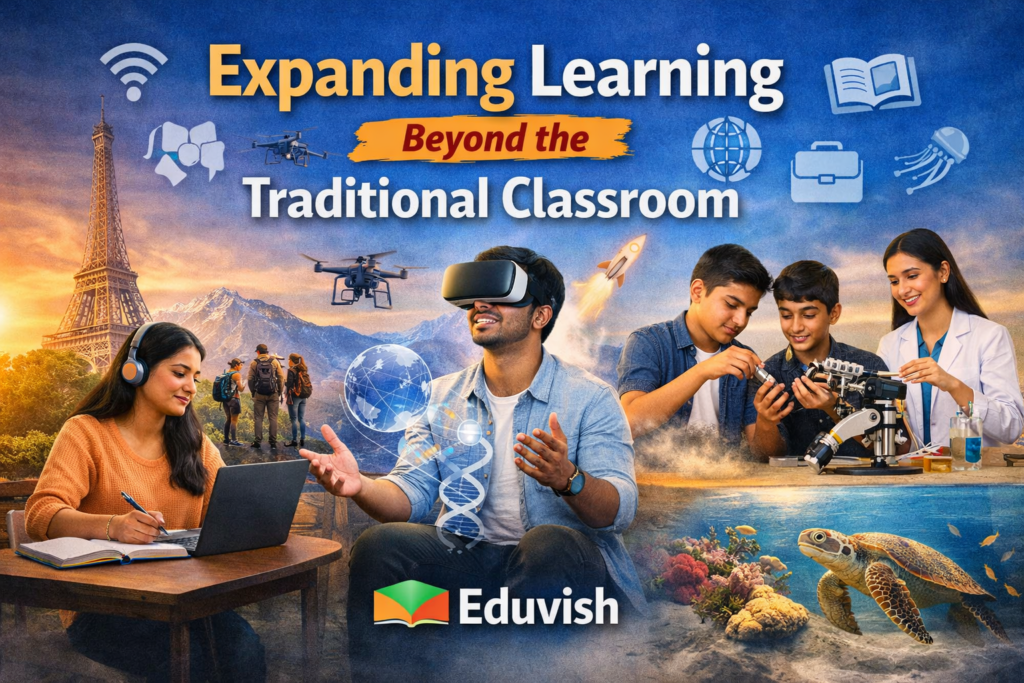
EXPANDING LEARNING BEYOND THE TRADITIONAL CLASSROOM
1. Introduction
Education is no longer confined to four walls. The modern world demands learning that is flexible, experiential, and technology‑driven. Expanding learning beyond the traditional classroom means embracing digital tools, real‑world experiences, and collaborative environments that prepare students for the challenges of the 21st century.
2. The Shift in Education
Traditional classrooms focused on textbooks and lectures. Today, learning extends to virtual platforms, outdoor experiences, internships, and global exchanges. This shift encourages creativity, critical thinking, and adaptability — skills essential for success in the digital age.
3. Key Elements of Modern Learning
| Element | Description | Impact on Students |
|---|---|---|
| Digital Learning | Online courses, e‑learning platforms, and virtual classrooms | Access to global knowledge and flexibility |
| Experiential Learning | Hands‑on projects, fieldwork, and internships | Real‑world application of concepts |
| Collaborative Learning | Group discussions and teamwork | Improves communication and leadership |
| Outdoor Learning | Nature‑based education and exploration | Enhances creativity and problem‑solving |
| Gamified Learning | Interactive quizzes and simulations | Makes learning fun and engaging |
4. Role of Technology in Expanding Learning
Technology is the backbone of modern education.
- AI and Machine Learning: Personalized learning paths for each student.
- Virtual Reality (VR): Immersive experiences that bring lessons to life.
- Online Platforms: Access to global educators and resources.
- Mobile Learning Apps: Study anytime, anywhere.
5. Benefits of Learning Beyond the Classroom
- Encourages independent thinking and creativity.
- Builds real‑world problem‑solving skills.
- Promotes global awareness and cultural understanding.
- Enhances digital literacy and adaptability.
- Fosters lifelong learning habits.
6. Challenges and Solutions
| Challenge | Solution |
|---|---|
| Limited access to technology | Government and NGO initiatives for digital inclusion |
| Lack of teacher training | Professional development programs |
| Student engagement issues | Gamified and interactive learning tools |
| Assessment difficulties | AI‑based evaluation systems |
7. Eduvish’s Approach to Modern Learning
Eduvish believes in empowering learners through innovation. The platform integrates mini‑courses, internships, and digital learning modules that allow students to explore subjects beyond textbooks. By combining technology with experiential education, Eduvish helps students develop critical skills for future careers.
8. Future of Education
The future of education lies in hybrid learning models — blending classroom teaching with online and experiential learning. Students will learn through AI tutors, virtual labs, and global collaborations, making education more inclusive and dynamic.
9. Conclusion
Expanding learning beyond the traditional classroom is not just a trend — it’s a transformation. It prepares students to think critically, act responsibly, and innovate fearlessly. Eduvish continues to lead this movement by creating opportunities that connect learning with life.

