
Introduction
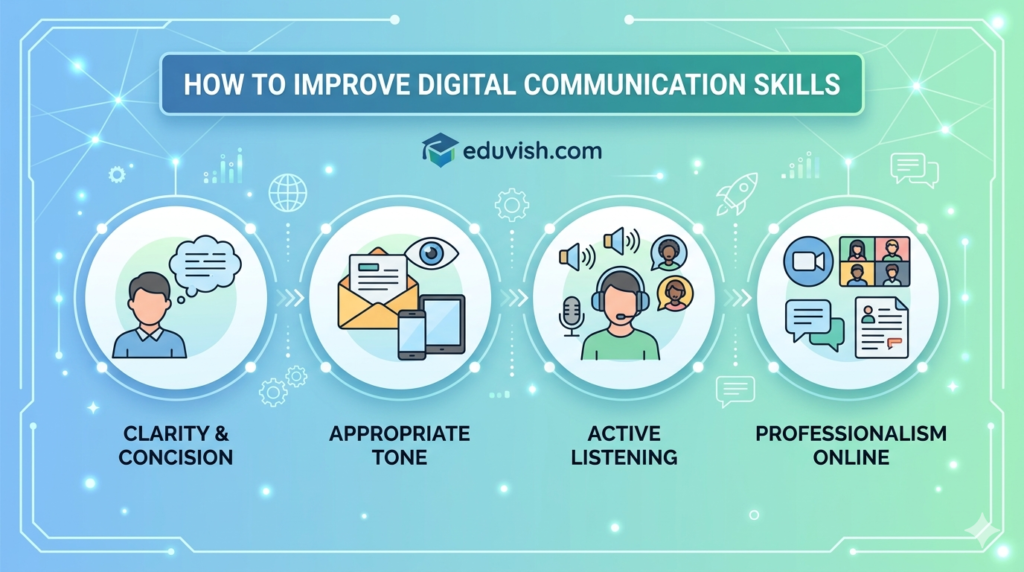
Digital communication is the backbone of modern education and workplaces. From emails and video calls to social media and collaborative tools, the ability to communicate effectively online is now a critical life skill. This guide explores how to improve digital communication skills, why they matter, and practical steps to build confidence.
What Are Digital Communication Skills?
Digital communication skills are the ability to share information clearly and effectively using digital platforms. They include writing professional emails, managing social media, using collaboration tools, and practicing online etiquette.
Key Components:
- Clarity in Writing – concise, error‑free messages
- Active Listening – paying attention during video calls
- Digital Etiquette – respecting tone, timing, and privacy
- Technical Proficiency – using tools like Zoom, Slack, or Google Docs
- Visual Communication – creating presentations, infographics, and videos
Why Digital Communication Skills Matter
- Career Growth: Employers value clear communicators.
- Global Collaboration: Teams across countries rely on digital tools.
- Academic Success: Students use online platforms for assignments and research.
- Personal Branding: Social media presence builds credibility.
- Digital Citizenship: Responsible communication prevents misinformation.
Steps to Improve Digital Communication Skills
1. Practice Professional Writing
- Use formal language in emails.
- Avoid slang and abbreviations.
- Proofread before sending.
2. Strengthen Listening Skills
- Pay attention during video calls.
- Avoid multitasking.
- Summarize discussions to confirm understanding.
3. Learn Digital Tools
- Master platforms like Zoom, Teams, Slack, and Google Workspace.
- Explore project management tools like Trello or Asana.
4. Improve Visual Communication
- Use Canva or PowerPoint for engaging presentations.
- Create infographics to simplify complex data.
5. Practice Online Etiquette
- Respond promptly to messages.
- Respect time zones in global teams.
- Use emojis sparingly and appropriately.
6. Build Confidence Through Practice
- Participate in online discussions.
- Record yourself speaking to improve tone and clarity.
- Seek feedback from peers or mentors.

