
Introduction
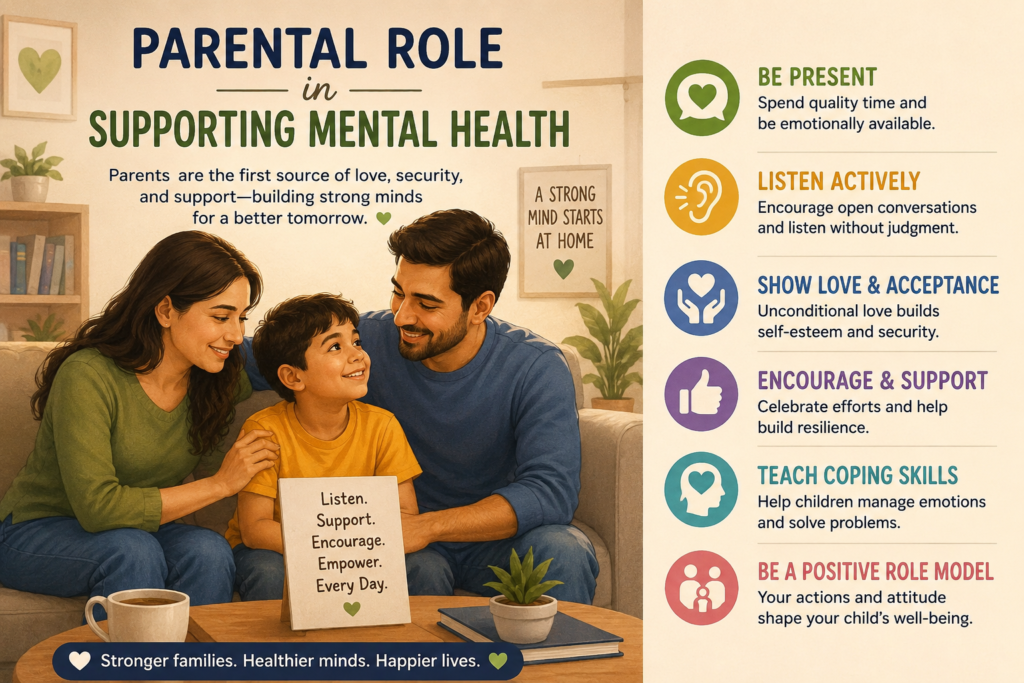
Mental health is as important as physical health, especially for children and young adults. Parents play a critical role in supporting mental health, as they are the first line of emotional support and guidance. By fostering a safe environment, encouraging open communication, and recognizing early signs of distress, parents can help their children build resilience and confidence.
Why Parental Support Matters
- Early detection: Parents can identify behavioral changes quickly.
- Emotional stability: A supportive home reduces stress and anxiety.
- Healthy communication: Encourages children to share feelings openly.
- Academic success: Mental well‑being improves focus and performance.
- Reduced stigma: Parents normalize conversations about mental health.
Strategies for Parents to Support Mental Health
1. Active Listening
Pay attention to children’s concerns without judgment.
2. Creating a Safe Environment
Encourage respect, love, and acceptance at home.
3. Stress Management Activities
Introduce mindfulness, yoga, or relaxation techniques.
4. Collaboration with Schools
Work with teachers and counselors to support children.
5. Professional Guidance
Seek help from psychologists or therapists when needed.
6. Building Resilience
Teach coping skills and problem‑solving strategies.
Comparison Table
| Strategy | Impact on Children | Impact on Parents |
|---|---|---|
| Active Listening | Builds trust | Stronger bond |
| Safe Environment | Reduces anxiety | Positive family atmosphere |
| Stress Management | Improves focus | Healthier routines |
| School Collaboration | Consistent support | Better communication |
| Professional Guidance | Timely help | Shared responsibility |
| Resilience Building | Long‑term coping skills | Confident parenting |
Benefits of Parental Support in Mental Health
- Improved academic performance
- Better emotional regulation
- Higher self‑confidence
- Reduced risk of depression

