
Introducation
In today’s fast-changing world, Artificial Intelligence (AI) is transforming how we communicate, learn, and work. From chatbots to virtual assistants, AI is reshaping human interaction. But as technology advances, one skill remains timeless — effective communication.
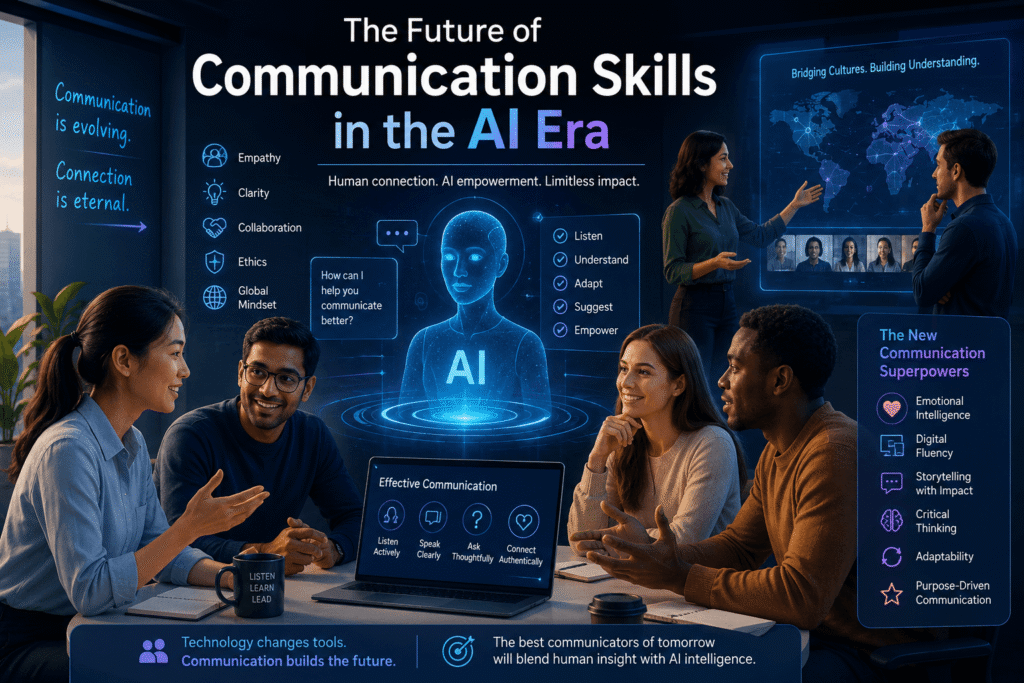
In the AI era, communication skills are evolving beyond words. They now include emotional intelligence, digital literacy, and adaptability. This article explores how communication will change in the age of AI and how students and professionals can prepare for the future.
1. Understanding Communication in the AI Era
Communication is no longer limited to human-to-human interaction. AI systems now play a major role in how information is shared and understood.
Examples:
- Chatbots answering customer queries.
- Virtual assistants scheduling meetings.
- AI tools analyzing tone and sentiment in messages.
SEO Keywords: future communication skills, AI and communication, digital communication trends, AI-driven communication tools
2. The Evolution of Communication Skills
Traditional communication focused on speaking, writing, and listening. In the AI era, these skills are expanding to include:
- Digital fluency: Understanding how to communicate through technology.
- Emotional intelligence: Connecting authentically in digital spaces.
- Data interpretation: Reading and responding to AI-generated insights.
- Adaptability: Adjusting communication styles for different platforms.
Result: Communication becomes more dynamic, data-driven, and empathetic.
3. Human vs. AI Communication
AI can process data faster, but it lacks emotional depth. Humans bring empathy, creativity, and understanding — qualities that machines can’t replicate.
| Aspect | Human Communication | AI Communication |
|---|---|---|
| Emotion | Expresses empathy and feelings | Analyzes tone but doesn’t feel emotions |
| Creativity | Generates new ideas | Relies on existing data |
| Understanding | Interprets context deeply | Limited to programmed responses |
| Connection | Builds relationships | Facilitates transactions |
SEO Keywords: human communication vs AI, empathy in digital communication, AI limitations in communication
4. Essential Future Communication Skills
To thrive in the AI era, students and professionals must develop new communication competencies.
Key Skills:
- Digital Literacy: Understanding AI tools and platforms.
- Emotional Intelligence: Maintaining empathy in tech-driven interactions.
- Critical Thinking: Evaluating AI-generated information.
- Adaptability: Communicating effectively across digital mediums.
- Ethical Awareness: Using AI responsibly and transparently.
Result: These skills ensure meaningful communication in a tech-driven world.
5. AI and Emotional Intelligence
AI can analyze emotions but cannot truly feel them. That’s why emotional intelligence is becoming more valuable.
Tips to Strengthen Emotional Communication:
- Practice empathy in digital conversations.
- Use positive language and tone online.
- Understand cultural and emotional differences.
SEO Keywords: emotional intelligence in AI era, human empathy in technology, future communication trends
6. AI-Powered Communication Tools
AI is enhancing communication through automation and personalization.
Examples:
- ChatGPT and Copilot: Helping users write and communicate efficiently.
- Grammarly: Improving writing clarity and tone.
- Zoom AI Companion: Summarizing meetings and generating insights.
Result: AI tools make communication faster and more precise, but human creativity remains essential.
7. The Role of AI in Education
AI is revolutionizing how students learn communication skills.
Examples:
- Virtual classrooms with AI tutors.
- Real-time feedback on writing and speaking.
- Personalized learning experiences.
SEO Keywords: AI in education, communication skills for students, AI learning tools
8. Challenges of Communication in the AI Era
While AI improves efficiency, it also brings challenges.
Common Issues:
- Overreliance on technology.
- Loss of human touch in communication.
- Privacy and ethical concerns.
Solution: Balance technology with empathy and authenticity.
9. How Students Can Prepare for the Future
Students must adapt to the changing communication landscape.
Tips:
- Learn digital communication tools.
- Practice emotional intelligence.
- Stay updated on AI trends.
- Focus on creativity and critical thinking.
SEO Keywords: student communication skills in AI era, future-ready skills, AI and education trends💡 10. The Importance of Human Connection
10. The Importance of Human Connection
In a world dominated by AI, human connection remains irreplaceable.
Why It Matters:
- Builds trust and collaboration.
- Encourages empathy and understanding.
- Creates meaningful relationships.
Result: The future belongs to those who combine technology with humanity.
11. Communication Ethics in the AI Era
Ethical communication ensures transparency and trust.
Tips:
- Verify AI-generated information before sharing.
- Respect privacy and data protection.
- Avoid manipulation or misinformation.
SEO Keywords: ethical communication in AI, responsible AI use, digital ethics for students
12. The Future Workplace and Communication
AI will reshape workplace communication.
Trends:
- Virtual collaboration across borders.
- AI-driven decision-making.
- Increased focus on emotional intelligence in leadership.
Result: Professionals who master both technology and empathy will lead the future.
13. How AI Enhances Global Communication
AI breaks language barriers and connects people worldwide.
Examples:
- Real-time translation tools.
- Voice recognition systems.
- Cross-cultural communication platforms.
SEO Keywords: AI and global communication, language translation technology, cross-cultural communication skills
14. Balancing AI and Human Skills
The best communicators will blend AI efficiency with human empathy.
Tips:
- Use AI for data and insights.
- Rely on human judgment for emotional understanding.
- Maintain authenticity in digital interactions.
Result: Balanced communication leads to innovation and trust.
15. The Future Outlook
The future of communication will be a partnership between humans and AI.
Predictions:
- AI will handle routine communication tasks.
- Humans will focus on creativity and emotional connection.
- Communication will become more personalized and inclusive.
SEO Keywords: future of communication skills, AI and human collaboration, digital communication evolution
Conclusion
The future of communication skills in the AI era is about blending technology with humanity. While AI enhances efficiency, human empathy, creativity, and emotional intelligence will remain irreplaceable.
Students and professionals who master both will lead the way in education, business, and innovation.
Remember: AI can process information, but only humans can connect hearts.

