
Introduction
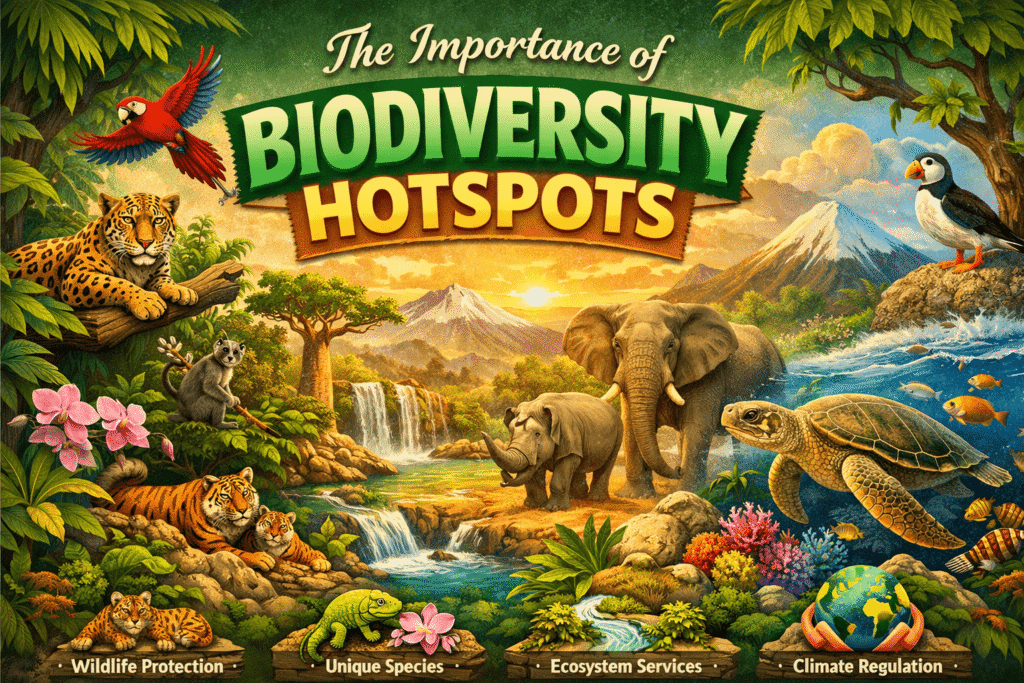
The Earth is home to millions of species — plants, animals, fungi, and microorganisms — all interconnected in a delicate balance. However, human activities such as deforestation, pollution, and climate change have threatened this balance. Biodiversity hotspots are regions that contain exceptional levels of species richness and endemism but are under severe threat.
Understanding the importance of biodiversity hotspots is crucial for protecting ecosystems, preserving genetic diversity, and ensuring the survival of life on our planet.
What Are Biodiversity Hotspots?
A biodiversity hotspot is a region that has a high number of unique species found nowhere else and has lost at least 70% of its original habitat.
Criteria for Hotspot Designation
- High endemism: Many species are native and found only in that region.
- Severe habitat loss: Significant destruction due to human activities.
- Ecological importance: Plays a vital role in maintaining global biodiversity.
Global Biodiversity Hotspots
There are 36 recognized biodiversity hotspots worldwide, covering about 2.3% of Earth’s land surface but housing over 50% of the world’s plant species and nearly 43% of animal species.
Examples
| Region | Location | Key Species |
|---|---|---|
| Amazon Rainforest | South America | Jaguars, macaws, poison dart frogs |
| Western Ghats | India | Lion-tailed macaque, Malabar civet |
| Madagascar | Africa | Lemurs, baobab trees |
| Coral Triangle | Southeast Asia | Sea turtles, clownfish |
| Himalayas | Asia | Snow leopards, red pandas |
Importance of Biodiversity Hotspots
Biodiversity hotspots are vital for ecological balance, climate regulation, and human survival.
1. Conservation of Species
Hotspots protect endangered and endemic species from extinction. They serve as natural sanctuaries for wildlife and plants.
2. Climate Regulation
Forests and wetlands in hotspots absorb carbon dioxide, helping mitigate global warming.
3. Water and Soil Conservation
Vegetation prevents soil erosion and maintains water cycles, ensuring clean water availability.
4. Medicinal Resources
Many plants found in hotspots are used in traditional and modern medicine.
5. Economic Value
Hotspots support tourism, agriculture, and sustainable livelihoods for local communities.
Biodiversity Hotspots in India
India is home to four major biodiversity hotspots, each rich in unique flora and fauna.
| Hotspot | Location | Key Features |
|---|---|---|
| Western Ghats | Maharashtra, Kerala, Tamil Nadu | High endemism, tropical forests |
| Himalayas | Northern India | Alpine ecosystems, rare species |
| Indo‑Burma Region | Northeast India | Rich bird diversity |
| Sundaland (Nicobar Islands) | Andaman & Nicobar | Marine biodiversity |
Threats to Biodiversity Hotspots
Despite their importance, hotspots face numerous threats.
Major Threats
- Deforestation
- Climate change
- Pollution
- Illegal wildlife trade
- Urbanization
Conservation Strategies
Protecting biodiversity hotspots requires global cooperation and sustainable practices.
Key Strategies
- Protected areas: Establishing national parks and wildlife sanctuaries.
- Community participation: Involving local people in conservation efforts.
- Sustainable development: Balancing economic growth with environmental protection.
- Restoration projects: Replanting native species and restoring degraded lands.
- Environmental education: Raising awareness about biodiversity importance.
Role of Technology in Conservation
Modern technology aids in monitoring and protecting biodiversity.
Innovations
- Satellite imaging for habitat mapping.
- DNA barcoding for species identification.
- AI and drones for tracking endangered species.
- Data analytics for predicting ecological changes.
Global Efforts to Protect Hotspots
Organizations like WWF, UNEP, and IUCN work globally to conserve biodiversity hotspots through funding, research, and policy advocacy.
International Agreements
- Convention on Biological Diversity (CBD)
- Paris Agreement
- UN Sustainable Development Goals (SDGs)
The Future of Biodiversity Hotspots
The future depends on collective action. Governments, NGOs, and individuals must work together to protect these ecological treasures.
Emerging trends include:
- Eco‑tourism promoting sustainable travel.
- Rewilding projects restoring natural habitats.
- Climate‑resilient ecosystems adapting to global changes.
Conclusion
Biodiversity hotspots are the heart of our planet’s ecological wealth. They sustain life, regulate climate, and provide resources essential for human survival.
Protecting these regions is not just an environmental duty — it’s a moral responsibility. By conserving biodiversity hotspots, we ensure a healthier, more sustainable future for all living beings.

