
What is Emotional Intelligence?
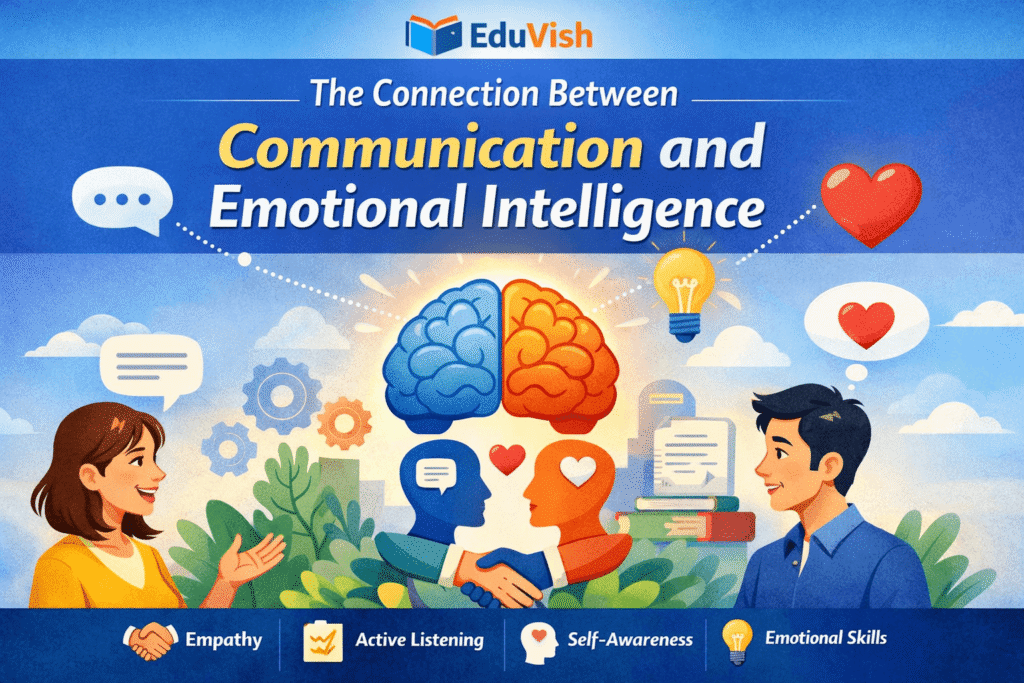
Emotional intelligence is the ability to recognize, understand, and manage your own emotions while also perceiving and responding to the emotions of others. It includes:
- Self-awareness (knowing your feelings)
- Self-regulation (controlling reactions)
- Empathy (understanding others’ emotions)
- Social skills (building relationships)
How EQ Improves Communication
- Clarity: Emotionally intelligent individuals express themselves clearly without confusion.
- Empathy: They listen actively and respond with understanding.
- Conflict Resolution: EQ helps manage disagreements calmly.
- Adaptability: Adjusting tone and style based on audience emotions.
Example: A student with high EQ can sense when a classmate is stressed and adjust their communication to be supportive rather than demanding.
Benefits of Combining Communication and EQ
| Benefit | Impact on Students/Professionals |
|---|---|
| Reduced Conflicts | Fewer misunderstandings in group projects. |
| Better Teamwork | Stronger collaboration and trust. |
| Improved Leadership | Leaders inspire through empathy and clarity. |
| Academic Success | Clearer presentations and discussions. |
| Career Growth | Builds credibility and professional relationships. |
Practical Tips to Build EQ Through Communication
- Practice active listening (nod, paraphrase, ask questions).
- Use positive body language (eye contact, open posture).
- Reflect on your emotions before responding.
- Show empathy by validating others’ feelings.
- Seek feedback to improve communication style.
Common Mistakes to Avoid
- Ignoring emotional cues in conversations.
- Overreacting emotionally during disagreements.
- Using harsh or dismissive language.
- Failing to adapt communication to different audiences.
Conclusion
The connection between communication and emotional intelligence is undeniable. By developing EQ, students and professionals can communicate more effectively, build stronger relationships, and achieve greater success in both academics and careers.

