Sale!

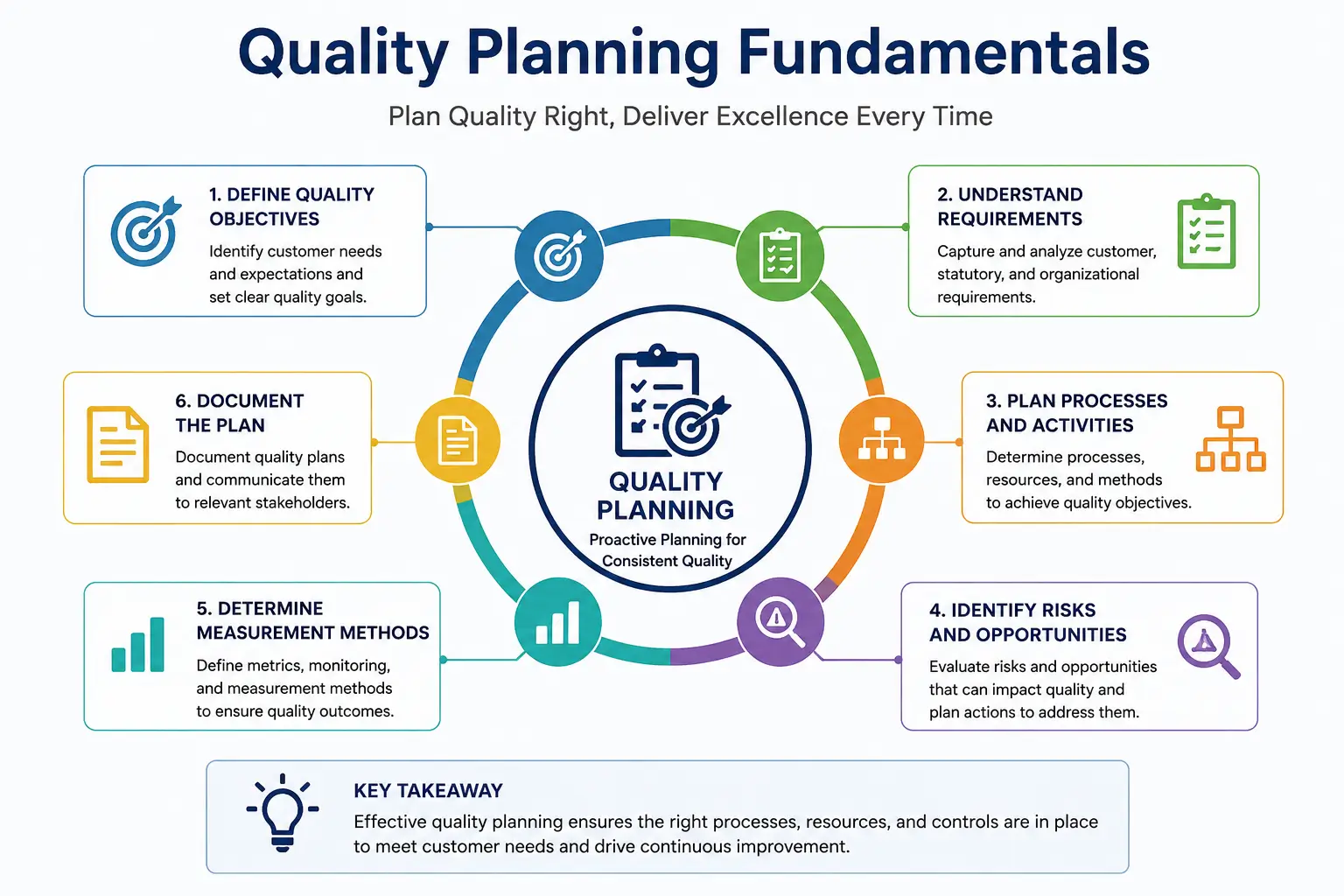
Quality Planning Fundamentals

Original price was: ₹999.00.Current price is: ₹99.00.

The Quality Planning Fundamentals Course is designed to help learners understand the principles and practices required to develop effective quality planning systems. Quality planning plays an important role in ensuring consistent processes, improving product performance, reducing errors, and meeting customer expectations.

This course provides practical knowledge of quality management principles, quality planning methods, process improvement techniques, quality standards, risk identification, and performance evaluation. Moreover, learners understand how organizations create structured approaches to maintain and improve quality across different operations.

Throughout the course, participants explore quality objectives, planning frameworks, quality assurance methods, documentation practices, process monitoring, and continuous improvement strategies. In addition, they learn how businesses use quality planning to improve efficiency, reduce waste, and achieve operational excellence.

The course is suitable for quality professionals, operations managers, production specialists, business professionals, students, and individuals interested in quality management. Furthermore, it helps learners develop analytical thinking, problem-solving abilities, process evaluation skills, and decision-making capabilities.

After completing this course, learners will understand quality planning fundamentals and gain the ability to support quality improvement initiatives, improve operational processes, and contribute to successful quality management systems.

SKU: SDC-2701 Category:

Introduction

Quality is a key factor that determines the success of products, services, and business operations. Organizations must maintain consistent quality standards to meet customer expectations, reduce operational problems, and remain competitive. Therefore, effective quality planning has become an essential part of modern business management.

The Quality Planning Fundamentals Course introduces learners to the concepts, methods, and strategies used to create effective quality planning systems. The course explains how organizations define quality goals, develop improvement plans, identify risks, and establish processes for maintaining high standards.

Moreover, quality planning helps businesses prevent errors before they occur. Instead of only correcting problems after production or service delivery, organizations use structured planning methods to improve processes from the beginning.

Throughout this course, learners explore quality objectives, quality frameworks, process analysis, quality assurance practices, documentation methods, and continuous improvement approaches. In addition, they understand how quality planning supports productivity, efficiency, and customer satisfaction.

The course also focuses on practical skills such as problem-solving, process evaluation, risk management, and performance improvement. These abilities help professionals contribute effectively to quality-driven organizations.

By completing this course, learners will gain a strong foundation in quality planning and understand how structured quality practices support long-term business success.


Course Overview

The Quality Planning Fundamentals Course provides comprehensive training on quality management principles, planning processes, quality assurance methods, process improvement, and operational excellence. Furthermore, the course explains how organizations build effective quality systems.

Fundamentals of Quality Planning

The course begins with the basics of quality planning, including quality concepts, quality objectives, planning importance, and the role of quality in business success.

Understanding Quality Management Systems

Learners explore quality management principles, quality frameworks, standards, process control, and methods used to maintain consistent performance.

Quality Objectives and Planning Strategies

This section explains setting quality goals, developing action plans, defining requirements, and aligning quality initiatives with organizational objectives.

Process Analysis and Improvement

Learners understand process evaluation, identifying inefficiencies, improving workflows, reducing errors, and implementing better operational practices.

Quality Assurance Methods

The course covers preventive quality approaches, monitoring techniques, inspections, testing methods, and ensuring process reliability.

Risk Identification and Quality Control

Learners explore risk assessment, failure prevention, quality challenges, corrective actions, and methods for maintaining standards.

Quality Documentation Practices

This section explains quality records, procedures, reporting systems, documentation control, and maintaining quality information.

Performance Measurement and Evaluation

Learners understand quality indicators, performance monitoring, audits, feedback analysis, and improvement measurement.

Continuous Improvement Techniques

The course covers improvement strategies, problem-solving methods, efficiency enhancement, and creating a culture of quality.

Future Trends in Quality Management

Finally, learners explore digital quality management, automation, data analytics, artificial intelligence, and modern approaches to quality improvement.

Overall, this course combines quality management principles with practical planning techniques. Therefore, learners develop the skills required to support effective quality systems and continuous improvement initiatives.


What You Will Learn

The Quality Planning Fundamentals Course equips learners with practical knowledge and skills required to develop and manage quality improvement processes.

Understand Quality Planning Concepts

Learners will understand quality principles, planning methods, quality objectives, and the importance of structured quality management.

Develop Quality Strategies

Participants will learn how to create quality plans, define requirements, and align quality activities with business goals.

Analyze Business Processes

Learners will explore process evaluation, workflow analysis, improvement opportunities, and efficiency enhancement methods.

Apply Quality Assurance Practices

The course teaches quality monitoring, preventive approaches, standards management, and maintaining consistent performance.

Identify Quality Risks

Learners will understand risk assessment, problem identification, corrective actions, and prevention strategies.

Manage Quality Documentation

Participants will learn documentation practices, quality records, reporting methods, and information management.

Measure Quality Performance

Learners will develop skills in quality indicators, audits, evaluation methods, and improvement tracking.

Apply Continuous Improvement Methods

The course helps learners understand improvement frameworks, problem-solving techniques, and operational excellence practices.


Skills You Will Gain

After completing the Quality Planning Fundamentals Course, learners will develop valuable quality management and operational skills.

Quality Planning Skills

Develop the ability to create quality plans, define objectives, and support quality improvement initiatives.

Quality Management Skills

Gain knowledge of quality systems, standards, process control, and quality assurance practices.

Process Improvement Skills

Learn methods for analyzing processes, reducing errors, improving efficiency, and enhancing performance.

Risk Management Skills

Understand quality risks, prevention methods, corrective actions, and improvement strategies.

Documentation Skills

Develop skills in maintaining quality records, reports, procedures, and compliance documentation.

Analytical Skills

Improve problem-solving, data evaluation, performance analysis, and decision-making abilities.

Continuous Improvement Skills

Learn techniques for operational excellence, workflow improvement, and sustainable quality enhancement.

Business Improvement Skills

Understand how quality planning contributes to customer satisfaction, productivity, and organizational success.


Benefits of the Course

The Quality Planning Fundamentals Course helps learners understand how organizations create effective quality systems, improve processes, and maintain consistent standards. Moreover, the course develops practical skills required to support quality improvement and operational excellence.

Understand Quality Management Principles

First, learners gain knowledge of basic quality concepts, planning approaches, and quality management practices. As a result, they can understand how organizations establish and maintain quality standards.

Improve Process Planning Skills

Effective quality planning improves business processes. Therefore, this course helps learners understand workflow analysis, process improvement methods, and strategies for preventing errors.

Develop Quality Assurance Knowledge

Quality assurance helps organizations maintain reliable performance. Additionally, learners explore monitoring methods, quality standards, preventive actions, and improvement techniques.

Enhance Problem-Solving Abilities

Quality challenges require effective solutions. Furthermore, learners develop skills to identify issues, analyze root causes, and implement corrective and preventive actions.

Learn Risk Identification Methods

Early risk identification helps prevent quality failures. Consequently, learners understand risk assessment techniques, quality risks, and strategies for reducing operational problems.

Improve Documentation Management Skills

Quality systems require proper documentation. Therefore, learners gain knowledge of procedures, records, reports, quality documents, and information control practices.

Support Continuous Improvement

Organizations focus on improving processes continuously. Moreover, learners understand improvement frameworks, efficiency enhancement methods, and quality-focused decision-making.

Strengthen Performance Evaluation Skills

Measuring quality performance helps organizations improve results. In addition, learners develop knowledge of quality indicators, audits, evaluations, and performance monitoring.

Understand Modern Quality Practices

Technology is transforming quality management. As a result, learners explore digital quality systems, automation, analytics, and modern improvement approaches.

Expand Career Opportunities

Quality management skills are valuable across industries. Therefore, this course helps learners prepare for careers in quality assurance, operations, manufacturing, and business improvement.


Who Should Enroll

The Quality Planning Fundamentals Course is designed for individuals who want to develop knowledge of quality management, process improvement, and operational excellence.

Quality Professionals

Quality professionals can improve their understanding of quality planning, assurance methods, performance evaluation, and improvement strategies.

Production and Manufacturing Professionals

Production professionals can learn how quality planning supports efficient processes, error reduction, and product improvement.

Operations Managers

Operations managers can develop skills to improve workflows, manage quality systems, and achieve operational goals.

Project Managers

Project professionals can understand quality planning methods, quality requirements, risk management, and performance monitoring.

Business Professionals

Business professionals can learn how quality management improves customer satisfaction, efficiency, and organizational performance.

Supply Chain Professionals

Supply chain professionals can understand quality planning throughout procurement, production, and delivery processes.

Students and Graduates

Students pursuing management, engineering, manufacturing, business, or quality-related fields can develop valuable industry skills.

Entrepreneurs and Business Owners

Business owners can learn how quality planning helps improve products, services, customer trust, and business growth.


Career Opportunities

Quality management is essential for organizations that want to deliver reliable products and services. Therefore, professionals with quality planning skills can explore various career opportunities.

Potential career roles include:

  • Quality Planning Specialist
  • Quality Assurance Analyst
  • Quality Manager
  • Quality Control Specialist
  • Process Improvement Specialist
  • Operations Manager
  • Quality Engineer
  • Compliance Analyst
  • Manufacturing Quality Specialist
  • Business Process Analyst
  • Continuous Improvement Specialist
  • Project Quality Manager
  • Quality Consultant
  • Production Quality Analyst
  • Operational Excellence Specialist

Professionals can find opportunities in:

  • Manufacturing industries
  • Automotive companies
  • Healthcare organizations
  • Technology companies
  • Construction industries
  • Supply chain organizations
  • Pharmaceutical companies
  • Service industries
  • Engineering firms
  • Research organizations

Furthermore, this course provides a strong foundation for advanced learning in quality management systems, Lean management, process improvement, operations excellence, and business performance improvement.


Certification

Upon successfully completing the Quality Planning Fundamentals Course, learners will receive a Course Completion Certificate that recognizes their knowledge of quality planning, quality management principles, process improvement methods, risk assessment, and performance evaluation.

Moreover, the certificate demonstrates your commitment to developing professional quality management skills. It can strengthen your resume and showcase your ability to support quality improvement initiatives.

Additionally, the certification validates your understanding of quality systems, documentation practices, assurance methods, continuous improvement techniques, and operational excellence principles. Consequently, it supports career growth in quality management, operations, manufacturing, and business improvement roles.


Conclusion

Quality planning is an important part of successful business operations because it helps organizations maintain standards, reduce errors, improve efficiency, and deliver better customer experiences. Businesses require professionals who can plan quality processes, evaluate performance, and support continuous improvement. Therefore, quality planning skills have become valuable across multiple industries.

The Quality Planning Fundamentals Course provides comprehensive knowledge of quality management principles, process improvement, risk identification, documentation practices, and performance measurement. Moreover, learners develop practical skills that help organizations create effective quality systems.

Throughout the course, participants strengthen their understanding of quality processes, problem-solving techniques, analytical methods, and improvement strategies. In addition, they learn how structured quality planning contributes to operational excellence and long-term business success.

Whether your goal is to build a career in quality management, improve operational skills, support manufacturing excellence, or understand business improvement practices, this course provides the foundation required for success. Ultimately, it prepares learners to contribute to quality-driven organizations and support continuous improvement initiatives.


FAQ SECTION

1. What is the Quality Planning Fundamentals Course?

The Quality Planning Fundamentals Course teaches learners how to create quality plans, improve processes, manage quality systems, and support operational excellence.

2. Who should enroll in this course?

This course is suitable for quality professionals, operations managers, production specialists, business professionals, students, and entrepreneurs.

3. Do I need prior quality management experience?

No. The course is suitable for beginners as well as professionals who want to improve their understanding of quality planning practices.

4. What topics are covered in this course?

The course covers quality planning, quality assurance, process improvement, risk management, documentation, performance measurement, and continuous improvement.

5. What skills will I gain after completing this course?

You will develop skills in quality planning, process analysis, risk identification, quality assurance, documentation management, and improvement strategies.

6. Why is quality planning important?

Quality planning helps organizations prevent errors, improve processes, maintain standards, reduce costs, and increase customer satisfaction.

7. What career opportunities are available after completing this course?

Graduates can pursue careers as Quality Managers, Quality Analysts, Process Improvement Specialists, Quality Engineers, and Operations Professionals.

8. Will I receive a certificate after completing this course?

Yes. Learners who successfully complete the course will receive a Course Completion Certificate validating their quality planning knowledge.

9. How does quality planning improve business performance?

Quality planning improves business performance by creating structured processes, reducing waste, improving efficiency, and maintaining consistent quality standards.

10. How can this course benefit my career?

This course enhances your quality management skills, improves your professional profile, and prepares you for opportunities in quality, operations, and process improvement fields.

Course Teacher Name

Komal Meena

Language

Hindi, English, Punjabi, Marathi, Malyalam

Mode

Online, Offline

Course Certificates

Yes

Reviews

There are no reviews yet.

Be the first to review “Quality Planning Fundamentals”

Your email address will not be published. Required fields are marked *