
Introduction
The Student Engagement Design Course is a comprehensive professional development program designed to help educators, instructional designers, trainers, and education professionals create engaging, interactive, and learner-centered educational experiences. Student engagement is one of the most important factors influencing academic success, knowledge retention, classroom participation, and lifelong learning. When learners are actively engaged, they become more motivated, confident, and capable of achieving meaningful learning outcomes.
Modern education extends beyond traditional lectures and passive learning. Today’s students expect interactive, collaborative, technology-enhanced, and personalized learning experiences. Educational institutions increasingly recognize the need for well-designed engagement strategies that encourage participation, improve critical thinking, and support student achievement across both classroom and online learning environments.
This course provides learners with practical knowledge and evidence-based strategies for designing engaging educational experiences. Whether you are a teacher, instructional designer, trainer, curriculum developer, academic coordinator, or educational leader, this course equips you with the skills needed to create motivating and effective learning environments.
Course Overview
Student engagement design focuses on creating educational experiences that encourage learners to participate actively, think critically, collaborate effectively, and remain motivated throughout the learning process. Effective engagement strategies improve learning outcomes while strengthening communication between educators and students.
This course introduces learners to learner-centered instructional design, active learning methodologies, collaborative teaching techniques, educational technology integration, assessment strategies, and continuous improvement practices. Participants learn how to design engaging learning activities that support diverse learning styles and educational goals.
The curriculum combines educational theory with practical applications, enabling learners to implement engagement strategies in schools, colleges, universities, corporate training environments, and online education platforms.
What You Will Learn
The Student Engagement Design Course covers a broad range of topics that prepare learners to design effective and engaging educational experiences.
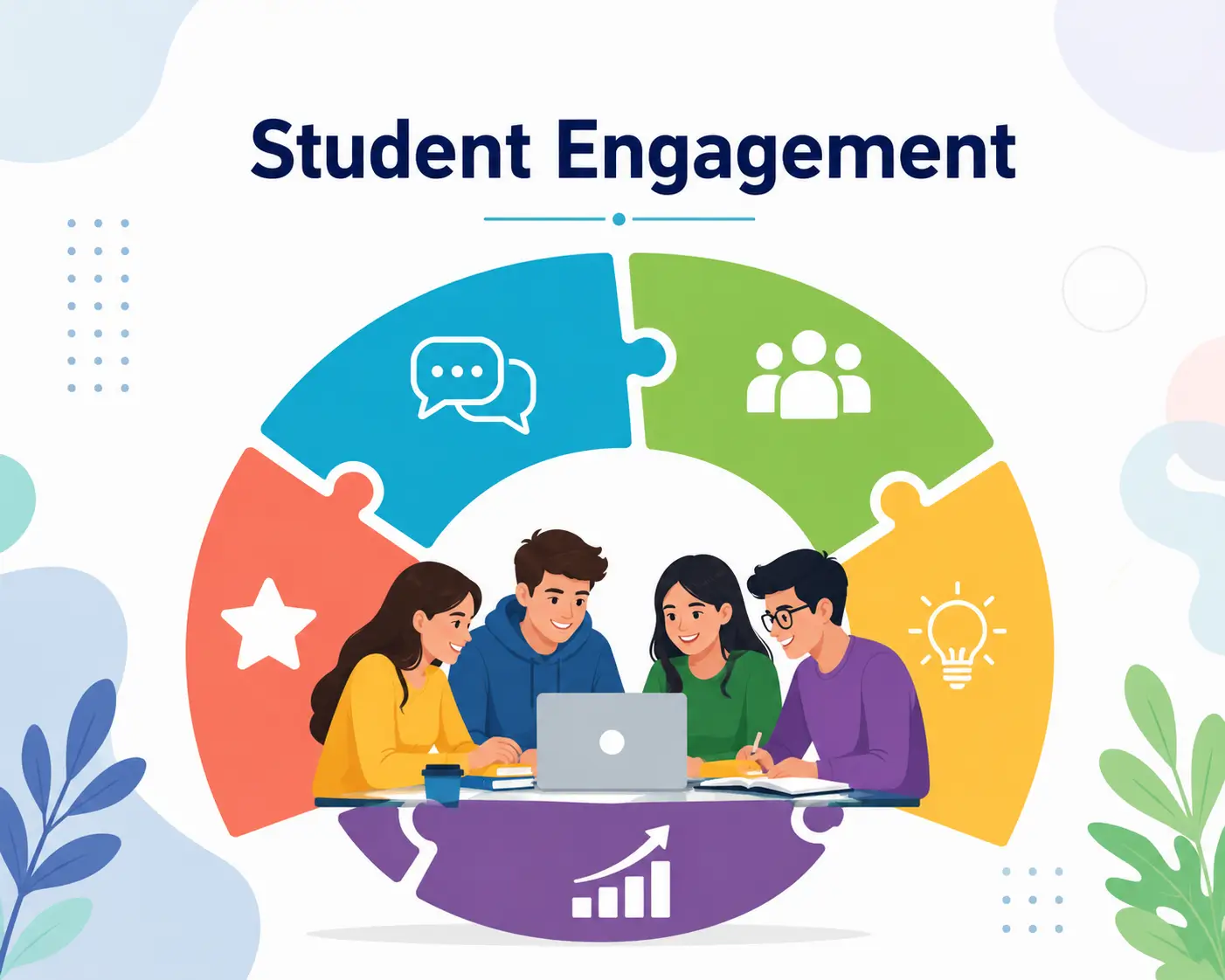
Learners begin by understanding the principles of student engagement and its relationship to motivation, participation, academic achievement, and learner satisfaction. They explore different dimensions of engagement, including behavioral, emotional, cognitive, and social engagement.
The course introduces learner-centered instructional design principles and explains how educational experiences can be structured to maximize student participation and learning outcomes.
Participants study active learning strategies such as collaborative learning, problem-based learning, project-based learning, inquiry-based learning, peer learning, and experiential learning. These approaches help students become active participants rather than passive recipients of information.
A significant portion of the course focuses on motivation and engagement theories. Learners understand how intrinsic and extrinsic motivation influence learning and discover practical methods for maintaining student interest throughout a course or program.
The course also explores classroom communication, questioning techniques, discussion facilitation, group activities, reflective learning, and effective feedback methods that encourage deeper understanding and continuous improvement.
Participants gain practical knowledge of educational technology tools, digital learning platforms, virtual classrooms, learning management systems (LMS), multimedia resources, gamification, and interactive content development. These technologies support engagement in both face-to-face and online learning environments.
Additionally, learners explore inclusive teaching practices, accessibility, culturally responsive instruction, differentiated learning strategies, and universal design for learning (UDL) principles to ensure that all students can participate successfully.
The curriculum also covers assessment design, formative and summative assessments, learner analytics, performance tracking, and evaluation techniques used to measure student engagement and learning effectiveness.
Finally, participants learn continuous improvement strategies, data-informed instructional planning, reflective teaching, and methods for adapting engagement approaches based on learner feedback and educational outcomes.
Skills You Will Gain
Upon successful completion of the course, learners will develop valuable professional skills, including:
- Student engagement design
- Learner-centered instructional design
- Active learning strategies
- Collaborative learning facilitation
- Classroom interaction techniques
- Educational technology integration
- Gamification in education
- Assessment design
- Student motivation strategies
- Inclusive teaching practices
- Online learning engagement
- Feedback and evaluation
- Curriculum enhancement
- Learning experience design
- Educational communication
These skills are highly valued in schools, colleges, universities, online learning platforms, corporate training organizations, educational technology companies, and instructional design roles.
Benefits of the Course
The Student Engagement Design Course provides learners with practical strategies for improving classroom participation, learner motivation, and academic performance.
Participants gain expertise in designing engaging lessons, integrating educational technology, promoting collaborative learning, and creating inclusive educational environments. These skills help educators improve learning experiences and increase student satisfaction.
The course also strengthens instructional design, communication, creativity, leadership, and problem-solving skills that support professional growth in education and training.
As educational institutions increasingly prioritize student-centered learning and digital education, professionals with expertise in student engagement design continue to be highly sought after.
The knowledge gained through this course also supports curriculum innovation, educational transformation, and continuous improvement initiatives.
Who Should Enroll?
This course is ideal for:
- Teachers
- College and university faculty
- Instructional designers
- Curriculum developers
- Academic coordinators
- Corporate trainers
- Education consultants
- E-learning specialists
- School administrators
- Learning experience designers
- Educational technology professionals
- Teacher educators
- Education students
- Online course creators
- Anyone interested in improving student engagement
No prior instructional design experience is required. The course is suitable for beginners as well as experienced education professionals.
Career Opportunities
After completing the course, learners may pursue opportunities such as:
- Instructional Designer
- Learning Experience Designer
- Student Engagement Specialist
- Academic Coordinator
- Curriculum Developer
- Educational Consultant
- Corporate Trainer
- E-learning Developer
- Online Learning Specialist
- Teacher Trainer
- Educational Program Designer
- Digital Learning Coordinator
- Faculty Development Specialist
- Learning and Development Consultant
- Educational Innovation Coordinator
Professionals with student engagement expertise are employed in schools, colleges, universities, educational technology companies, online learning platforms, corporate training organizations, nonprofit educational institutions, and government education departments.
Certification
Upon successful completion of the Student Engagement Design Course, participants receive a certification recognizing their knowledge of student engagement strategies, instructional design, active learning, educational technology, assessment design, learner motivation, and inclusive teaching practices. This certification enhances professional credibility and supports career advancement in education, instructional design, and learning experience development.
Why Choose This Course?
The Student Engagement Design Course combines learner-centered instructional design with practical engagement strategies to provide a comprehensive learning experience.
The curriculum focuses on active learning, motivation, educational technology, assessment, collaborative learning, inclusive teaching, and continuous improvement. Learners gain practical skills that help create engaging educational experiences across classrooms, online platforms, and training environments.
Whether your goal is to improve classroom participation, design engaging online courses, enhance teaching effectiveness, or build a career in instructional design, this course provides the knowledge, practical skills, and confidence needed to succeed.
Enroll today and build a strong foundation in student engagement design, learner-centered education, instructional design, and educational innovation.
FAQ Section
1. What is the Student Engagement Design Course?
The course teaches learners how to design engaging learning experiences using learner-centered instructional strategies, active learning methods, educational technology, and student motivation techniques.
2. Is this course suitable for beginners?
Yes. The course is designed for beginners as well as experienced educators and instructional designers.
3. What topics are covered in this course?
Topics include student engagement, instructional design, active learning, gamification, assessment design, educational technology, learner motivation, inclusive teaching, and online learning engagement.
4. Will I receive a certificate after completing the course?
Yes. Participants receive a certificate upon successful completion of the course.
5. Do I need prior teaching or instructional design experience?
No. The course introduces all concepts in a beginner-friendly and practical manner.
6. Who should enroll in this course?
Teachers, instructional designers, curriculum developers, trainers, education consultants, academic coordinators, and education students can benefit from this course.
7. Is the course fully online?
Yes. The course is designed for flexible online learning, allowing participants to study at their own pace.
8. What skills will I gain?
You will gain skills in student engagement, instructional design, active learning, educational technology, assessment design, learner motivation, and collaborative learning.
9. Can this course improve my career opportunities?
Yes. Student engagement and instructional design skills are highly valued in schools, universities, educational technology companies, online learning platforms, and corporate training organizations.
10. Why is student engagement important in education?
Student engagement improves motivation, participation, knowledge retention, critical thinking, academic performance, and overall learning outcomes while creating a more positive and effective educational experience.




Reviews
There are no reviews yet.