
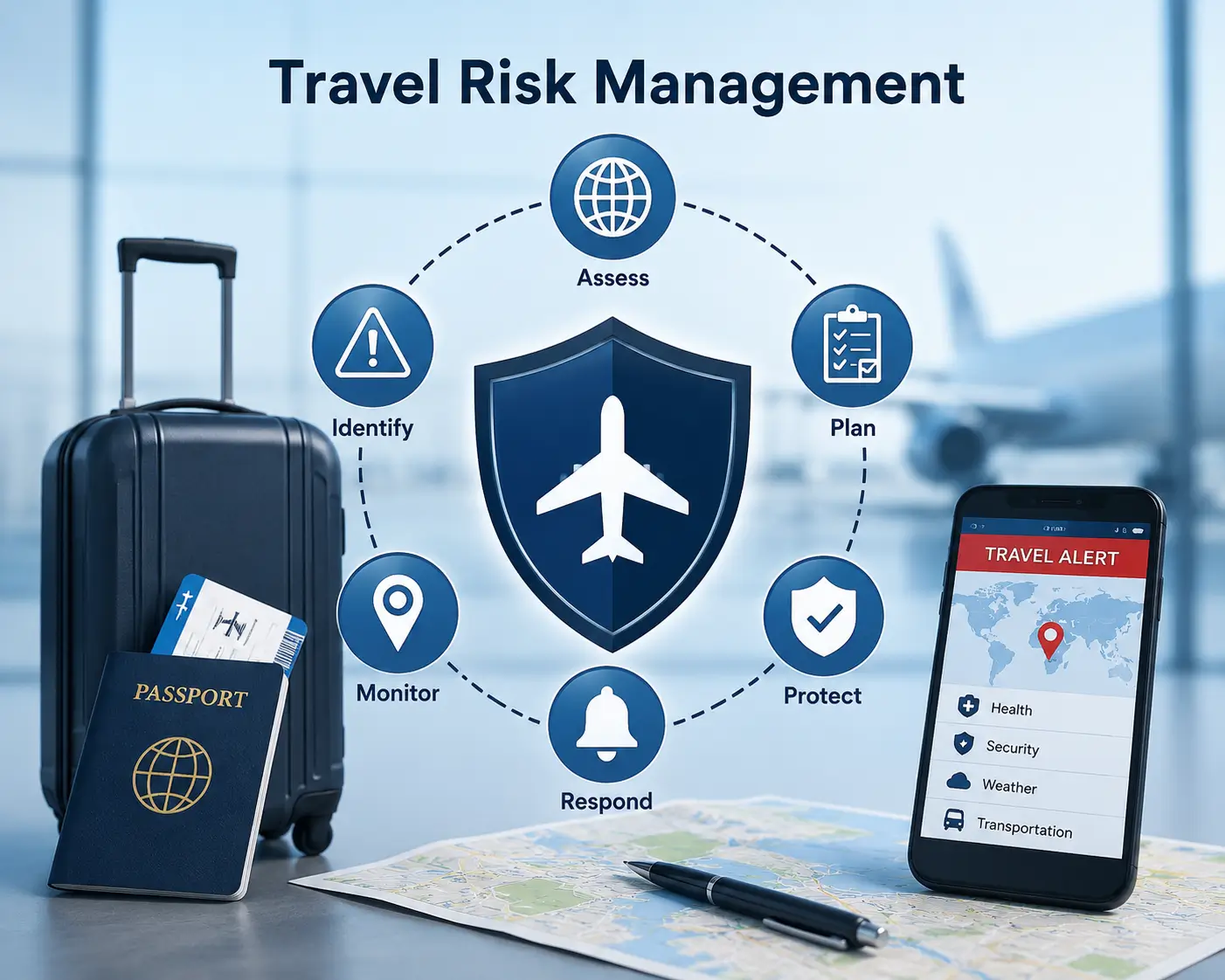
Introduction to Travel Risk Management
The Travel Risk Management Course is a comprehensive professional training program designed to prepare learners to identify, evaluate, and mitigate risks that may affect travelers, travel organizations, and tourism operations. Modern travel involves a wide range of potential risks, including health concerns, security threats, natural disasters, transportation disruptions, legal requirements, and operational challenges.
Travel risk management helps organizations develop proactive strategies to protect travelers while maintaining business continuity. Effective planning enables travel professionals to respond quickly to unexpected events, reduce financial losses, and maintain customer confidence.
This course combines tourism management, safety planning, emergency preparedness, security principles, and operational management to provide learners with practical knowledge applicable across travel agencies, airlines, tour operators, hospitality businesses, corporate travel departments, and destination management organizations.
Why Travel Risk Management Matters
Travel has become increasingly complex due to changing regulations, environmental factors, cybersecurity concerns, and global events. Organizations that effectively manage travel risks can reduce operational disruptions, protect travelers, strengthen brand reputation, and improve customer confidence.
Travel risk management supports informed decision-making, ensures compliance with legal and safety requirements, enhances emergency preparedness, and helps organizations respond efficiently to unexpected situations.
The Travel Risk Management Course enables learners to understand how structured risk management contributes to safer and more resilient travel operations.
Course Overview
The Travel Risk Management Course introduces learners to the principles, frameworks, and best practices used to manage travel-related risks.
Participants begin by studying travel risk assessment methodologies, traveler safety, and legal responsibilities. The course explores emergency response planning, crisis communication, travel insurance, destination risk analysis, cybersecurity awareness, and business continuity planning.
Learners also study regulatory compliance, incident reporting, digital monitoring tools, stakeholder communication, leadership, teamwork, and continuous improvement in travel safety.
Practical case studies demonstrate how travel organizations prepare for, respond to, and recover from operational disruptions while maintaining high service standards.
Topics Covered
Throughout the Travel Risk Management Course, learners will study:
Travel Risk Assessment
Learn how to identify, evaluate, and prioritize travel-related risks before and during travel.
Traveler Safety and Security
Understand personal safety, destination security, transportation safety, and traveler protection strategies.
Emergency Response Planning
Study emergency preparedness, evacuation procedures, incident response, and contingency planning.
Crisis Communication
Explore communication strategies for travelers, stakeholders, emergency services, and organizational teams.
Health and Safety Management
Learn health protocols, travel advisories, medical emergencies, and workplace safety practices.
Travel Insurance and Legal Compliance
Understand insurance coverage, liability management, legal responsibilities, and international travel regulations.
Business Continuity Planning
Study operational resilience, recovery planning, disruption management, and continuity strategies.
Cybersecurity in Travel
Explore digital security, online booking protection, data privacy, and cyber risk awareness.
Destination Risk Analysis
Understand political, environmental, weather-related, and infrastructure risks affecting travel.
Leadership and Decision-Making
Develop leadership, communication, teamwork, critical thinking, and crisis management skills.
Skills You Will Gain
After completing the Travel Risk Management Course, learners will develop valuable professional skills including:
- Travel risk assessment
- Emergency response planning
- Crisis management
- Traveler safety and security
- Health and safety management
- Business continuity planning
- Legal and regulatory compliance
- Travel insurance knowledge
- Cybersecurity awareness
- Risk communication
- Leadership and decision-making
- Problem-solving
- Incident reporting
- Operational resilience
- Strategic planning
These competencies are valuable across travel agencies, tour operators, airlines, hotels, resorts, corporate travel departments, destination management companies, and tourism organizations.
Benefits of the Course
The Travel Risk Management Course provides practical knowledge for protecting travelers and ensuring safe, efficient travel operations.
Participants gain confidence in conducting risk assessments, developing emergency plans, managing crises, ensuring compliance, and improving organizational resilience. The course also strengthens leadership, analytical thinking, communication, and strategic planning skills.
As global travel continues to evolve, professionals with expertise in travel risk management are increasingly valuable across the travel and tourism industry.
Who Should Enroll?
This course is suitable for:
- Travel managers
- Tour operators
- Travel agents
- Tourism professionals
- Corporate travel coordinators
- Hospitality professionals
- Airline operations staff
- Destination managers
- Safety and compliance officers
- Individuals interested in travel and tourism careers
No previous experience is required.
Career Opportunities
After completing the Travel Risk Management Course, learners may pursue careers such as:
- Travel Risk Manager
- Corporate Travel Manager
- Travel Operations Manager
- Tourism Safety Officer
- Risk and Compliance Executive
- Travel Security Coordinator
- Emergency Planning Officer
- Business Continuity Coordinator
- Travel Consultant
- Destination Risk Analyst
- Airline Operations Executive
- Hospitality Risk Manager
- Crisis Management Coordinator
- Travel Safety Advisor
- Tourism Operations Specialist
Certification
Upon successful completion of the Travel Risk Management Course, learners receive a professional certificate recognizing their expertise in travel risk assessment, emergency response planning, traveler safety, crisis management, regulatory compliance, business continuity, and travel operations. This certification supports career advancement across travel agencies, airlines, hospitality organizations, corporate travel departments, and tourism businesses.
Frequently Asked Questions (FAQs)
1. What is the Travel Risk Management Course?
The course teaches how to identify, assess, and manage risks associated with domestic and international travel.
2. Who should enroll in this course?
Travel managers, tour operators, travel agents, tourism professionals, corporate travel coordinators, and hospitality staff can benefit.
3. Do I need prior experience?
No. The course is suitable for beginners as well as experienced professionals.
4. What topics are covered?
Topics include travel risk assessment, emergency planning, traveler safety, crisis communication, compliance, cybersecurity, and business continuity.
5. Will I receive a certificate after completion?
Yes. Participants receive a professional certificate after successfully completing the course.
6. What skills will I develop?
You will develop skills in risk assessment, emergency planning, crisis management, traveler safety, communication, and strategic decision-making.
7. Is this course suitable for travel and tourism careers?
Yes. It is highly relevant for careers in travel management, tourism operations, corporate travel, hospitality, and airline operations.
8. Can this course improve my career opportunities?
Yes. It prepares learners for leadership and operational roles focused on travel safety, compliance, and risk management.
9. Does the course include digital risk management tools?
Yes. The course introduces digital monitoring tools, cybersecurity practices, travel management systems, and incident reporting processes.
10. Why is travel risk management important?
It helps organizations protect travelers, reduce operational disruptions, ensure legal compliance, improve emergency preparedness, and maintain business continuity.




Reviews
There are no reviews yet.