
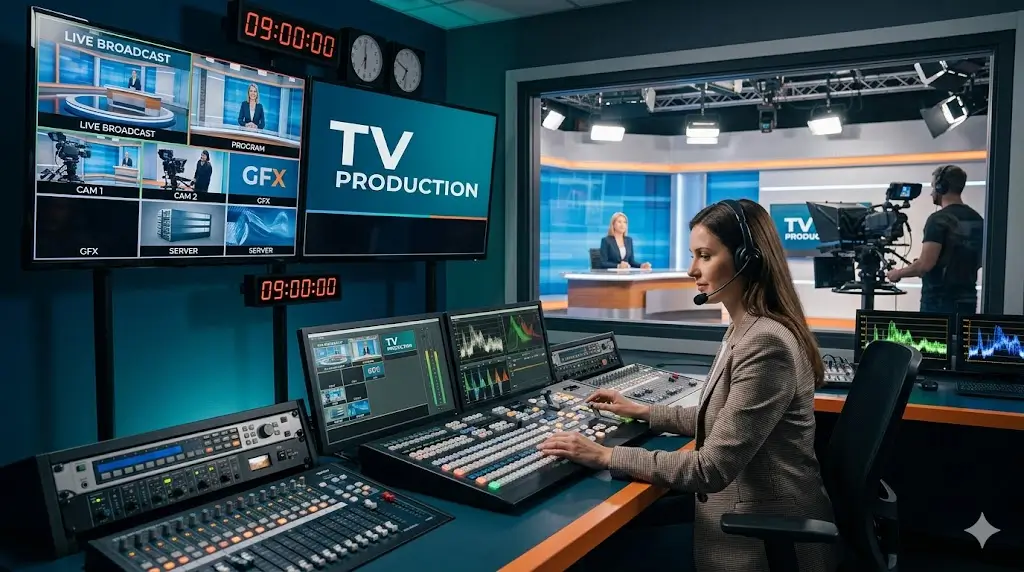
TV Production Course
The TV Production Course is designed for individuals who want to build professional skills in television broadcasting and media production. This course introduces learners to the complete television production process, from planning and filming to editing and broadcasting. Moreover, it provides practical knowledge that helps students understand how television programs are created and delivered to audiences.
Course Overview
Television remains one of the most influential forms of media worldwide. Therefore, skilled professionals are needed to manage production, content creation, camera operations, and broadcasting activities. This course provides a strong foundation in television production and helps learners understand industry standards and best practices.
Furthermore, students explore the technical and creative aspects of television production. As a result, they develop the skills required to work in modern broadcasting environments.
Television Production Fundamentals
The course introduces the basics of television production and broadcasting. Learners understand production workflows, television formats, and studio operations. In addition, they explore how television content is planned, developed, and produced.
Moreover, students gain insights into the roles and responsibilities of production teams. These skills help them understand how successful television programs are created.
Camera Operations and Filming Techniques
Camera work is a key part of television production. Therefore, learners study camera functions, framing, shot composition, and movement techniques. Furthermore, they learn how to capture high-quality footage for various television formats.
As a result, students gain practical filming skills that improve production quality and audience engagement.
Studio Production and Broadcasting
Television studios require effective coordination and technical expertise. Consequently, this course covers studio management, live production processes, and broadcasting techniques. In addition, learners understand how multiple production elements work together during live and recorded programs.
These skills prepare students for professional studio environments.
Video Editing and Post-Production
Editing plays a major role in television production. Therefore, students learn video editing techniques, post-production workflows, and content enhancement methods. Moreover, they explore how editing improves storytelling and audience experience.
Furthermore, learners gain practical experience in organizing and producing polished television content.
Lighting and Audio Production
Effective lighting and sound contribute to successful television programs. Consequently, students study lighting setups, audio recording methods, and sound management techniques. In addition, they learn how technical quality affects viewer engagement.
As a result, learners develop a complete understanding of production standards.
Content Creation and Storytelling
Compelling content is essential for television success. Therefore, the course focuses on storytelling, script development, and audience-focused content creation. Moreover, learners explore creative techniques that improve communication and viewer interest.
These skills help students create engaging television programs.
Practical Learning and Industry Applications
The course includes practical projects, production exercises, and real-world case studies. Furthermore, students analyze professional television programs to understand industry practices and production strategies.
Consequently, learners gain hands-on experience and confidence in television production environments.
Learning Outcomes
By the end of the TV Production Course, learners will be able to:
- Understand television production workflows.
- Operate cameras and production equipment effectively.
- Apply video editing and post-production techniques.
- Manage studio production activities.
- Create engaging television content.
- Use lighting and audio production methods professionally.
- Develop a portfolio of television production projects.
Who Should Enroll?
This course is ideal for students, aspiring television producers, content creators, media professionals, journalists, and broadcasting enthusiasts. In addition, it benefits individuals who want to build practical skills in television production and media communication.
Conclusion
The TV Production Course helps learners develop technical, creative, and management skills required in the television industry. Moreover, it combines practical training with industry knowledge. As a result, graduates can confidently contribute to television productions, broadcasting projects, and media organizations. Finally, the course provides a strong foundation for a successful career in television production.
FAQ SECTION
What is a TV Production Course?
A TV Production Course teaches broadcasting, filming, editing, and studio production skills required for television and media industries.
Who can enroll in this course?
Students, media professionals, content creators, aspiring broadcasters, and beginners can enroll in this course.
Do I need prior experience?
No, prior experience is not required. Beginners can join and learn television production from the basics.
What skills will I learn?
You will learn filming, camera operations, video editing, broadcasting techniques, studio production, lighting, and audio management.
Is practical training included?
Yes, the course includes hands-on projects, production exercises, and practical learning activities.
Will I receive a certificate?
Yes, learners receive a course completion certificate after successfully completing the program.
Can I work in television after this course?
Yes, the course prepares learners for careers in television production, broadcasting, and media organizations.
Does the course cover video editing?
Yes, video editing and post-production are important components of the curriculum.
What career opportunities are available?
Career opportunities include TV Producer, Camera Operator, Video Editor, Broadcast Assistant, Production Coordinator, and Media Executive.
Why should I study TV production?
Studying TV production helps you develop professional broadcasting, content creation, filming, and media production skills that are highly valued in the entertainment and media industries.



Reviews
There are no reviews yet.