Introduction
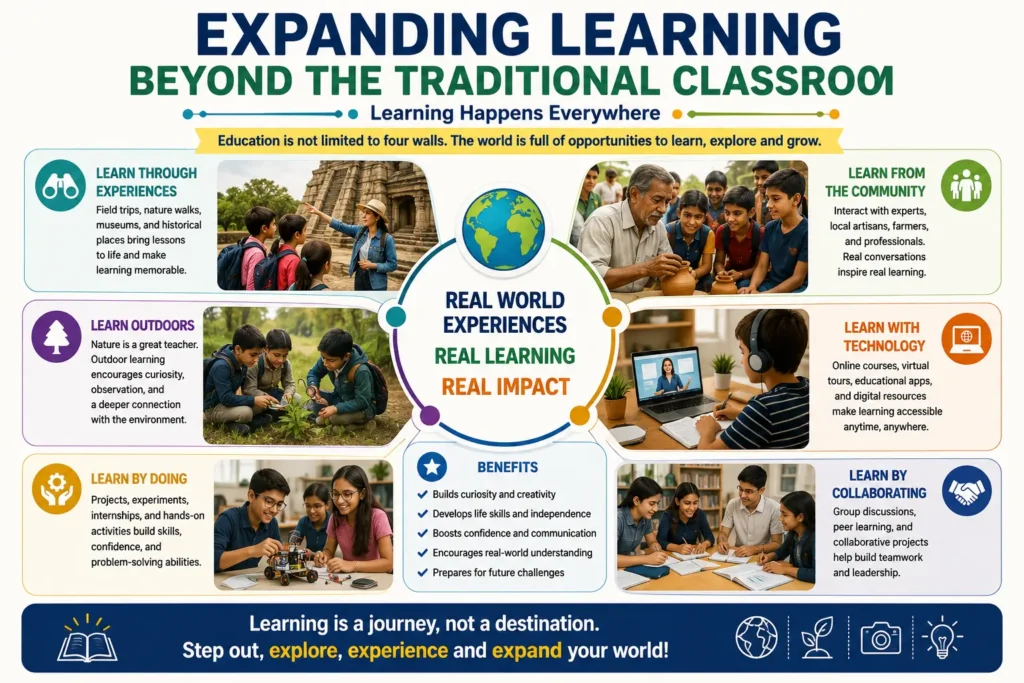
Education is no longer limited to four walls, chalkboards, and textbooks. With the rise of technology, global connectivity, and innovative teaching methods, learning has expanded far beyond the traditional classroom. Students today can access knowledge anywhere, anytime, and in ways that are interactive, personalized, and practical.
This article explores the benefits, strategies, and tools for expanding learning beyond the traditional classroom, helping educators, students, and institutions embrace the future of education.
Why Move Beyond the Traditional Classroom?
- Flexibility: Students can learn at their own pace.
- Accessibility: Knowledge is available globally through online platforms.
- Engagement: Interactive tools make learning exciting.
- Real-World Application: Learning connects directly to practical experiences.
- Collaboration: Students can work with peers worldwide.
Key Approaches to Expanding Learning
1. Online Learning Platforms
Websites and apps like Coursera, Khan Academy, and Udemy provide courses on diverse topics.
2. Blended Learning
Combines classroom teaching with digital resources for a balanced approach.
3. Flipped Classroom
Students study lessons online at home and engage in discussions and problem-solving in class.
4. Project-Based Learning
Encourages students to apply knowledge in real-world projects.
5. Experiential Learning
Learning through internships, field trips, and hands-on experiences.
6. Gamification
Using game elements like points, badges, and challenges to motivate students.
7. Collaborative Learning
Students work together across borders using digital tools like Zoom, Slack, or Google Classroom.
Benefits of Expanding Learning
- Personalized Learning Paths: Tailored to individual strengths and weaknesses.
- Global Exposure: Students interact with diverse cultures and ideas.
- Skill Development: Critical thinking, problem-solving, and digital literacy.
- Increased Motivation: Interactive tools keep students engaged.
- Career Readiness: Real-world projects prepare students for professional challenges.
Challenges and Solutions
| Challenge | Solution |
|---|---|
| Digital Divide | Provide affordable devices and internet access |
| Teacher Training | Offer workshops on digital tools |
| Student Distraction | Use structured schedules and monitoring tools |
| Assessment Difficulties | Implement project-based and competency-based evaluations |
Future of Learning Beyond Classrooms
Emerging technologies like AI, VR, AR, and blockchain will revolutionize education. Imagine virtual field trips to historical sites, AI tutors offering personalized guidance, and blockchain-secured certificates for lifelong learning.