
Introduction
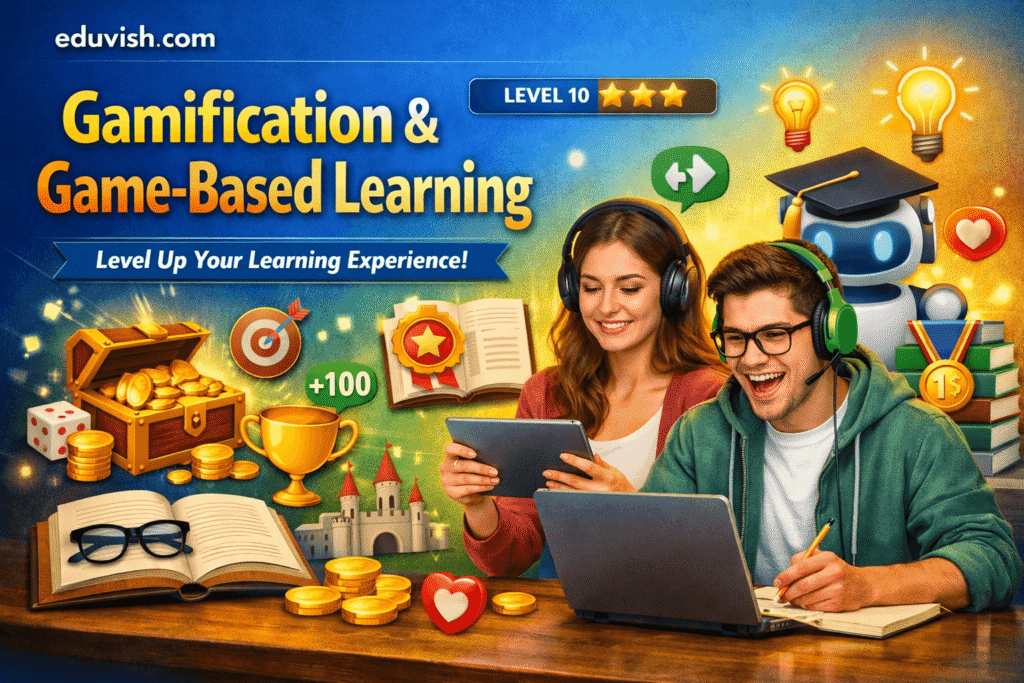
Education is evolving rapidly, and gamification is at the heart of this transformation. By integrating game mechanics into learning environments, educators can make lessons more engaging, interactive, and effective. Game‑based learning goes a step further — using actual games to teach concepts and skills. Together, they create a dynamic approach that motivates learners and enhances retention.
Understanding Gamification and Game‑Based Learning
- Gamification defined: The use of game elements like points, badges, and leaderboards in non‑game contexts.
- Game‑based learning explained: Learning through actual gameplay designed around educational objectives.
- Key difference: Gamification adds game mechanics to existing tasks; game‑based learning uses games as the core learning tool.
Why Gamification Works
- Motivation through rewards: Points and badges trigger dopamine responses that encourage progress.
- Instant feedback: Learners see results immediately, reinforcing positive behavior.
- Healthy competition: Leaderboards and challenges drive engagement.
- Sense of achievement: Completing levels builds confidence and persistence.
Benefits of Game‑Based Learning
- Improved retention: Interactive experiences help learners remember concepts longer.
- Critical thinking: Games often require strategy and problem‑solving.
- Collaboration: Multiplayer games foster teamwork and communication.
- Real‑world application: Simulations mirror real‑life scenarios.
Examples of Gamification in Education
- Duolingo: Uses streaks, XP points, and badges to motivate language learners.
- Kahoot!: Turns quizzes into competitive games.
- Classcraft: Transforms classroom management into a role‑playing adventure.
- Minecraft Education Edition: Encourages creativity and problem‑solving through virtual worlds.
Designing Gamified Learning Experiences
- Set clear objectives aligned with curriculum goals.
- Choose appropriate game mechanics like points, levels, or badges.
- Balance fun and learning to maintain educational value.
- Provide feedback loops for continuous improvement.
Psychological Foundations
- Behavioral reinforcement: Rewards strengthen desired actions.
- Intrinsic motivation: Learners engage for enjoyment, not just rewards.
- Flow theory: Balancing challenge and skill keeps learners immersed.
Challenges and Solutions
- Over‑gamification: Avoid turning learning into pure competition.
- Accessibility: Ensure games are inclusive for all learners.
- Assessment alignment: Match game outcomes with measurable learning goals.
- Teacher training: Educators need guidance to implement gamified methods effectively.
Tools and Platforms
- Quizizz
- Edmodo
- Seppo
- GooseChase
Future of Gamified Education
The future of learning will blend AI, VR, and gamification to create immersive experiences. Imagine virtual classrooms where students earn badges for solving real‑world problems or collaborate in global missions to learn sustainability.
Tips for Educators
- Start small — gamify one lesson at a time.
- Use storytelling to create emotional engagement.
- Track progress with analytics tools.
- Encourage peer feedback and reflection.
Conclusion
Gamification and game‑based learning are not just trends — they’re powerful educational strategies that make learning enjoyable, memorable, and effective. By combining technology, psychology, and creativity, educators can truly level up the learning experience.

