
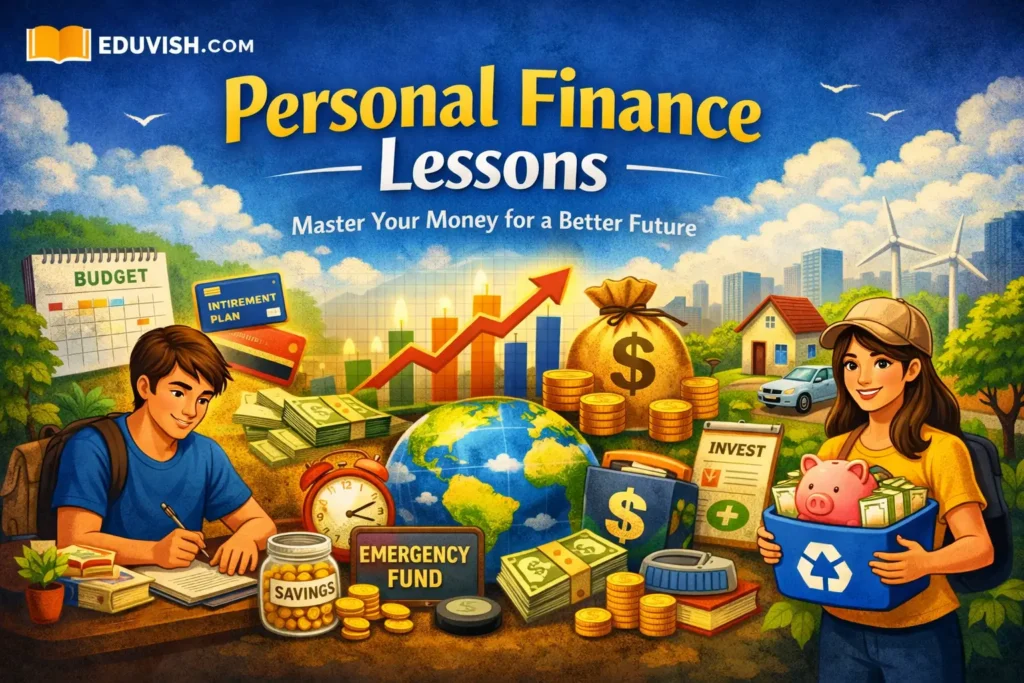
Introduction
Money plays a vital role in shaping our lives. Whether you’re a student, professional, or entrepreneur, understanding personal finance is essential for achieving financial stability and independence. This guide explores practical personal finance lessons that help you manage money wisely, save effectively, and invest smartly for long‑term success.
What Is Personal Finance?
Personal finance refers to managing your money, including budgeting, saving, investing, and planning for future expenses. It’s about making informed decisions that align with your goals and lifestyle.
Key components include:
- Budgeting – Tracking income and expenses.
- Saving – Setting aside money for emergencies and goals.
- Investing – Growing wealth through assets like stocks, mutual funds, or real estate.
- Debt management – Handling loans and credit responsibly.
- Financial planning – Preparing for retirement, education, and major life events.
Why Personal Finance Matters
Essential Personal Finance Lessons Everyone Should Learn
1. Create a Realistic Budget
List your income and expenses. Categorize spending into needs, wants, and savings. Use apps like Mint or YNAB to track progress.
2. Build an Emergency Fund
Save at least 3–6 months of living expenses. This fund acts as a safety net during job loss or medical emergencies.
3. Understand Credit and Debt
Learn how credit scores work. Pay bills on time and avoid high‑interest loans.
4. Start Investing Early
The earlier you invest, the more you benefit from compound interest. Explore mutual funds, SIPs, and index funds.
5. Set Financial Goals
Define short‑term (vacation, gadgets) and long‑term (home, retirement) goals. Align your savings and investments accordingly.
6. Avoid Impulse Spending
Differentiate between wants and needs. Delay purchases to evaluate necessity.
7. Learn Tax Basics
Understand deductions, exemptions, and filing procedures to save money legally.
8. Plan for Retirement
Start early with pension plans, PPF, or NPS. The power of compounding ensures a comfortable future.
9. Diversify Investments
Don’t put all your money in one asset. Spread across stocks, bonds, and real estate to minimize risk.
10. Educate Yourself Continuously
Read books, attend webinars, and follow finance blogs to stay updated.
Common Financial Mistakes to Avoid
- Ignoring budgeting.
- Overspending on credit cards.
- Not saving for emergencies.
- Investing without research.
- Neglecting insurance coverage.
Tools to Manage Personal Finance
| Tool | Purpose | Example |
|---|---|---|
| Budgeting apps | Track income and expenses | Mint, PocketGuard |
| Investment platforms | Invest in mutual funds or stocks | Groww, Zerodha |
| Expense trackers | Monitor daily spending | Walnut, Money Manager |
| Tax calculators | Estimate tax liability | ClearTax |
| Retirement planners | Plan long‑term savings | NPS, PPF calculators |
Real‑Life Examples of Smart Financial Management
- Warren Buffett – Advocates long‑term investing and frugality.
- Rakesh Jhunjhunwala – Focused on patience and research in investments.
- Everyday savers – People who built wealth through discipline and planning.
How Students Can Learn Personal Finance
- Attend financial literacy workshops.
- Practice budgeting with pocket money.
- Learn investment basics early.
- Follow finance influencers for insights.
The Future of Personal Finance Education
With digital banking and fintech innovations, financial literacy is becoming more accessible. Schools and universities are integrating personal finance education into their curriculum to prepare students for real‑world challenges.
Conclusion
Personal finance lessons empower individuals to take control of their money and future. By learning how to budget, save, invest, and plan wisely, you can achieve financial freedom and peace of mind. Remember, financial success isn’t about how much you earn—it’s about how well you manage what you have.

