
Introduction
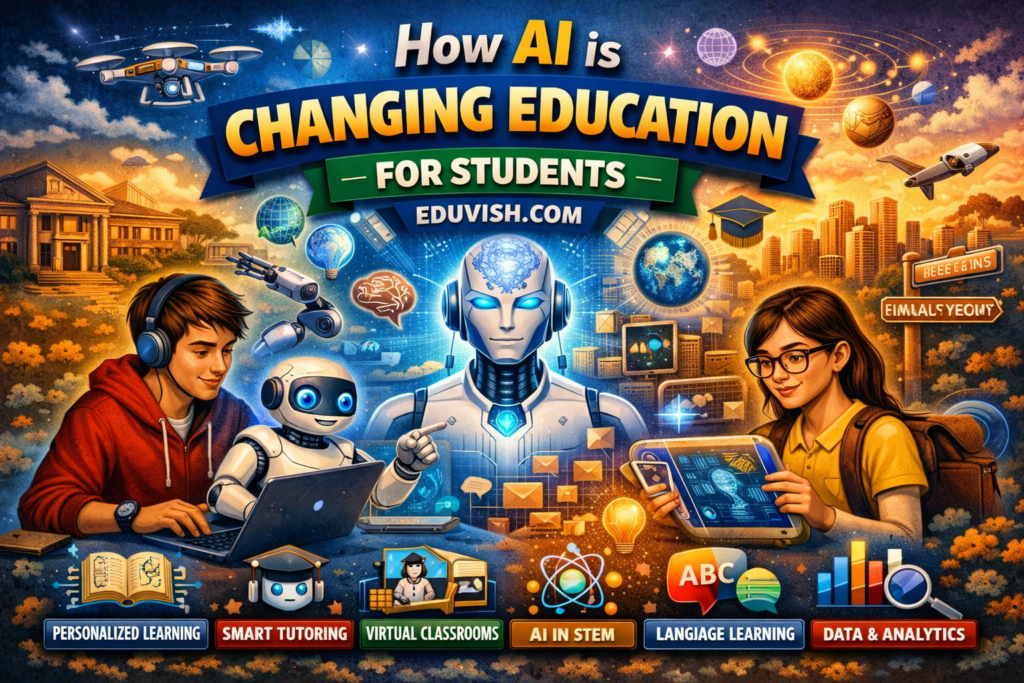
How AI is changing education for students has become one of the most important discussions in modern learning. Artificial intelligence is helping students access personalized learning experiences, receive instant feedback, improve academic performance, and develop future-ready skills. Understanding how AI is changing education for students can help educators and learners make better use of emerging technologies.
What Is Artificial Intelligence in Education?
- Definition of AI in education: AI refers to computer systems that simulate human intelligence—learning, reasoning, and problem‑solving—to assist in teaching and learning.
- Purpose of AI in learning: It helps personalize education, automate tasks, and provide real‑time feedback to students.
- AI tools in classrooms: Chatbots, virtual tutors, and adaptive learning platforms are becoming common in schools and universities.
Benefits of AI in Education
- Improved accessibility: AI tools assist students with disabilities through speech‑to‑text and visual aids.
- Enhanced engagement: Interactive content keeps learners motivated.
- Efficient administration: Automating grading and scheduling saves time for teachers.
- Global learning opportunities: Students can access world‑class education from anywhere.
Challenges of AI in Education
While AI offers immense benefits, it also presents challenges.
- Data privacy concerns: Protecting student information is crucial.
- Digital divide: Not all students have access to technology.
- Ethical use of AI: Ensuring fairness and transparency in AI algorithms is essential.
The Future of AI in Education
AI will continue to evolve, making learning more immersive and personalized. Future classrooms may include virtual reality (VR), augmented reality (AR), and AI‑driven mentors guiding students through customized learning paths. At Eduvish.com, we envision a future where technology empowers every learner to reach their full potential.

