
Introduction
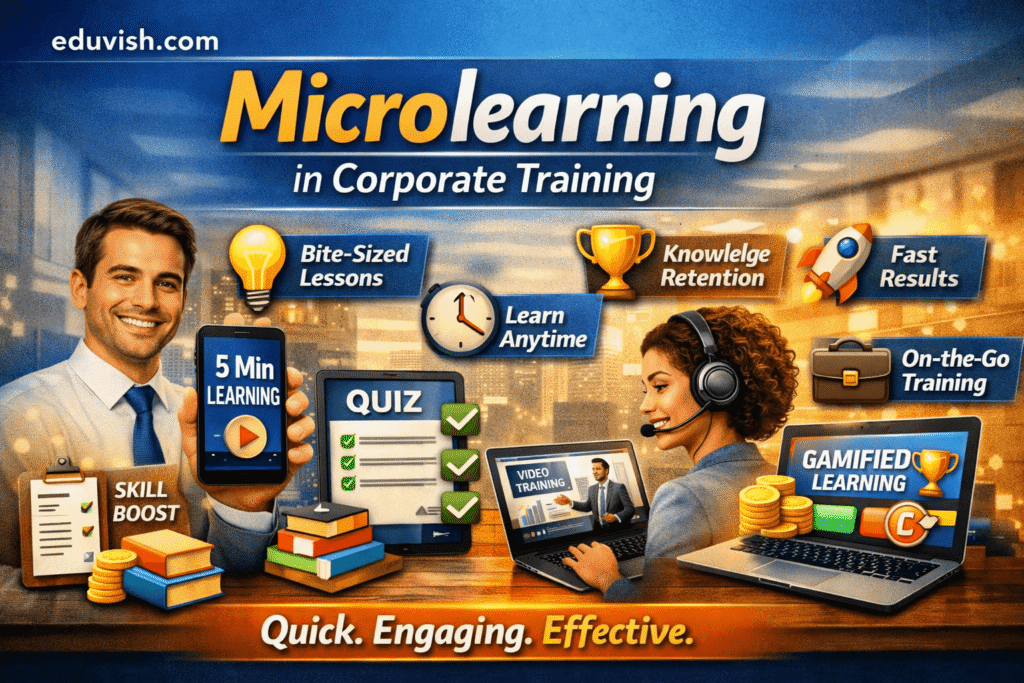
Corporate training has evolved from long, tedious sessions to quick, engaging, and effective learning experiences. In today’s fast‑paced business world, employees need to learn new skills rapidly without disrupting their workflow. That’s where microlearning comes in — a modern approach that delivers bite‑sized lessons designed for maximum retention and real‑world application.
What Is Microlearning?
- Definition: Microlearning is a training method that breaks complex topics into short, focused modules — typically lasting 3–10 minutes.
- Purpose: To make learning accessible, engaging, and easy to digest.
- Formats: Videos, quizzes, infographics, podcasts, and interactive simulations.
Why Microlearning Works in Corporate Training
- Short attention spans: Employees retain more information when lessons are concise.
- On‑the‑go accessibility: Mobile‑friendly modules fit into busy schedules.
- Immediate application: Learners can apply new skills right after training.
- Continuous learning culture: Encourages daily skill development.
Key Benefits of Microlearning
a. Improved Knowledge Retention
Short lessons reinforce memory through repetition and active engagement.
b. Higher Engagement
Gamified elements, quizzes, and interactive videos keep learners motivated.
c. Cost‑Effective Training
Reduces training time and expenses compared to traditional workshops.
d. Personalized Learning
Employees can choose modules relevant to their roles and goals.
e. Scalability
Easily deployable across departments and global teams.
Microlearning Formats That Drive Results
| Format | Description | Example |
|---|---|---|
| Video Tutorials | Short clips explaining concepts visually | Product demos, safety procedures |
| Interactive Quizzes | Reinforce learning through questions | Compliance training |
| Infographics | Visual summaries of key points | Process flowcharts |
| Podcasts | Audio lessons for multitasking learners | Leadership insights |
| Simulations | Real‑world practice scenarios | Customer service training |
How Microlearning Enhances Corporate Performance
- Skill reinforcement: Regular micro‑sessions strengthen existing knowledge.
- Faster onboarding: New hires learn company processes quickly.
- Performance tracking: Analytics measure progress and completion rates.
- Employee empowerment: Learners take ownership of their growth.
Integrating Microlearning into Corporate Training Programs
- Identify learning objectives.
- Break content into modules.
- Use multimedia tools.
- Gamify the experience.
- Measure outcomes.
Tools and Platforms for Microlearning
- TalentLMS
- EdApp
- LearnWorlds
- I Spring Learn
- Docebo
Microlearning and Employee Engagement
Microlearning fosters a culture of continuous improvement. Employees feel empowered when they can learn at their own pace and see tangible progress.
- Gamified learning boosts motivation.
- Social learning encourages collaboration.
- Feedback loops enhance performance.
Challenges and Solutions
| Challenge | Solution |
|---|---|
| Content overload | Focus on one skill per module |
| Lack of engagement | Add gamified elements and rewards |
| Measuring ROI | Use analytics dashboards |
| Resistance to change | Communicate benefits clearly |
The Future of Microlearning in Corporate Training
The future is AI‑driven, personalized, and immersive.
- AI personalization tailors content to individual needs.
- Virtual reality creates realistic learning environments.
- Data analytics provides insights for continuous improvement.
- Mobile learning ensures accessibility anytime, anywhere.
Conclusion
Microlearning is transforming corporate training by making learning quick, engaging, and effective. It empowers employees to learn continuously, boosts productivity, and aligns training with organizational goals. As technology advances, microlearning will remain the cornerstone of modern workforce development.