
Introduction
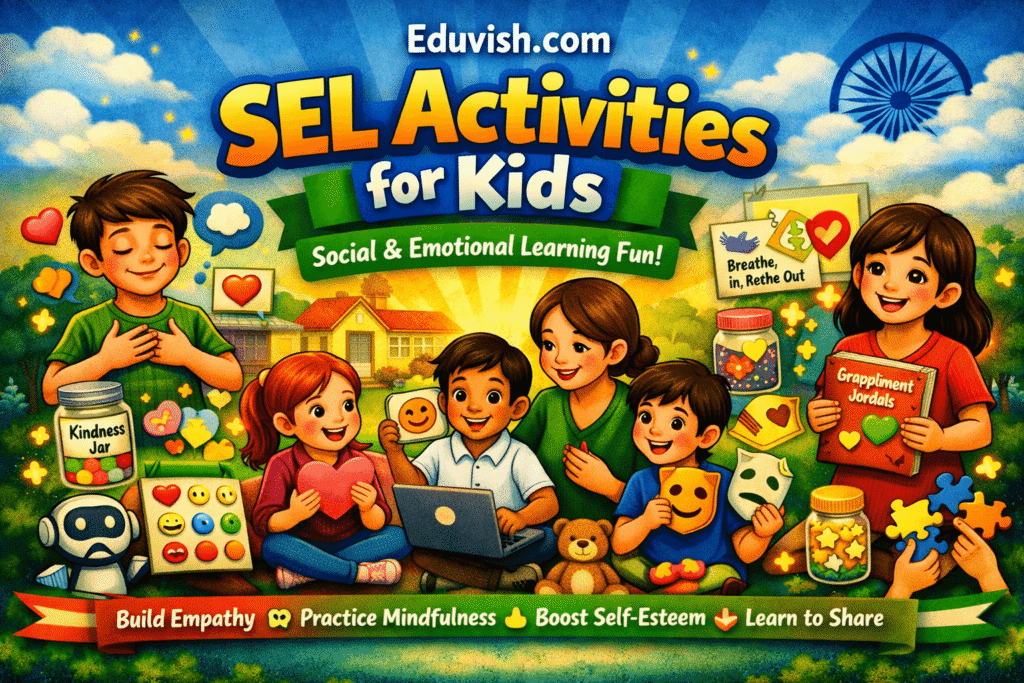
In today’s fast‑paced world, children need more than academic knowledge to thrive — they need emotional intelligence, empathy, and resilience. Social and Emotional Learning (SEL) helps kids understand their feelings, build positive relationships, and make responsible decisions. At Eduvish.com, we explore fun and effective SEL activities for kids that nurture emotional growth and social skills while keeping learning joyful.
What Is Social and Emotional Learning (SEL)?
Social and Emotional Learning is the process through which children develop self‑awareness, self‑management, social awareness, relationship skills, and responsible decision‑making. It’s not just about teaching emotions — it’s about helping kids become kind, confident, and cooperative individuals.
Why SEL Matters for Kids
- Builds empathy: Kids learn to understand others’ feelings.
- Improves communication: Encourages open dialogue and listening.
- Boosts confidence: Helps children believe in themselves.
- Reduces anxiety: Mindfulness and emotional regulation calm young minds.
- Enhances teamwork: Promotes cooperation and problem‑solving.
Core Components of SEL
- Self‑Awareness – Recognizing emotions and strengths.
- Self‑Management – Controlling impulses and managing stress.
- Social Awareness – Understanding others’ perspectives.
- Relationship Skills – Building healthy connections.
- Responsible Decision‑Making – Making thoughtful choices.
Fun SEL Activities for Kids
1. Emotion Charades
Kids act out emotions like happiness, anger, or surprise while others guess. It teaches emotional recognition and empathy.
2. Gratitude Journals
Encourage children to write three things they’re thankful for daily. Builds positivity and mindfulness.
3. Kindness Jar
Each time a child does something kind, they add a note to the jar. At week’s end, read them together.
4. Mindful Breathing
Teach deep breathing exercises to manage stress and emotions.
5. Compliment Circle
Children sit in a circle and give compliments to each other — boosting self‑esteem and social bonds.
6. Conflict Resolution Role‑Play
Kids act out common disagreements and practice peaceful solutions.
7. Emotion Wheel
Use colorful charts to help children identify and express feelings.
8. Team‑Building Games
Activities like building towers or solving puzzles together enhance cooperation.
9. Storytelling for Empathy
Read stories that highlight emotions and discuss characters’ feelings.
10. Art Therapy
Drawing or painting emotions helps children express themselves creatively.
SEL in Indian Schools
Indian educators are increasingly integrating SEL into classrooms. Schools use circle time, peer mentoring, and mindfulness sessions to help students manage emotions and build empathy. This shift aligns with the National Education Policy (NEP 2020), which emphasizes holistic development and emotional well‑being.
Benefits of SEL Activities
| Benefit | Description |
|---|---|
| Emotional Regulation | Kids learn to manage anger, sadness, and frustration. |
| Empathy Development | Encourages understanding and compassion. |
| Improved Academic Performance | Emotionally balanced kids focus better. |
| Better Relationships | Builds trust and cooperation among peers. |
| Resilience | Helps children bounce back from challenges. |
How Parents Can Support SEL at Home
- Model empathy: Show kindness in daily interactions.
- Encourage open communication: Let kids express feelings freely.
- Practice mindfulness together: Use breathing or meditation exercises.
- Celebrate small wins: Recognize emotional growth.
- Create a safe space: Ensure children feel heard and supported.