
Introduction
A literature review is a critical component of academic writing. It summarizes, analyzes, and evaluates existing research on a topic, helping students and researchers identify gaps, trends, and future directions. Writing a literature review may seem challenging, but with clear steps and the right approach, it becomes manageable and rewarding.
What is a Literature Review?
- Definition: A structured summary of scholarly sources related to a specific topic.
- Purpose: To provide context, highlight gaps, and justify new research.
- Importance: Builds credibility, demonstrates knowledge, and strengthens academic arguments.
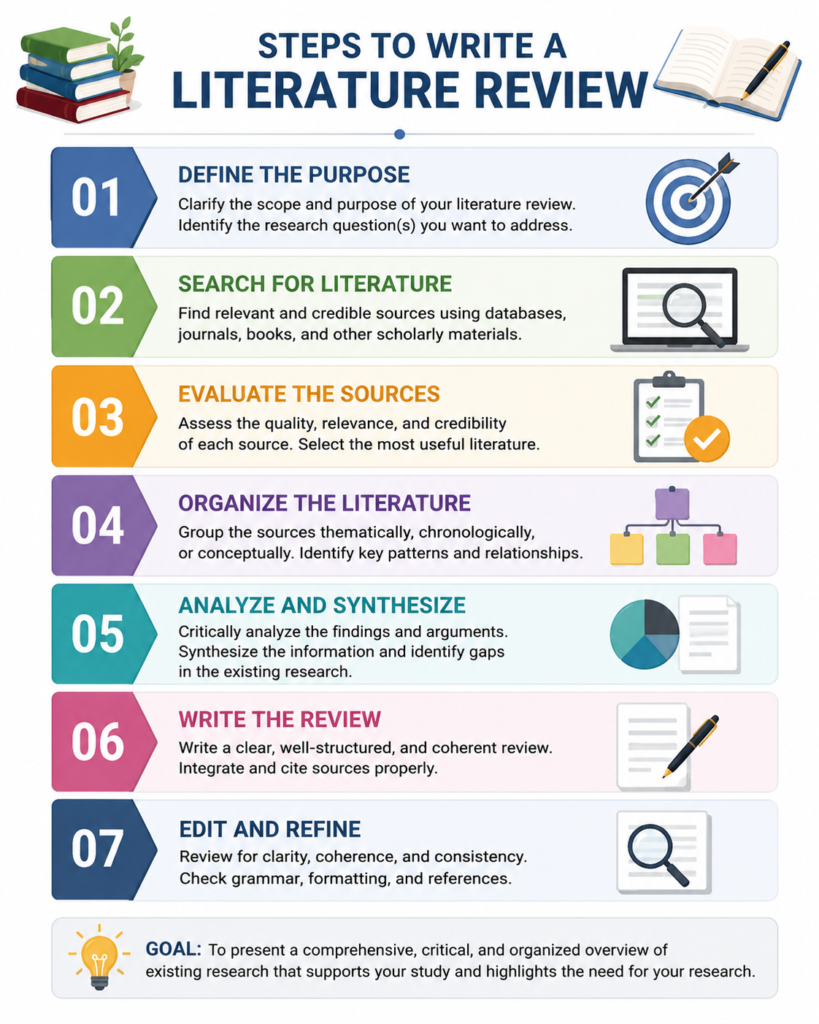
Steps to Write a Literature Review
1. Define Your Topic
Choose a clear, focused research question or theme. Narrow topics make reviews more precise.
2. Search for Sources
Use databases like Google Scholar, JSTOR, PubMed, or Scopus. Collect peer‑reviewed articles, books, and credible reports.
3. Evaluate Sources
Check relevance, credibility, and publication date. Avoid outdated or non‑academic references.
4. Organize the Literature
Group sources by themes, methodologies, or chronological order. This helps structure the review logically.
5. Analyze and Synthesize
Go beyond summarizing—compare findings, highlight contradictions, and identify gaps.
6. Write the Review
Structure it into:
- Introduction: Define scope and purpose.
- Body: Discuss themes, trends, and debates.
- Conclusion: Summarize insights and suggest future research.
7. Cite Properly
Use citation styles like APA, MLA, or Chicago. Proper referencing avoids plagiarism.
8. Revise and Edit
Check clarity, coherence, grammar, and formatting. Ensure logical flow.
Comparison Table
| Step | Action | Outcome |
|---|---|---|
| Define Topic | Narrow research question | Clear focus |
| Search Sources | Use databases | Comprehensive coverage |
| Evaluate Sources | Check credibility | Reliable references |
| Organize Literature | Group by theme | Logical structure |
| Analyze & Synthesize | Compare findings | Identify gaps |
| Write Review | Draft intro, body, conclusion | Academic contribution |
| Cite Properly | APA/MLA/Chicago | Avoid plagiarism |
| Revise & Edit | Proofread | Polished final draft |
Benefits of a Good Literature Review
- Academic credibility
- Research foundation
- Critical thinking
- Gap identification

