
Introduction
In 2026, students spend most of their time online — attending classes, submitting assignments, and socializing on digital platforms. But with this convenience comes risk. Cybercriminals target students because they often lack awareness of cybersecurity basics.
Learning cybersecurity is no longer optional; it’s a life skill. This guide explains the fundamental cybersecurity practices every student should know, with practical tips, examples, and tools.
What Is Cybersecurity?
Cybersecurity is the practice of protecting devices, networks, and data from unauthorized access or attacks. For students, it means safeguarding personal information, academic records, and online identity.
Why Cybersecurity Matters for Students
- Protects personal data (emails, bank accounts, social media).
- Prevents identity theft and fraud.
- Ensures safe online learning.
- Builds digital responsibility and awareness.
- Prepares students for future careers in a tech‑driven world.
Example: A phishing email disguised as a scholarship offer can trick students into sharing sensitive information.
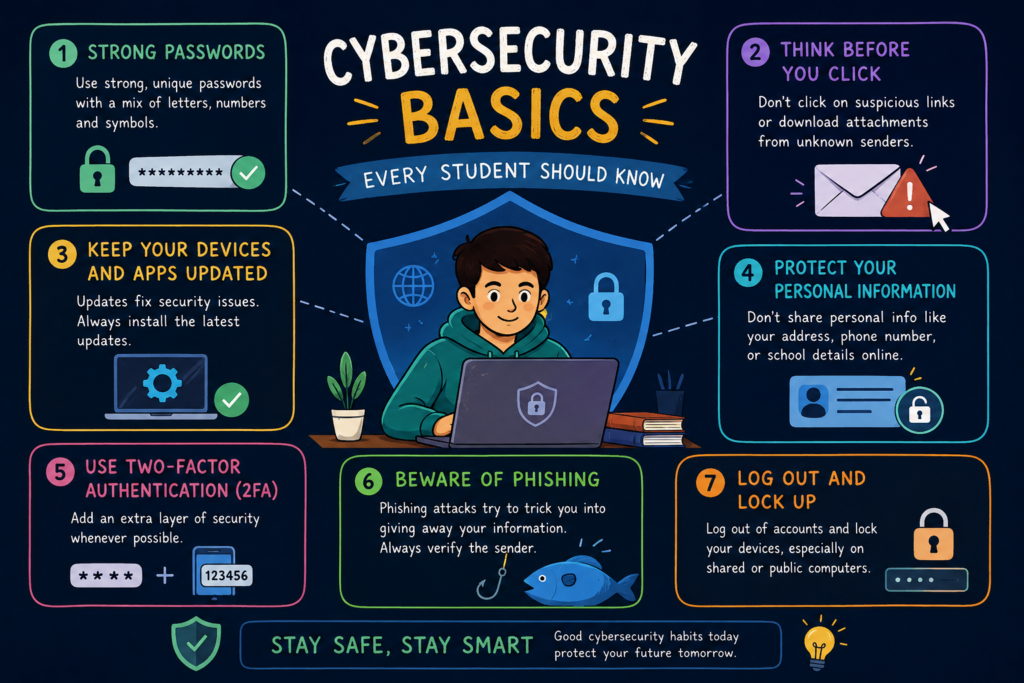
Cybersecurity Basics Every Student Should Know
1. Strong Passwords & Authentication
- Use unique, complex passwords.
- Enable two‑factor authentication (2FA).
- Avoid reusing passwords across accounts.
2. Safe Internet Practices
- Verify links before clicking.
- Avoid suspicious downloads.
- Be cautious of free WiFi networks.
3. Protecting Devices
- Keep systems updated.
- Install antivirus software.
- Lock devices when unattended.
4. Public Wi-Fi Risks
- Use a VPN when accessing public WiFi.
- Avoid logging into sensitive accounts on shared networks.
5. Data Privacy & Digital Footprint
- Limit personal information shared online.
- Think before posting on social media.
- Understand that online actions leave permanent records.
6. Recognizing Scams
- Beware of fake job offers or scholarships.
- Check sender details in emails.
- Report suspicious activity immediately.
7. Cyberbullying & Online Etiquette
- Practice respectful communication.
- Report harassment to authorities.
- Support peers facing cyberbullying.
Future of Cybersecurity in Education
By 2026, cybersecurity will be part of every curriculum. Students will learn:
- AI‑powered threat detection
- Ethical hacking basics
- Cyber hygiene practices
- Digital citizenship responsibilities
Risks of Ignoring Cybersecurity
- Identity theft
- Academic record manipulation
- Financial fraud
- Cyberbullying exposure
- Long‑term damage to reputation

