
Introducation
The Key to Successful Collaboration
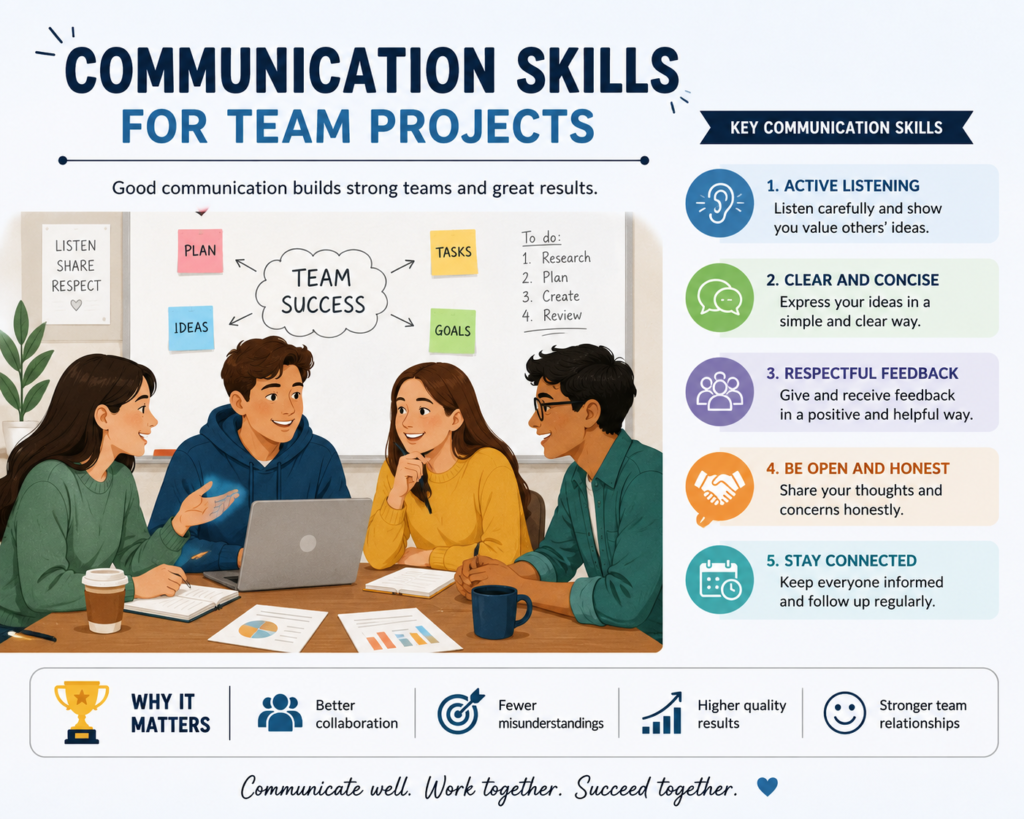
Team projects are an essential part of academic and professional life. They teach students how to work together, share ideas, and achieve common goals. However, the success of any team project depends largely on one thing — effective communication.
Strong communication skills help team members coordinate tasks, resolve conflicts, and ensure that everyone contributes equally. In this article, we’ll explore how students can develop communication skills that make team projects more productive and enjoyable.
1. Understanding Communication in Team Projects
Communication in team projects means exchanging ideas, feedback, and information to achieve shared objectives. It involves listening, speaking, writing, and non-verbal cues.
Why It Matters:
- Builds trust among team members.
- Prevents misunderstandings and confusion.
- Encourages creativity and collaboration.
- Improves overall project quality.
SEO Keywords: communication skills for teamwork, team collaboration tips, effective communication in group projects
2. Active Listening
Listening is the foundation of good communication. Active listening means paying full attention to what others are saying.
Tips:
- Maintain eye contact.
- Avoid interrupting.
- Summarize or repeat key points to show understanding.
- Ask clarifying questions.
Result: Team members feel respected and understood.
3. Clear and Concise Speaking
When sharing ideas, clarity is crucial. Avoid long, confusing explanations.
Tips:
- Speak slowly and confidently.
- Use simple language.
- Focus on one idea at a time.
- Encourage questions for better understanding.
SEO Keywords: clear communication in teamwork, effective speaking skills for students
4. Written Communication
Team projects often involve written tasks like reports, emails, or presentations.
Tips:
- Use clear and professional language.
- Keep messages short and focused.
- Proofread before sending.
- Use collaborative tools like Google Docs for shared writing.
Result: Everyone stays informed and aligned.
5. Respectful Communication
Respect is the cornerstone of teamwork. Treat every member’s opinion with value.
Tips:
- Avoid criticizing ideas harshly.
- Use polite language.
- Appreciate contributions.
- Resolve disagreements calmly.
SEO Keywords: respectful communication in teams, team collaboration skills
6. Non-Verbal Communication
Body language, facial expressions, and tone of voice play a big role in communication.
Tips:
- Smile and maintain open posture.
- Use gestures to emphasize points.
- Avoid negative expressions like eye-rolling or sighing.
Result: Positive non-verbal cues create a friendly and cooperative environment.
7. Feedback and Constructive Criticism
Feedback helps teams improve and grow.
Tips:
- Give feedback politely and specifically.
- Focus on the issue, not the person.
- Accept feedback gracefully.
- Use phrases like “I think we could improve this by…” instead of “You did this wrong.”
SEO Keywords: constructive feedback in teamwork, communication improvement tips
8. Conflict Resolution
Disagreements are natural in team projects. Good communication helps resolve them effectively.
Tips:
- Listen to all sides before deciding.
- Stay calm and objective.
- Find solutions that benefit everyone.
- Avoid blaming or arguing.
Result: Conflicts turn into opportunities for growth.
9. Role Clarity and Task Communicatio
Every team member should know their role and responsibilities.
Tips:
- Discuss roles at the start of the project.
- Set deadlines and expectations clearly.
- Use project management tools like Trello or Asana.
SEO Keywords: team role communication, project management for students
10. Empathy and Understanding
Empathy helps you connect emotionally with your teammates.
Tips:
- Be patient with others’ challenges.
- Offer help when needed.
- Celebrate team achievements together.
Result: Empathy builds strong bonds and trust.
11. Confidence in Communication
Confidence makes your ideas more persuasive.
Tips:
- Prepare before meetings.
- Practice public speaking.
- Focus on facts and logic.
- Believe in your contribution.
SEO Keywords: confidence in teamwork, communication skills for students
12. Use Technology Effectively
Digital tools make communication easier in team projects.
Examples:
- Google Meet / Zoom: For virtual meetings.
- Slack / WhatsApp: For quick updates.
- Google Docs / Notion: For collaborative writing.
Result: Technology keeps everyone connected and organized.
13. Time Management and Communication
Good communication helps manage time efficiently.
Tips:
- Set clear deadlines.
- Send reminders politely.
- Update the team regularly on progress.
SEO Keywords: time management in team projects, effective communication for productivity
14. Encourage Participation
Every member should feel comfortable sharing ideas.
Tips:
- Ask quieter members for their opinions.
- Create a safe space for discussion.
- Appreciate diverse perspectives.
Result: Inclusive communication leads to better creativity and teamwork.
15. Regular Meetings and Updates
Consistent communication keeps the project on track.
Tips:
- Schedule weekly check-ins.
- Discuss progress and challenges.
- Keep meetings short and focused.
SEO Keywords: team meeting communication, project collaboration strategies
16. Adaptability
Be flexible in your communication style.
Tips:
- Adjust tone based on the situation.
- Be open to new ideas.
- Adapt to different personalities in the team.
Result: Adaptability ensures smooth collaboration.
17. Celebrate Success
Acknowledging achievements boosts morale.
Tips:
- Appreciate team efforts publicly.
- Share positive feedback.
- Celebrate milestones together.
SEO Keywords: team motivation tips, positive communication in teamwork
18. Continuous Improvement
Communication skills can always be improved.
Tips:
- Reflect on past projects.
- Ask for feedback on your communication style.
- Attend workshops or webinars.
Result: Continuous learning leads to long-term success.
Conclusion
Strong communication skills are the backbone of successful team projects. They help students collaborate effectively, resolve conflicts, and achieve shared goals.
By practicing active listening, clear speaking, empathy, and respect, you can become a valuable

