
Introduction
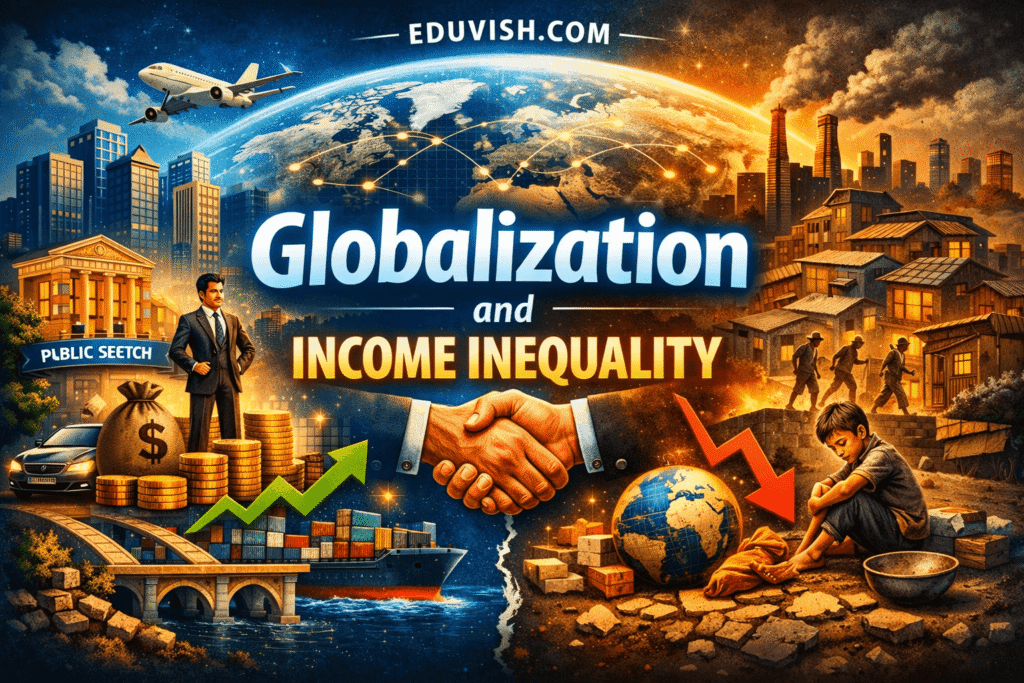
Globalization has transformed the world into a connected marketplace, enabling trade, technology exchange, and cultural integration. However, while globalization has created opportunities, it has also widened the gap between the rich and the poor. Income inequality — the uneven distribution of wealth and income among individuals and nations — is one of the most pressing challenges of our time.
This article explores how globalization affects income inequality, its causes, consequences, and possible solutions for a more balanced global economy.
What Is Globalization?
Globalization refers to the process of increasing interconnection and interdependence among countries through trade, investment, technology, and cultural exchange.
Key Drivers of Globalization
- International trade: Exchange of goods and services across borders.
- Foreign investment: Companies investing in other countries.
- Technology advancement: Internet and digital platforms connecting people globally.
- Migration: Movement of people for work and education.
- Global supply chains: Production spread across multiple countries.
What Is Income Inequality?
Income inequality means that some individuals or groups earn significantly more than others. It can occur within countries or between nations.
Types of Income Inequality
| Type | Description | Example |
|---|---|---|
| Personal inequality | Difference in income among individuals. | CEO vs factory worker |
| Regional inequality | Economic gap between regions within a country. | Urban vs rural areas |
| Global inequality | Wealth gap between developed and developing nations. | USA vs Sub‑Saharan Africa |
How Globalization Affects Income Inequality
Globalization has both positive and negative effects on income distribution.
Positive Impacts
- Job creation: New industries and employment opportunities.
- Economic growth: Increased trade and investment boost GDP.
- Technology transfer: Developing countries gain access to innovation.
- Skill development: Workers learn new skills through global exposure.
Negative Impacts
- Wage disparity: Skilled workers earn more, unskilled workers earn less.
- Job outsourcing: Low‑income countries face exploitation.
- Automation: Technology replaces low‑skill jobs.
- Capital concentration: Wealth accumulates among multinational corporations.
Globalization and Inequality Between Nations
Developed countries often benefit more from globalization than developing ones.
| Aspect | Developed Nations | Developing Nations |
|---|---|---|
| Access to technology | High | Limited |
| Labor wages | High | Low |
| Industrial growth | Advanced | Emerging |
| Education | Universal | Unequal |
| Wealth distribution | Balanced | Uneven |
Causes of Income Inequality in the Global Era
- Unequal education access
- Technological divide
- Trade liberalization
- Tax policies
- Corruption and governance
Consequences of Income Inequality
Income inequality affects societies in multiple ways:
- Social unrest
- Reduced economic mobility
- Health disparities
- Political instability
- Decline in consumer spending
Case Studies
1. United States
Globalization has led to technological progress but also widened the wage gap between high‑skill and low‑skill workers.
2. China
Rapid globalization lifted millions out of poverty but created urban‑rural income disparities.
3. India
Globalization boosted IT and service sectors but left agricultural workers behind.
Solutions to Reduce Income Inequality
Governments and organizations can take steps to ensure globalization benefits everyone.
Policy Measures
- Progressive taxation
- Education reforms
- Social welfare programs
- Fair trade policies
- Inclusive technology access
Corporate Responsibility
- Ethical business practices
- Fair wages
- Sustainable development goals (SDGs)
The Future of Globalization and Equality
The future depends on how nations manage globalization. Digital globalization, green economy, and inclusive growth can help reduce inequality.
Emerging trends include:
- Remote work creating global job opportunities.
- AI and automation reshaping labor markets.
- Global cooperation promoting fair wealth distribution.
Conclusion
Globalization is a powerful force that can either bridge or widen economic divides. To ensure fairness, countries must adopt policies that promote inclusive growth, education, and equal opportunities.
A balanced approach to globalization can create a world where prosperity is shared — not concentrated.

